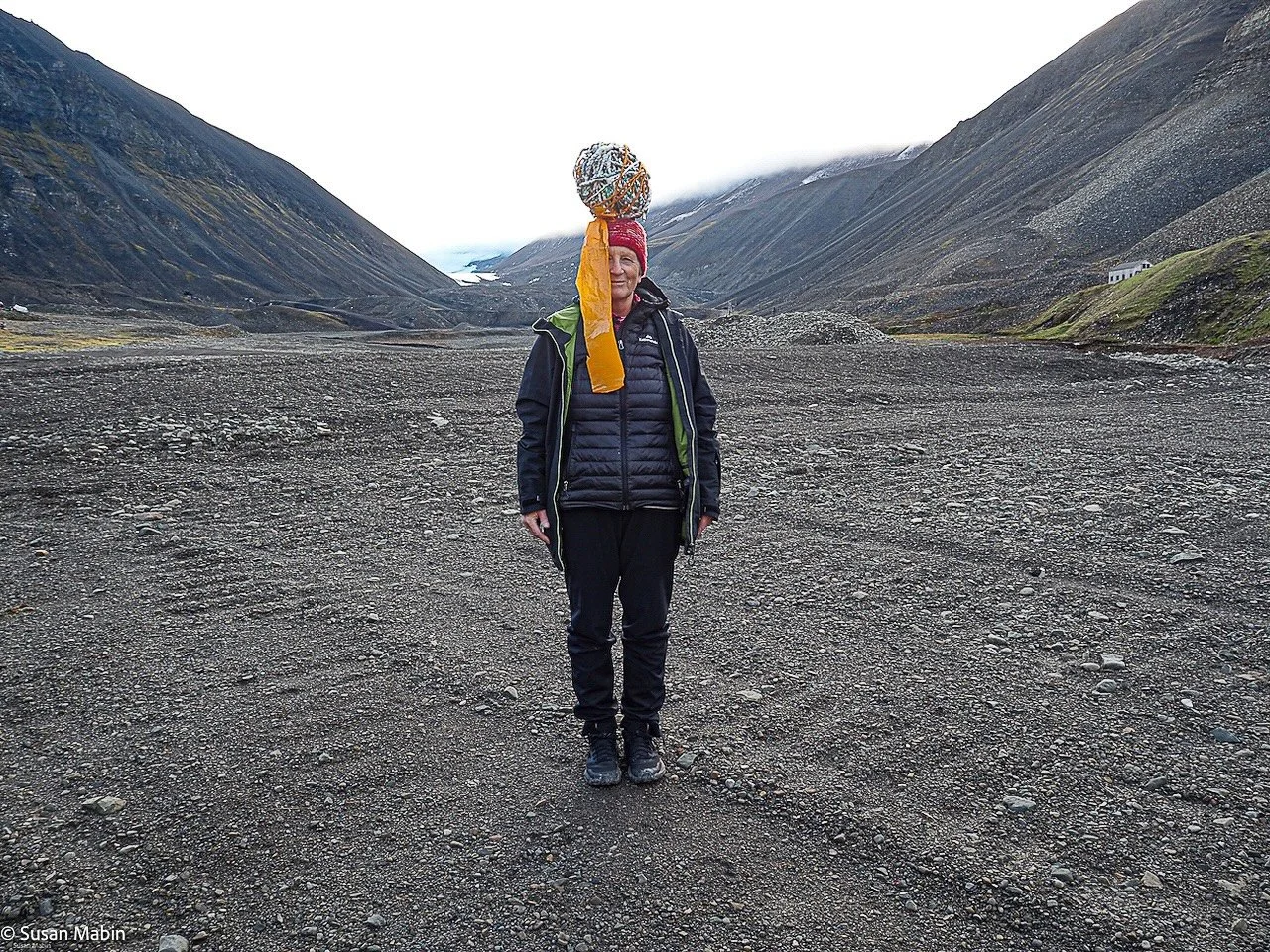
August 5th - September 15th. 2024
Climate Zone: Arctic
Transition zone: Coastal/glacier river valley
Coordinates: 78.21642°N, 15.63506°E
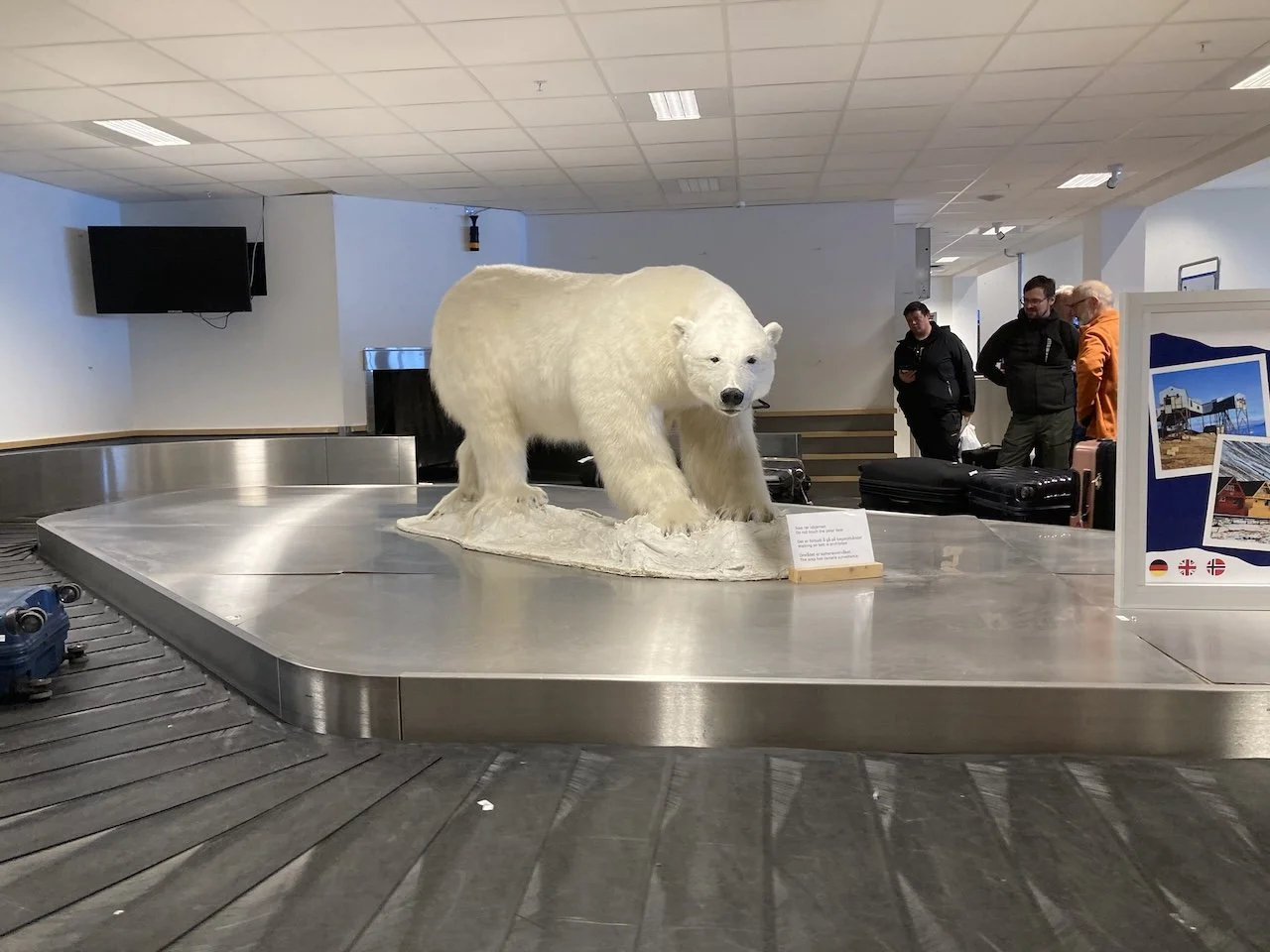
It was exciting to have the opportunity to spend 6 weeks in the high Arctic. I had spent the previous months from May-Aug backpacking in the Uk and 3 weeks in Norway, seeing friends and new places, eventually flying out to Longyearbyen from Tromso, Norway, on the 5 August. I didn’t have a window seat on the plane and my first impression of Spitsbergen was not the glaciers from above but the taxidermy polar bear in Arrivals, forever going nowhere on the baggage carousel.
The residency co-ordinator was there at the airport to pick me up and gave me a short tour of Longyearbyen, followed by a quick stop at the supermarket and then up to the Artist centre at Nybyen further up the Longyear Valley. Was given a tour around the Spitsbergen Artist residency premises and then pretty much left to it, for the next 6 weeks. The residency set up was a shared kitchen, lounge and bathroom and at the other end of the building, some studios where local artists worked, and some gallery spaces downstairs.
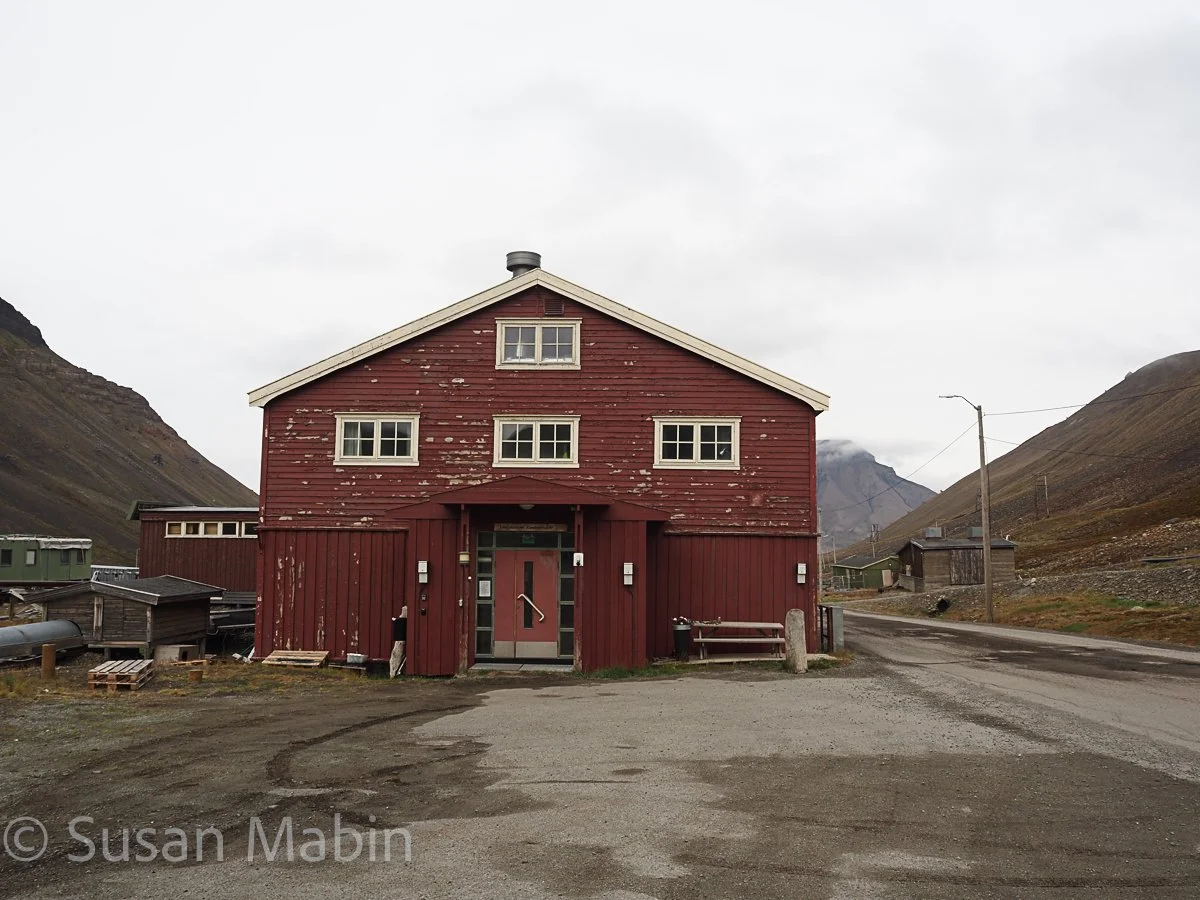
Spitsbergen Artist Centre building in Nybyen.
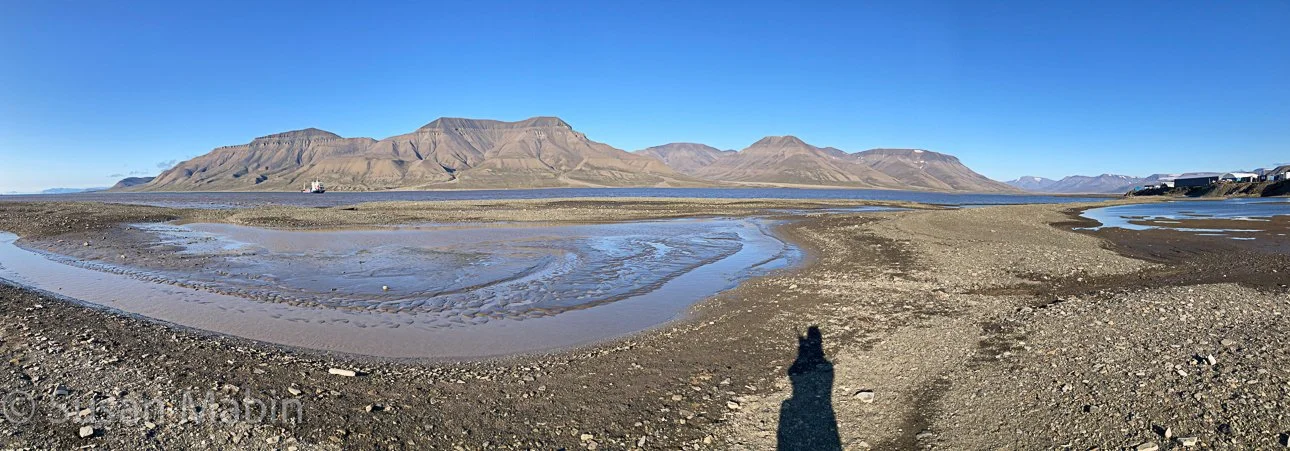
First walk down to the fjord.
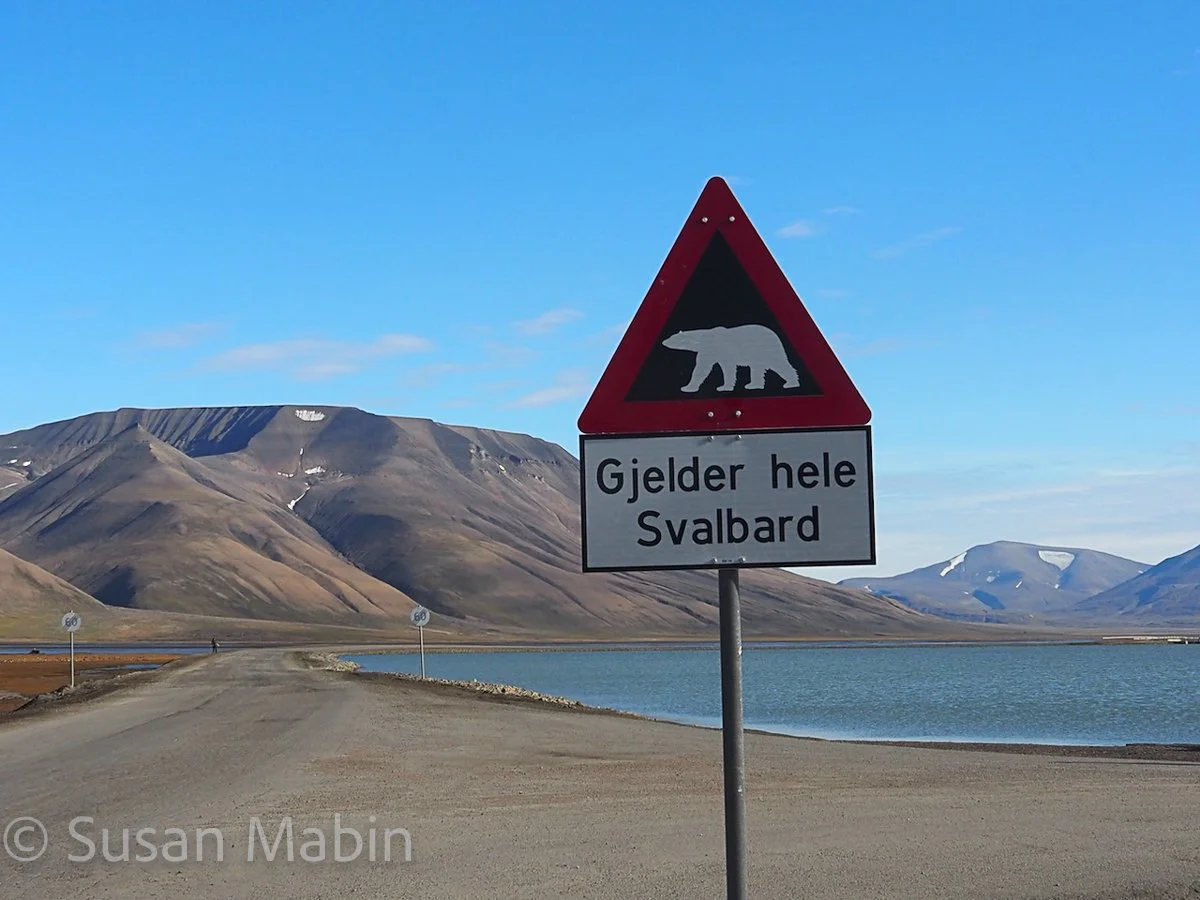
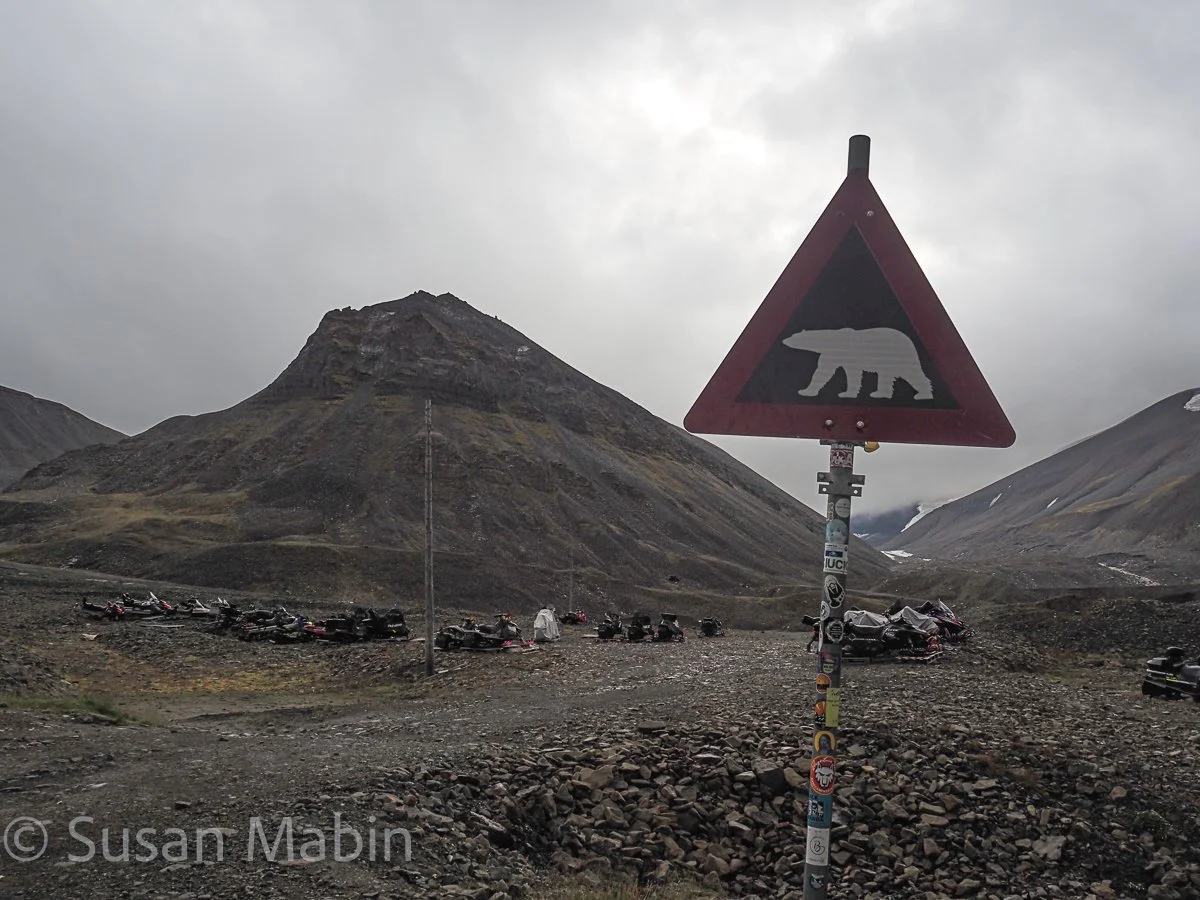
The polar bear signage at the edges of Longyearbyen town are there to indicate that, beyond these, it is polar bear territory and you should not go past these without a guide. The guides take a rifle and flare gun, along with their knowledge and skills, and one can always join guided walking trips with a tour group, to go beyond the signage.
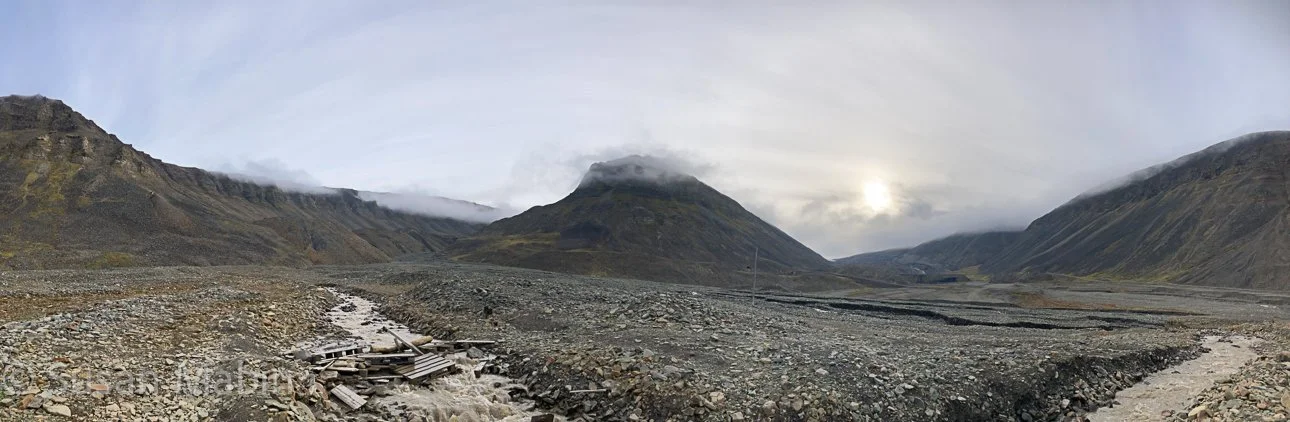
Looking up the valley from Nybyen (New town), just a short walk up from the residency buildings.
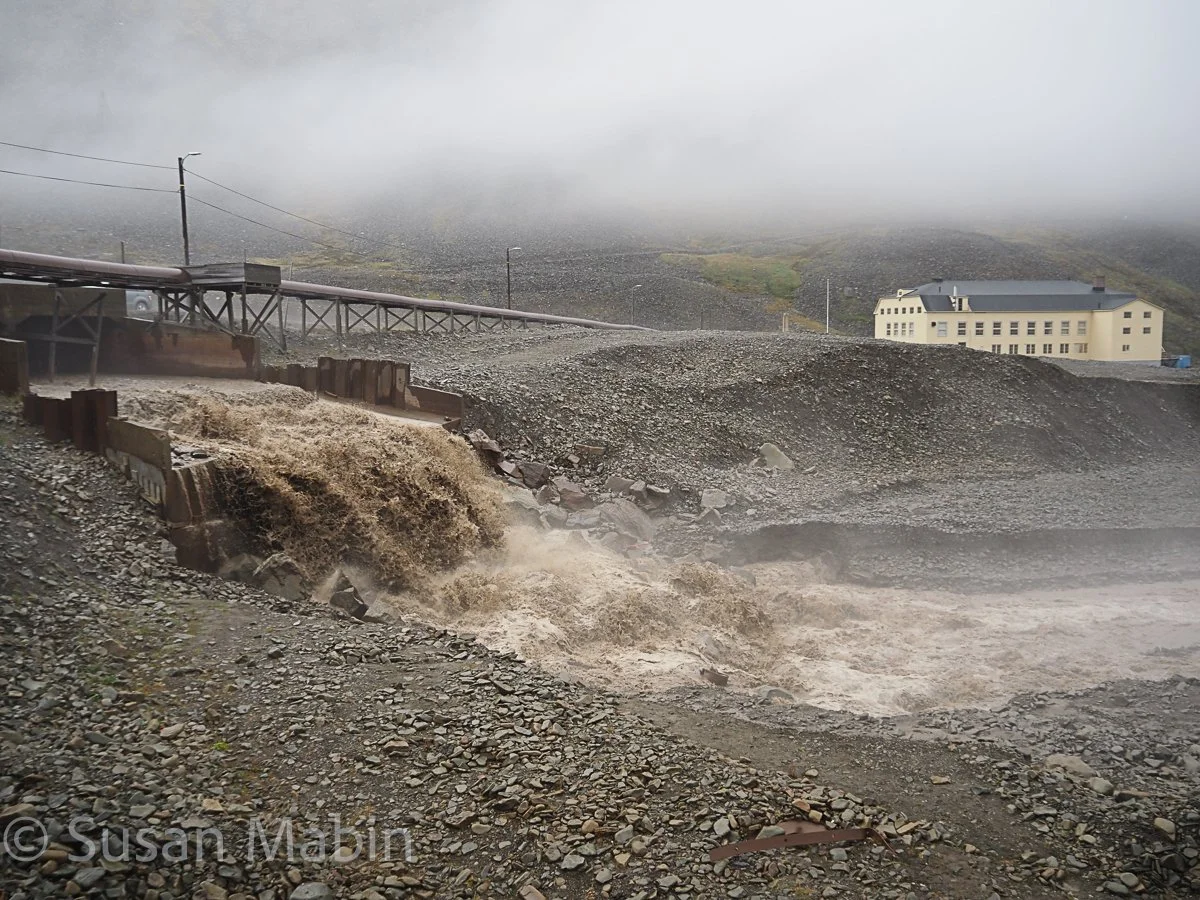
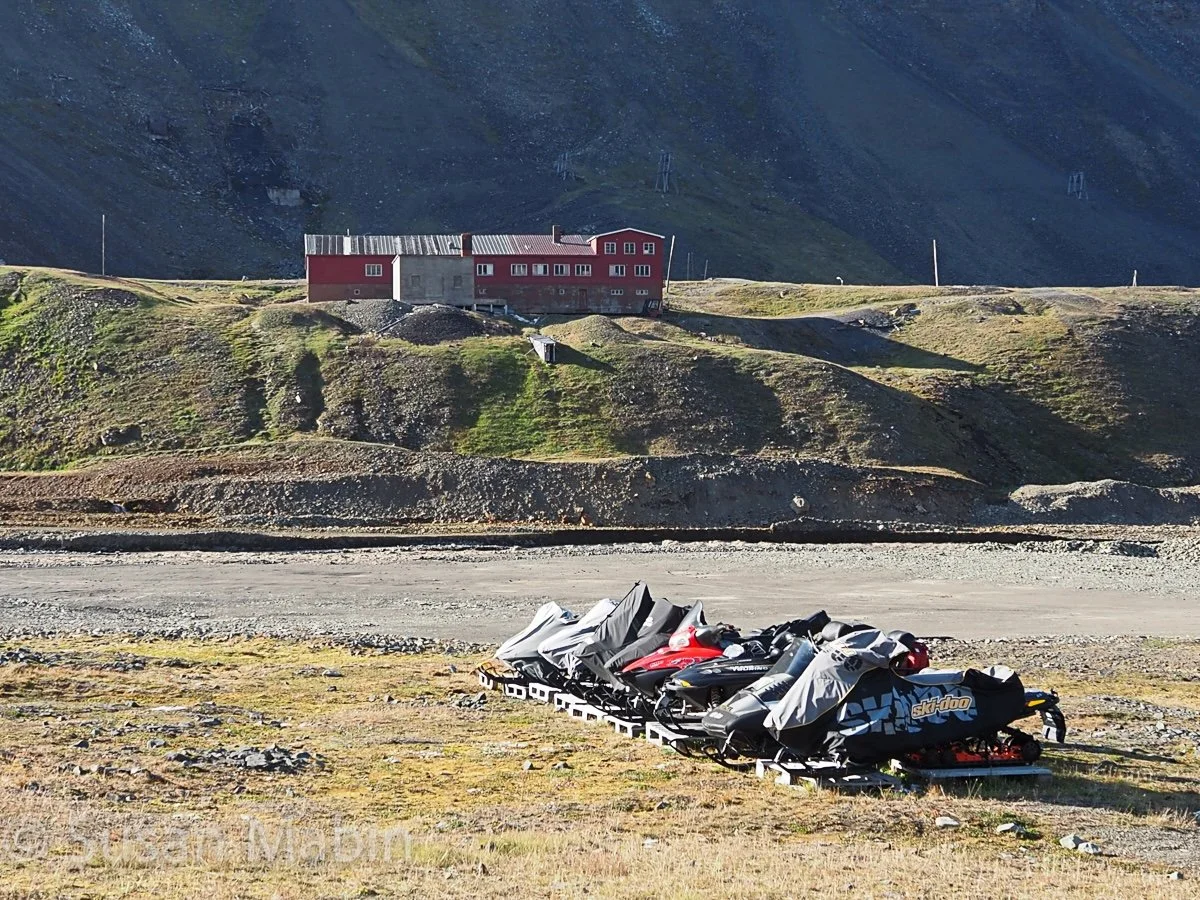
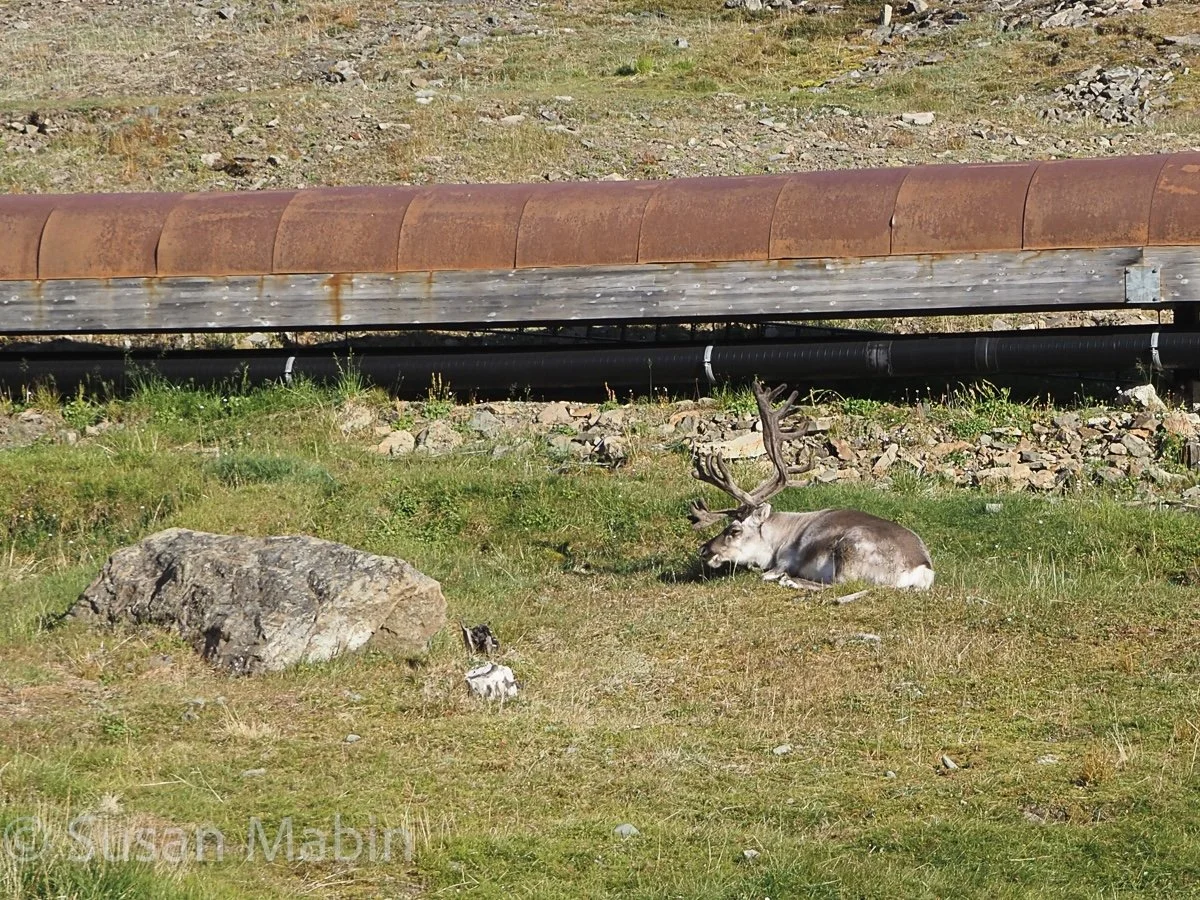
It was 24 hours of daylight and warm temperatures, sometimes up to 17 ° C. Climate change is amplified up in the Arctic and the summer of 2024 was a hot one. With the warming temperatures there is a lot more rain now, which increases the glacier melt, and the waterflow in the Longyear River Valley from the glaciers above it, fluctuated significantly in response to this.
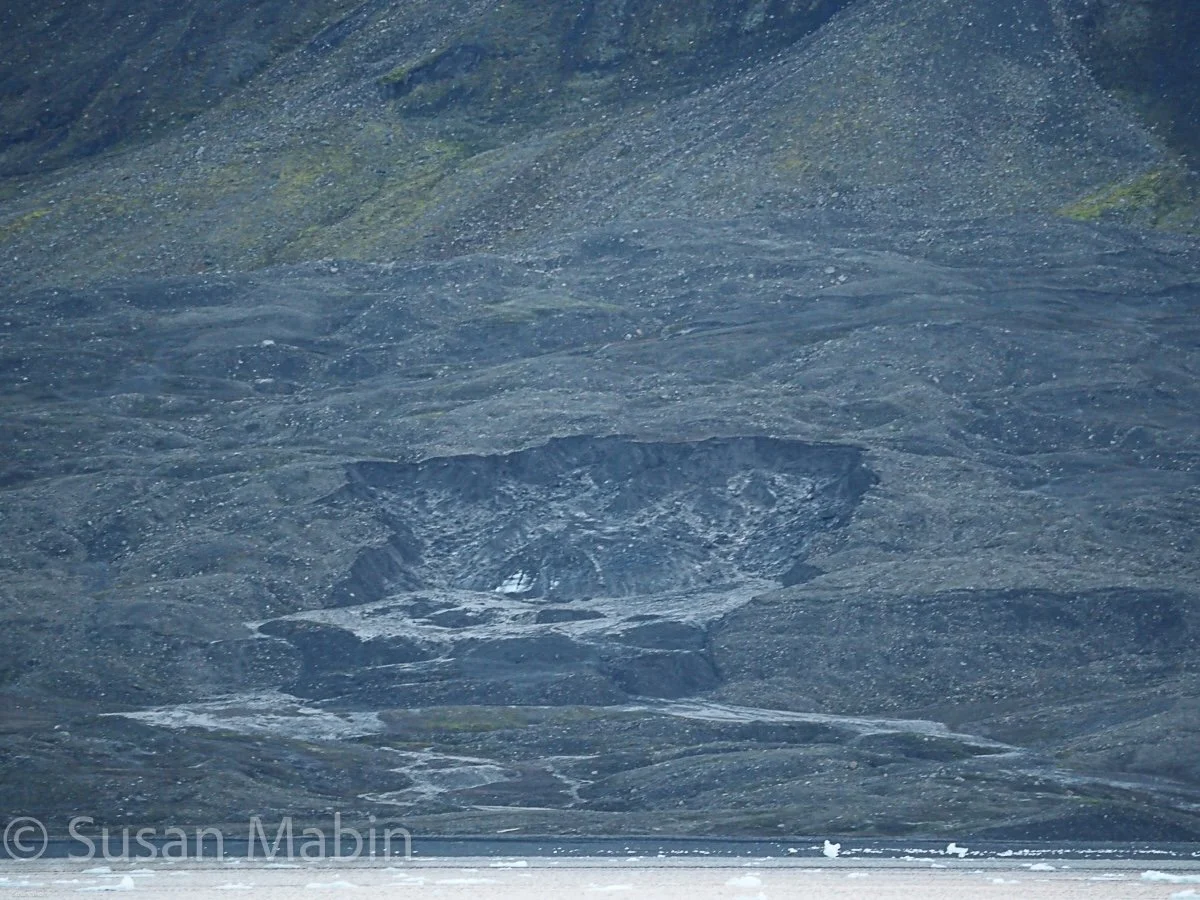
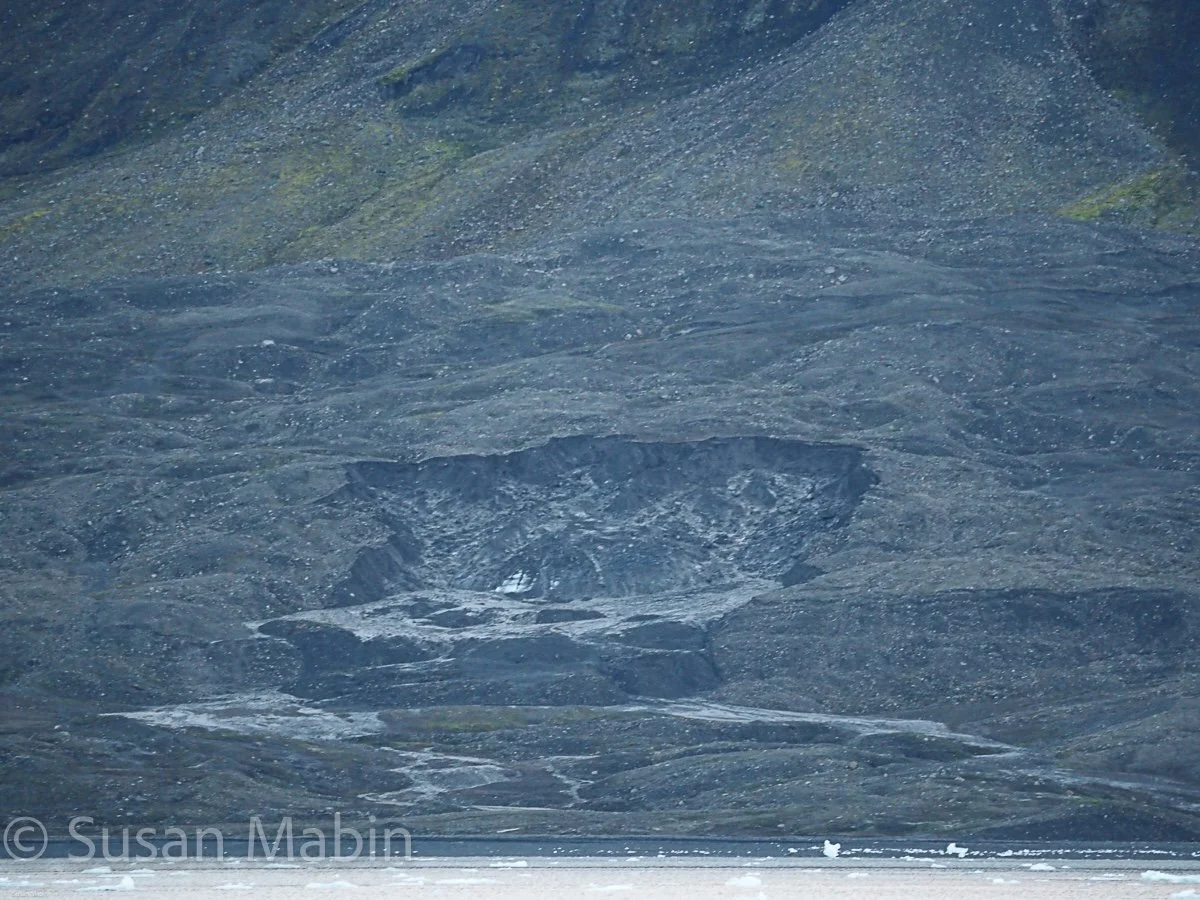
The permafrost is melting as well and more landslides are happening every summer. This photo below was taken from a boat trip to one of the glaciers.
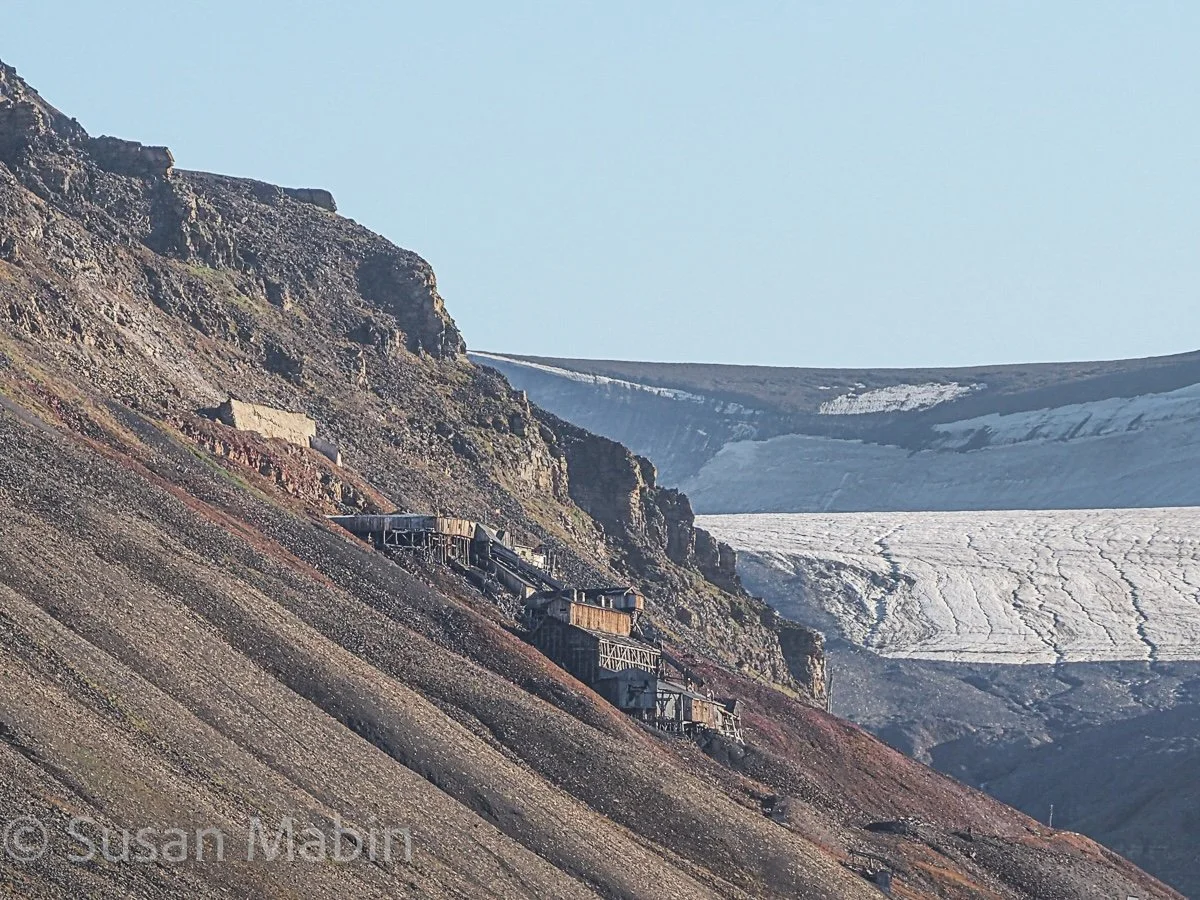
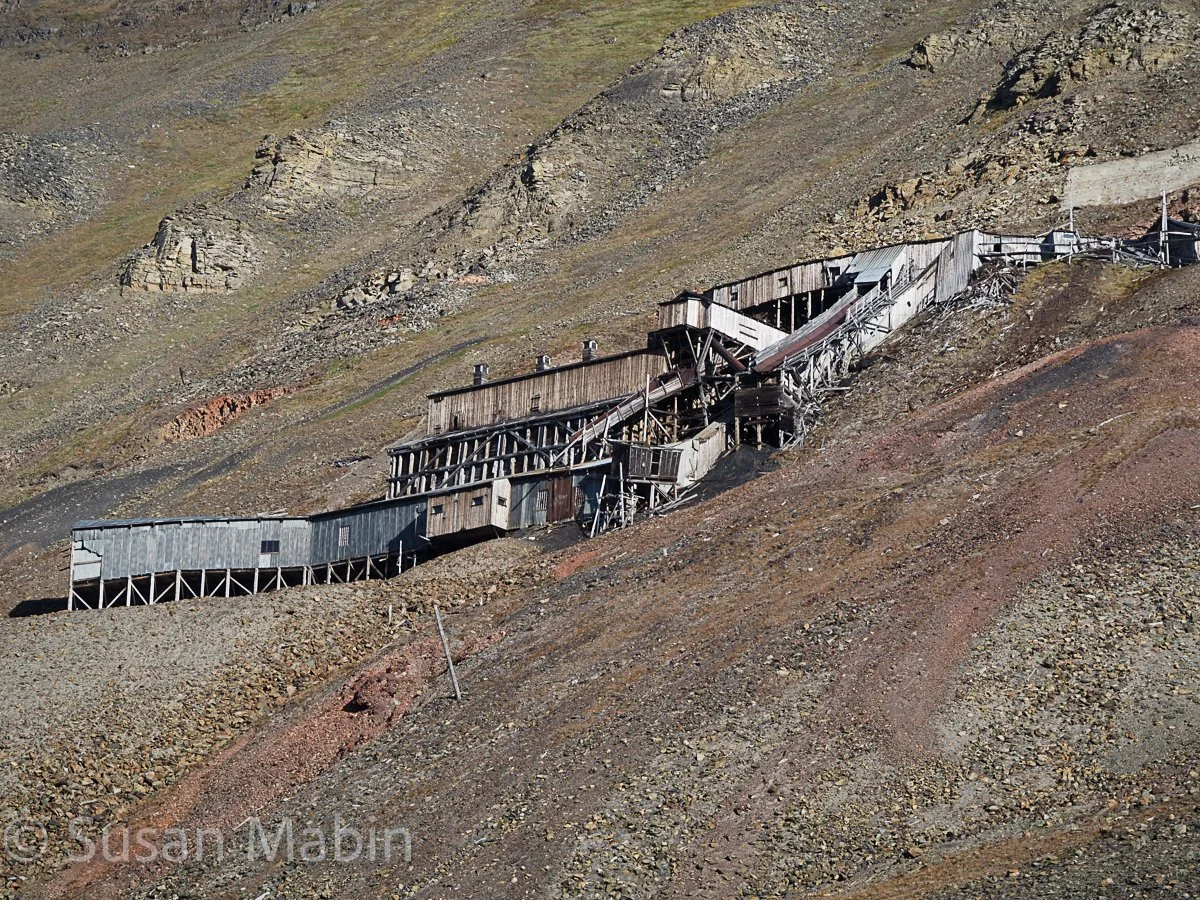
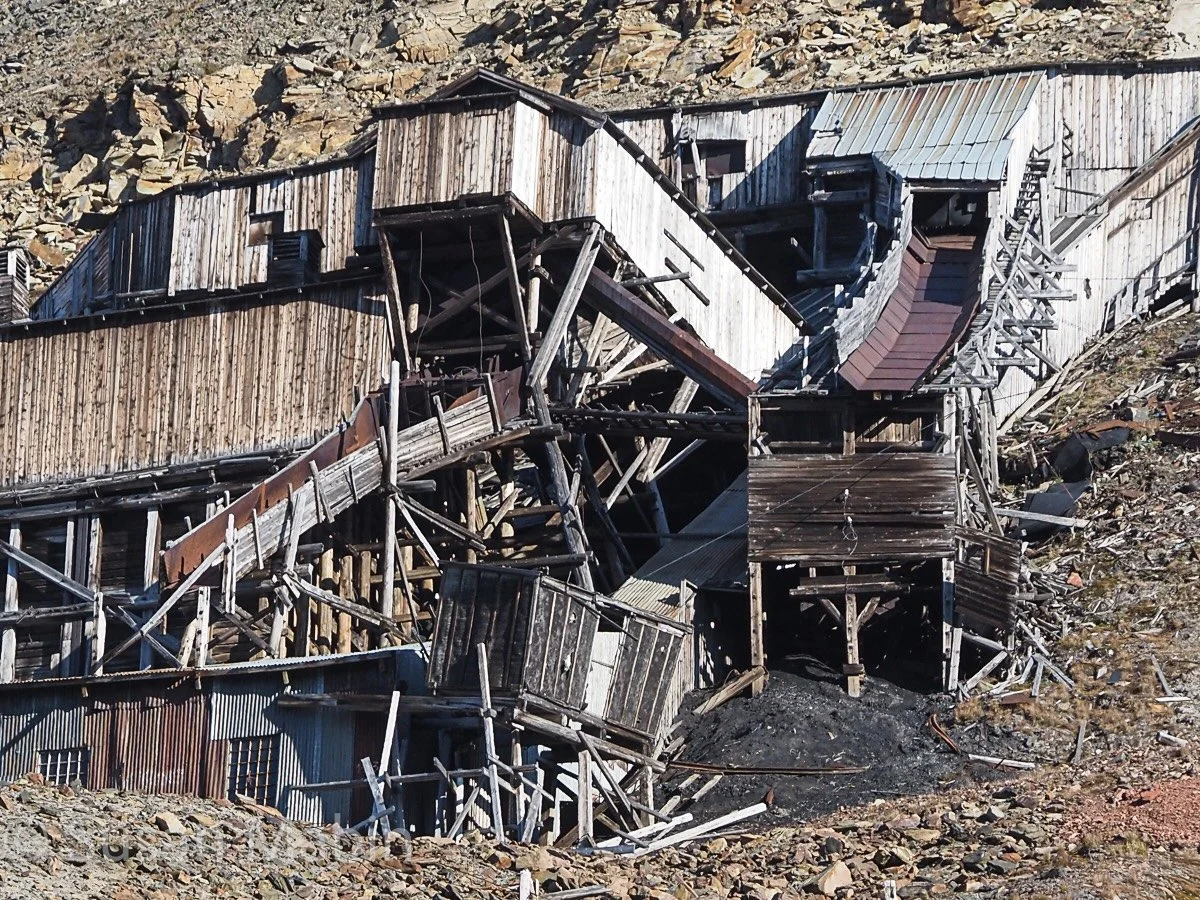
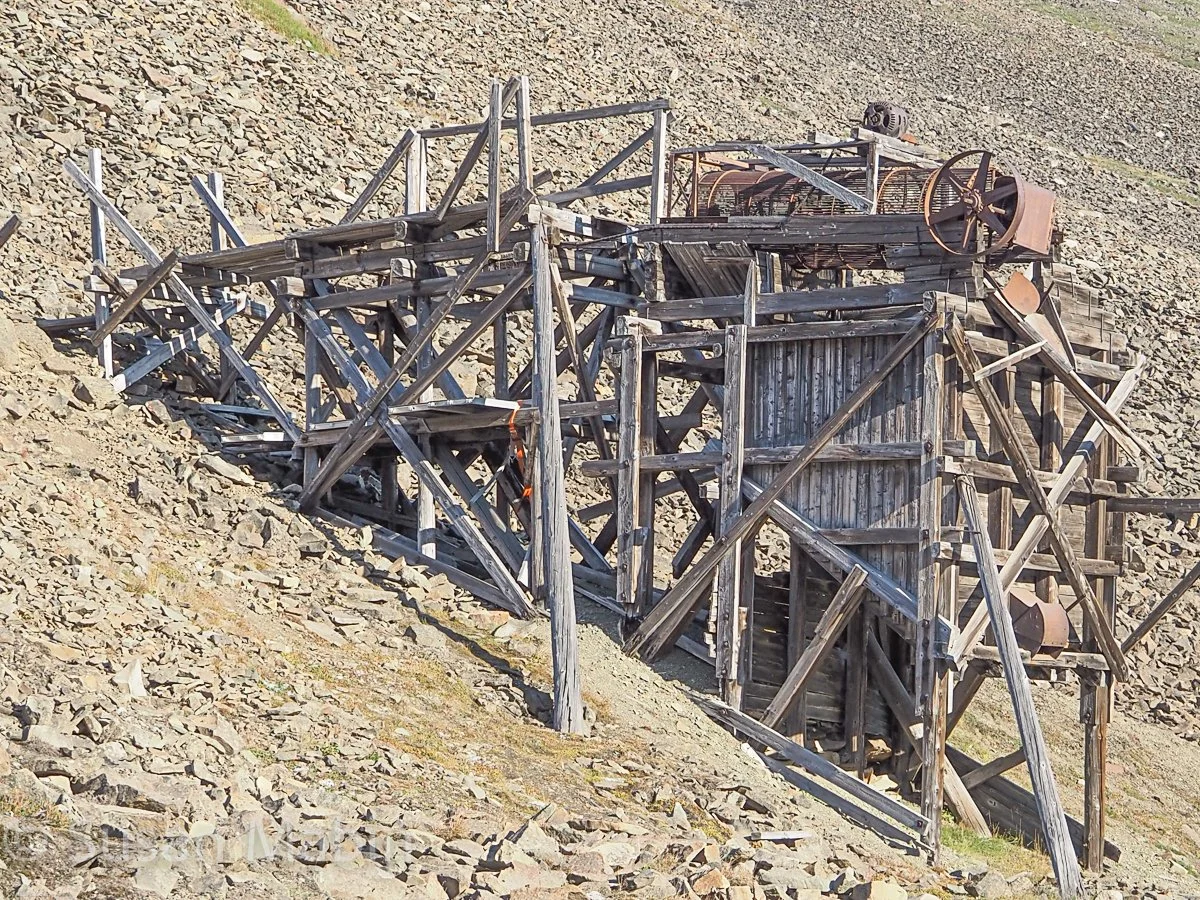
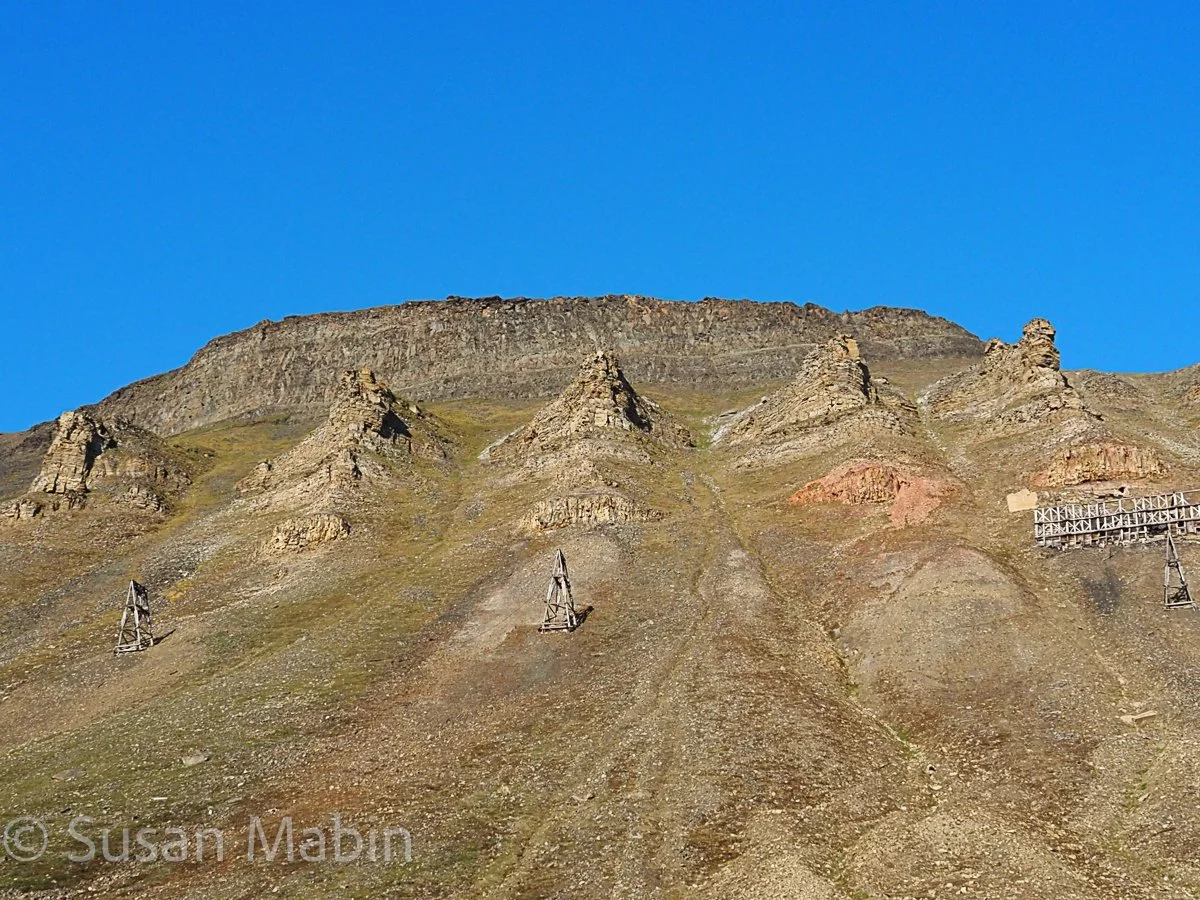
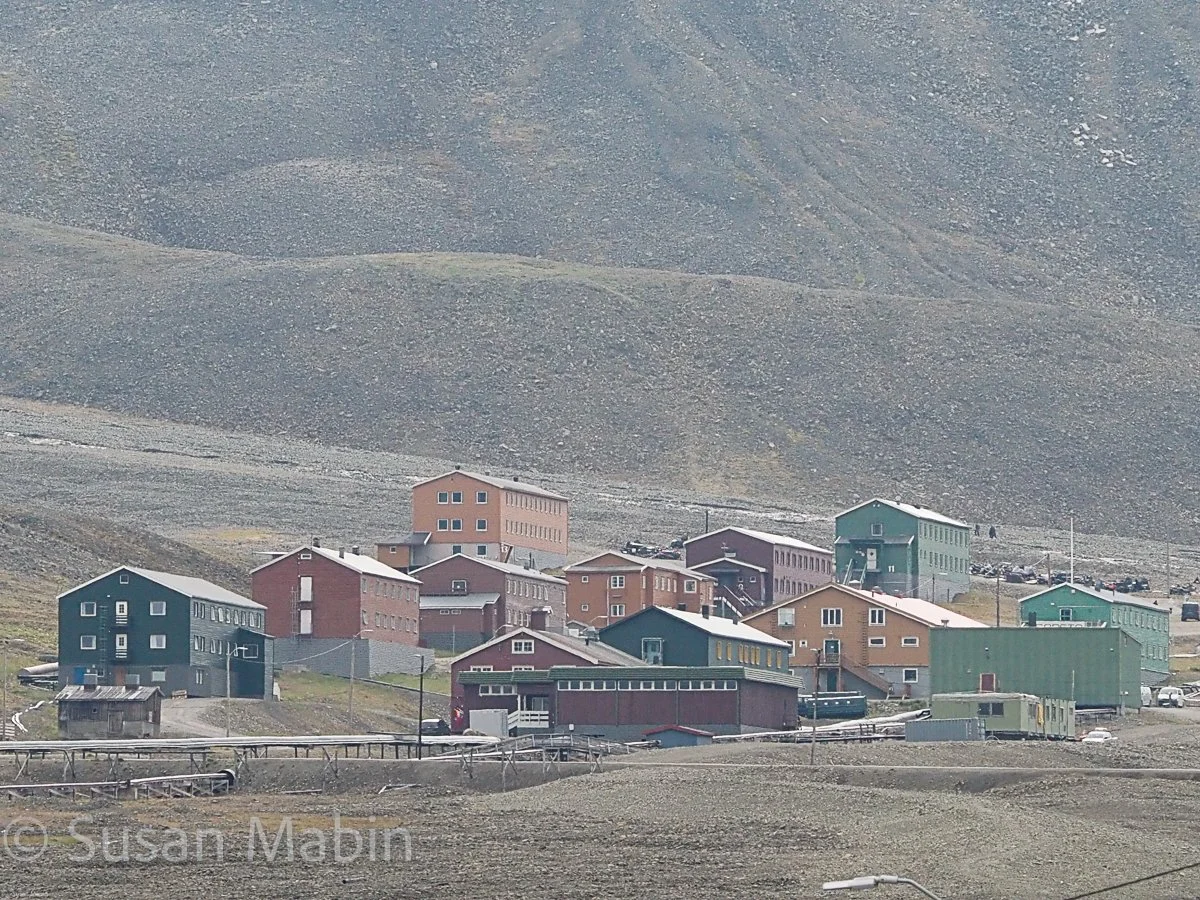
Longyearbyen town was founded in 1906 as a coal-mining town.
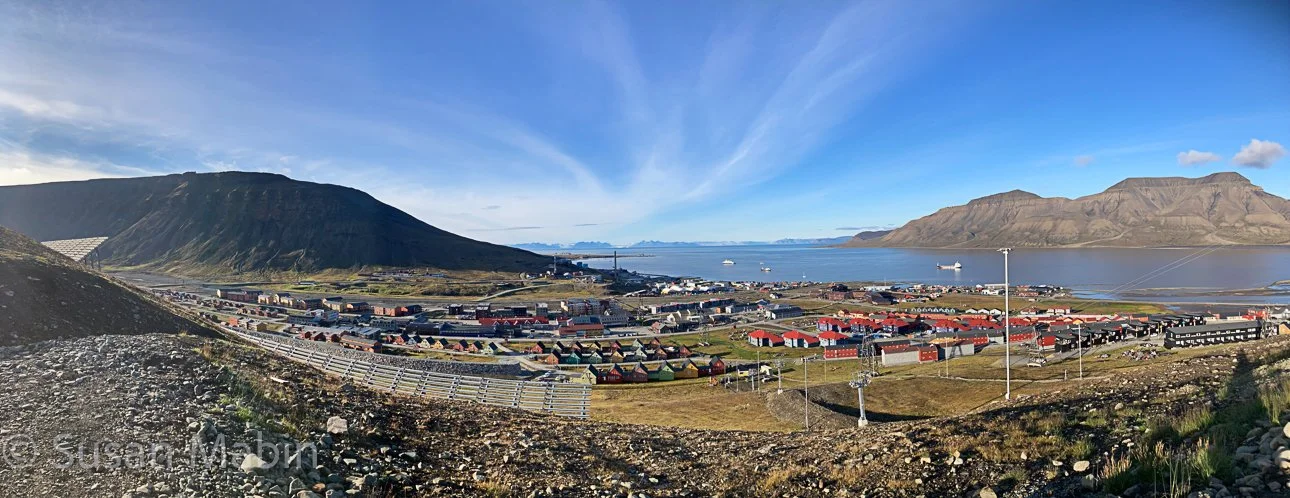
Longyearbyen town
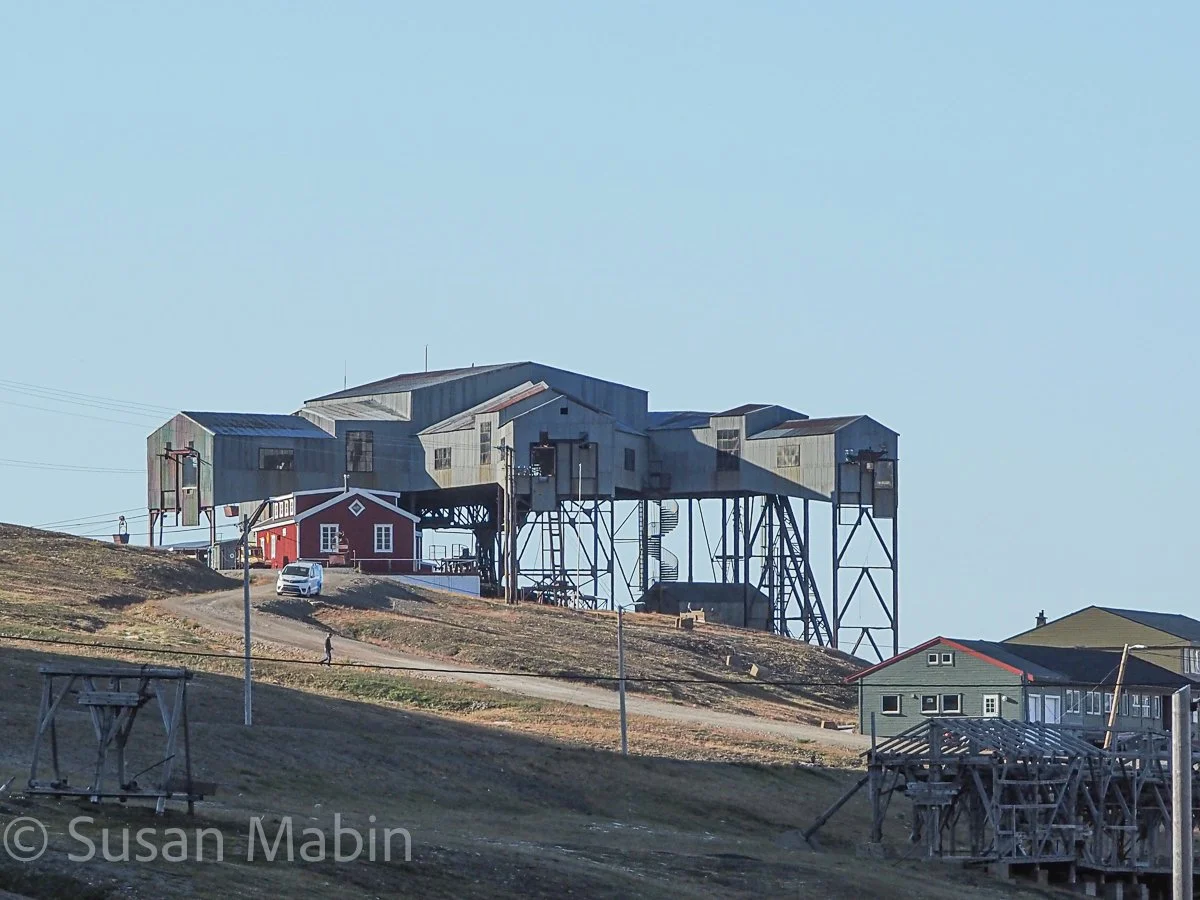
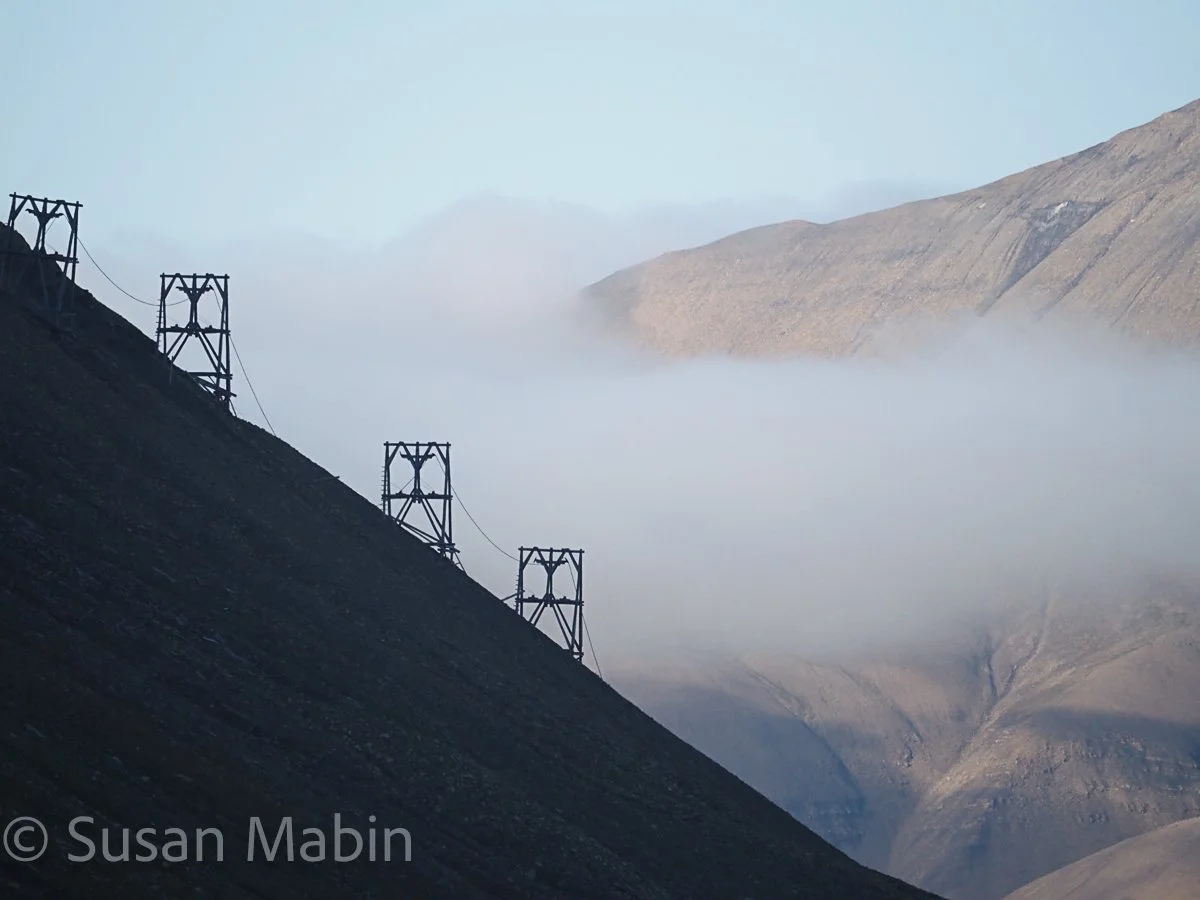
The coal mining structures and remains are considered cultural heritage sites and as such are protected. When I was there, only one Norwegian mine was still active which was scheduled to close in 2025. Arctic Scientific Research and tourism are now the predominant industries in the region. Svalbard is being marketed as a sustainable tourist destination, which I find as ironic as the taxidermy polar bear on the arrivals baggage carousel.
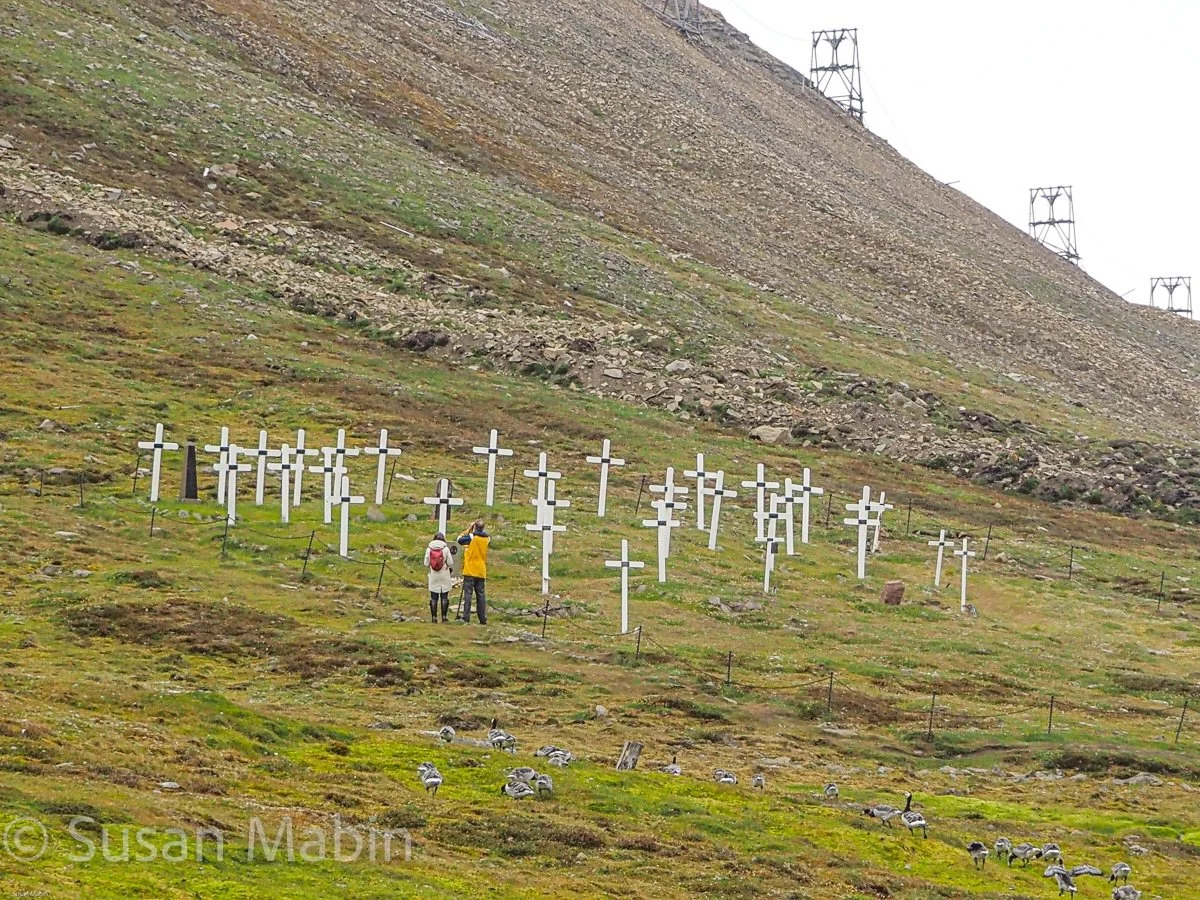
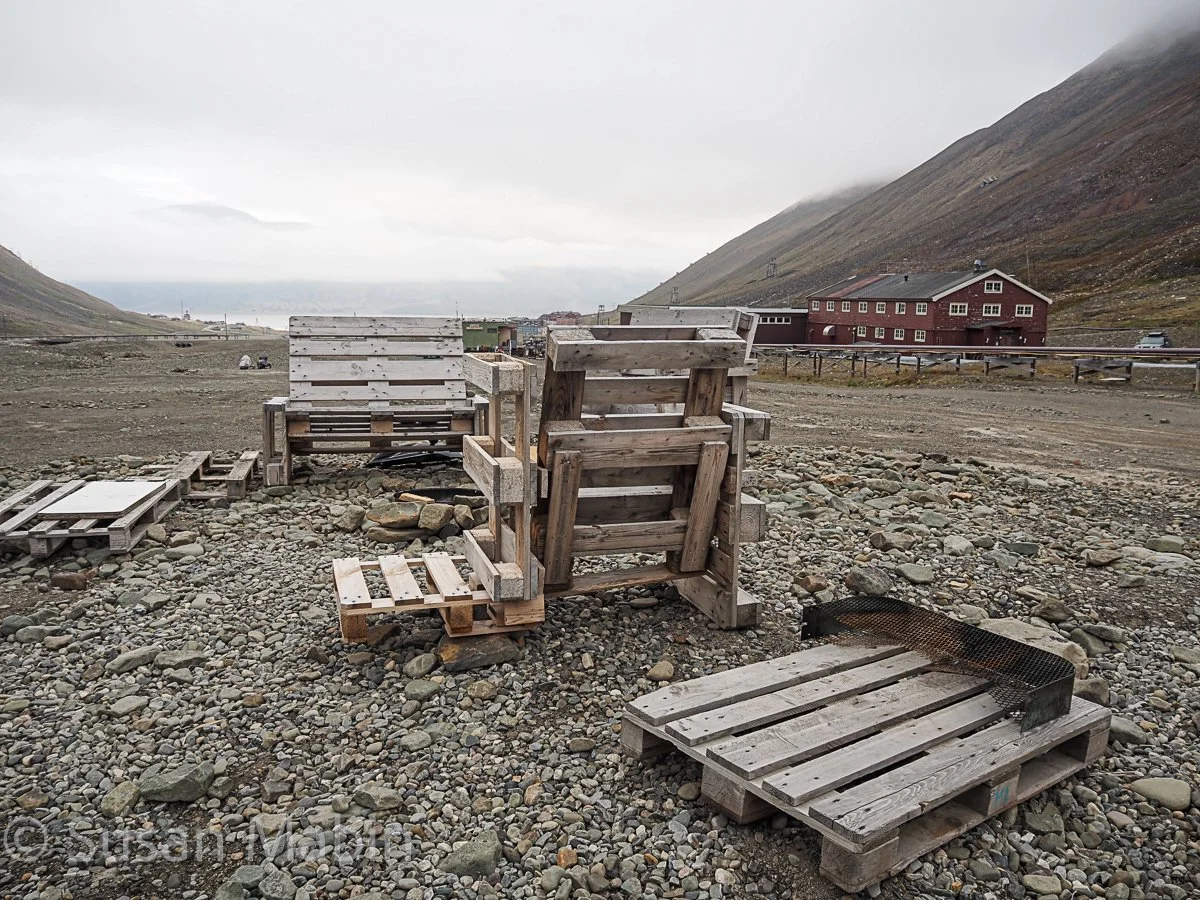
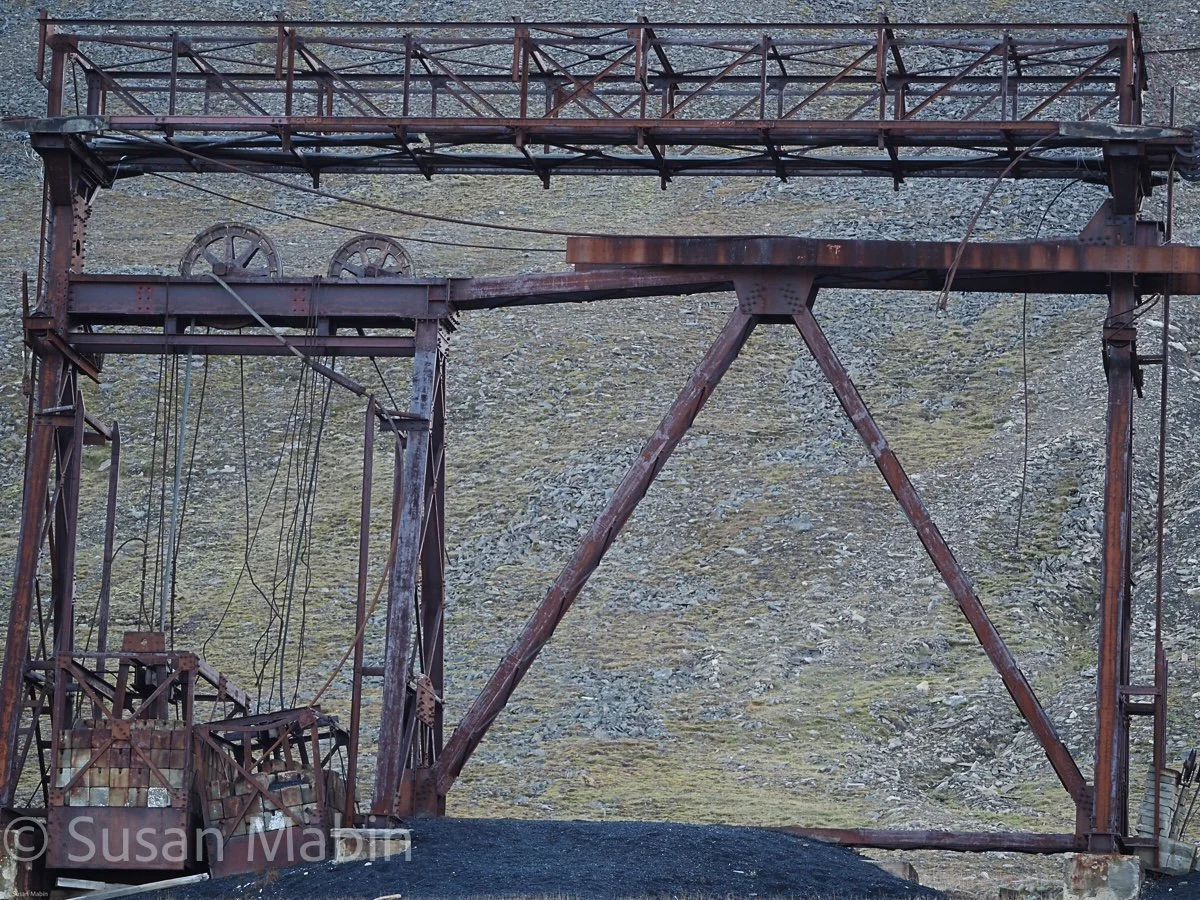
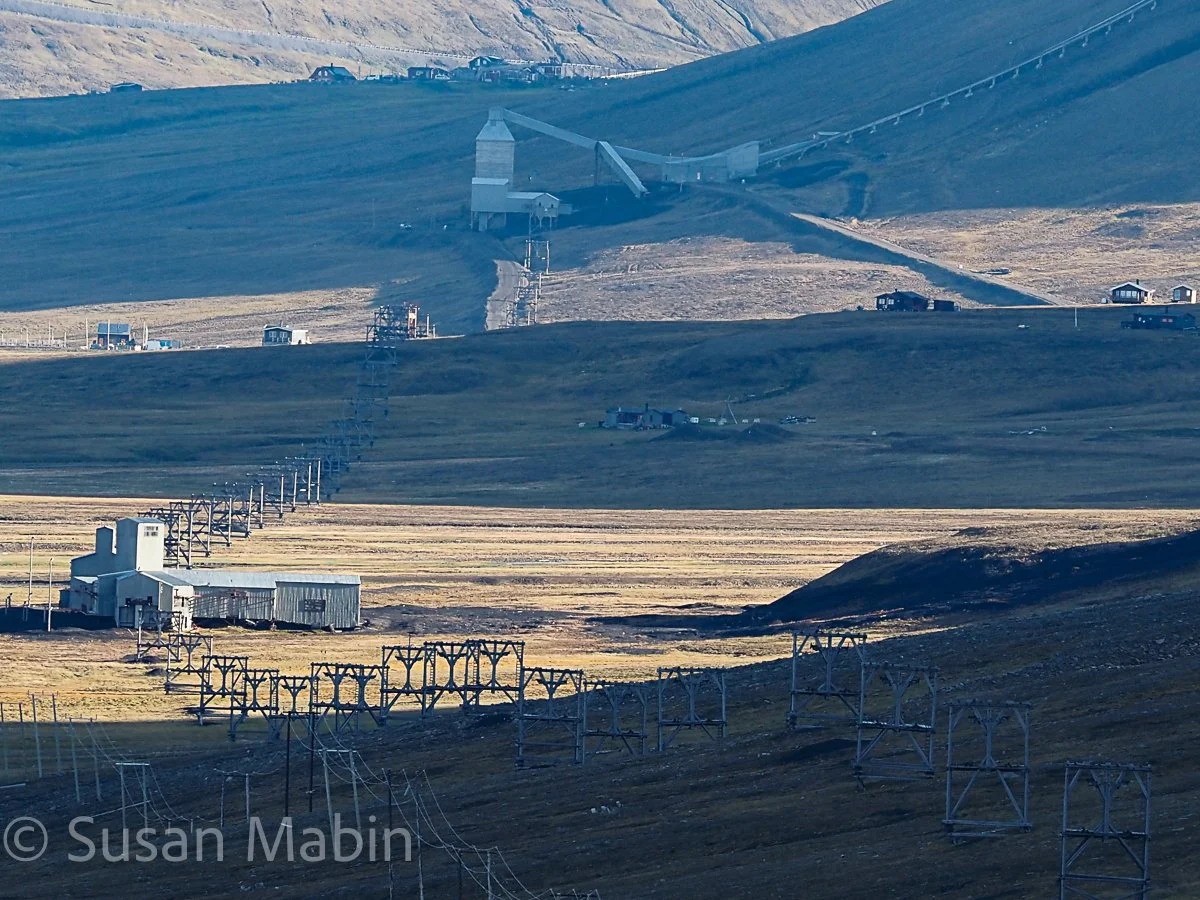
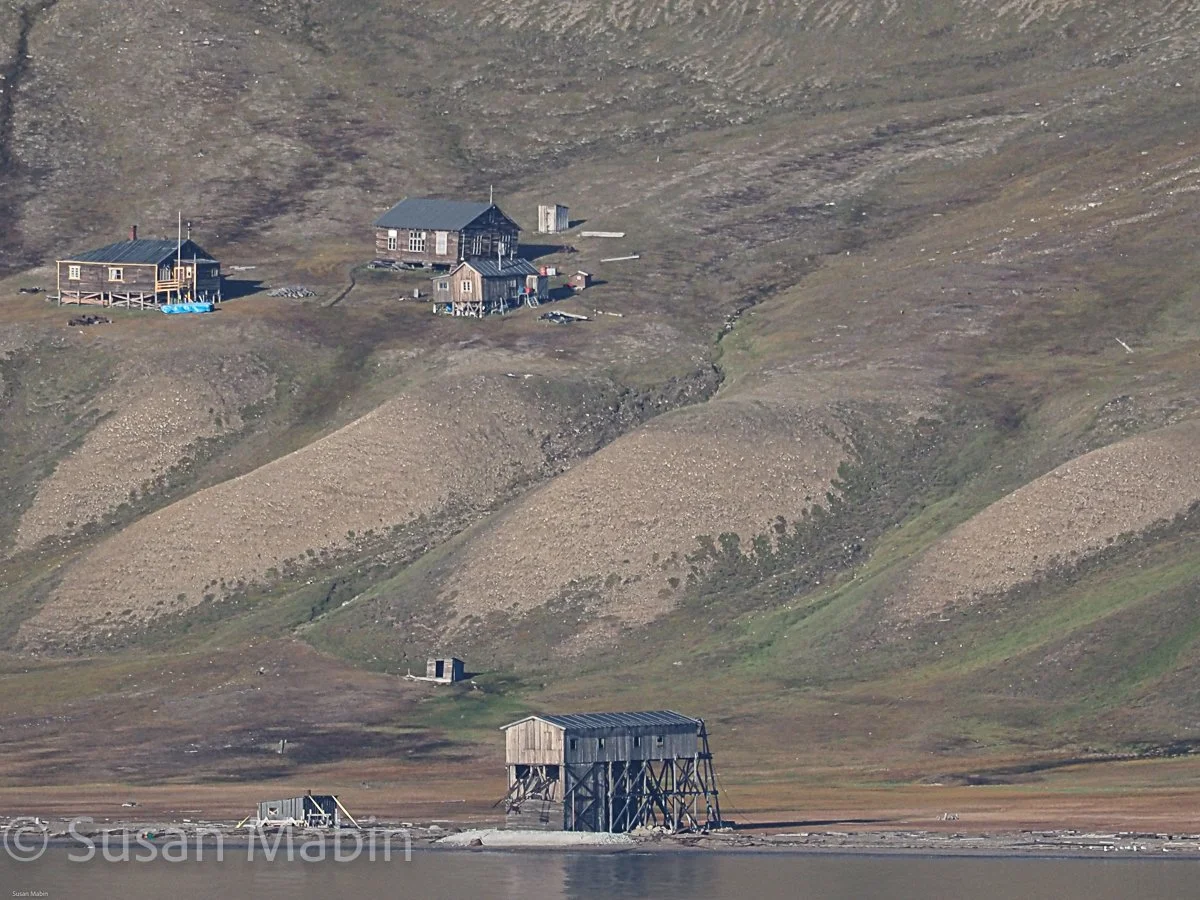
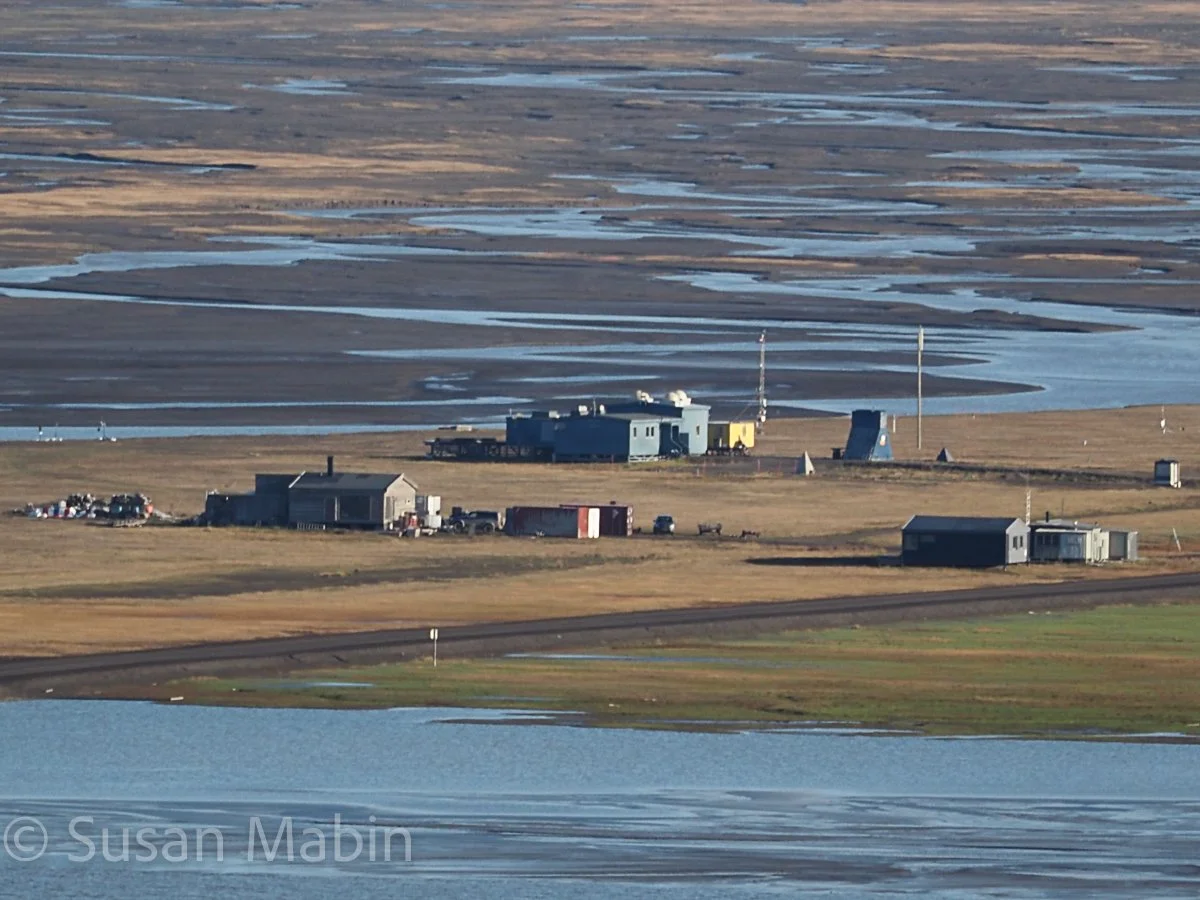
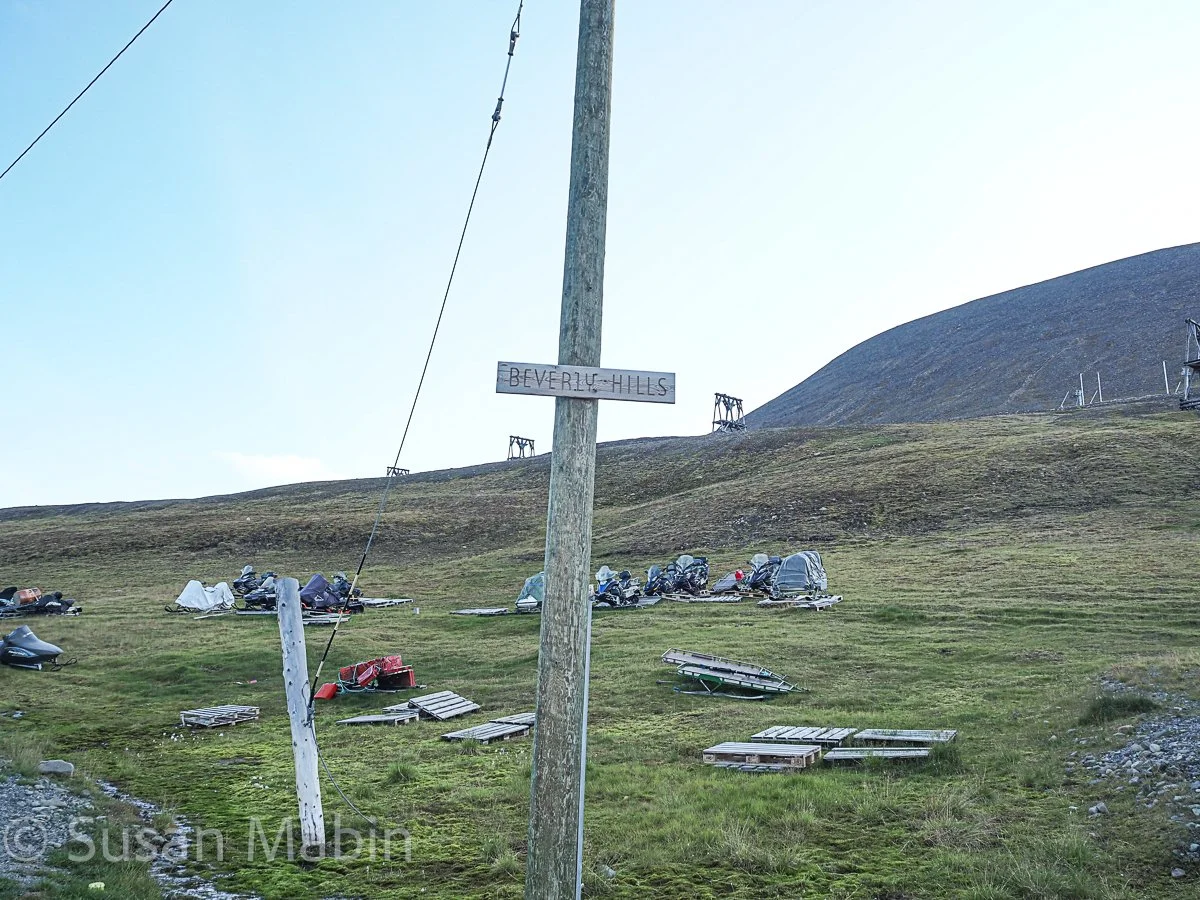
One of the tourism companies (Henningsens) offered artists on the residency a discount for their boat tours and I was lucky enough to be able to go on three of these. These trips were the highlights for me as it was an opportunity to see more of Svalbard, than within the polar bear signage, and experience seeing and being close to some big glaciers.
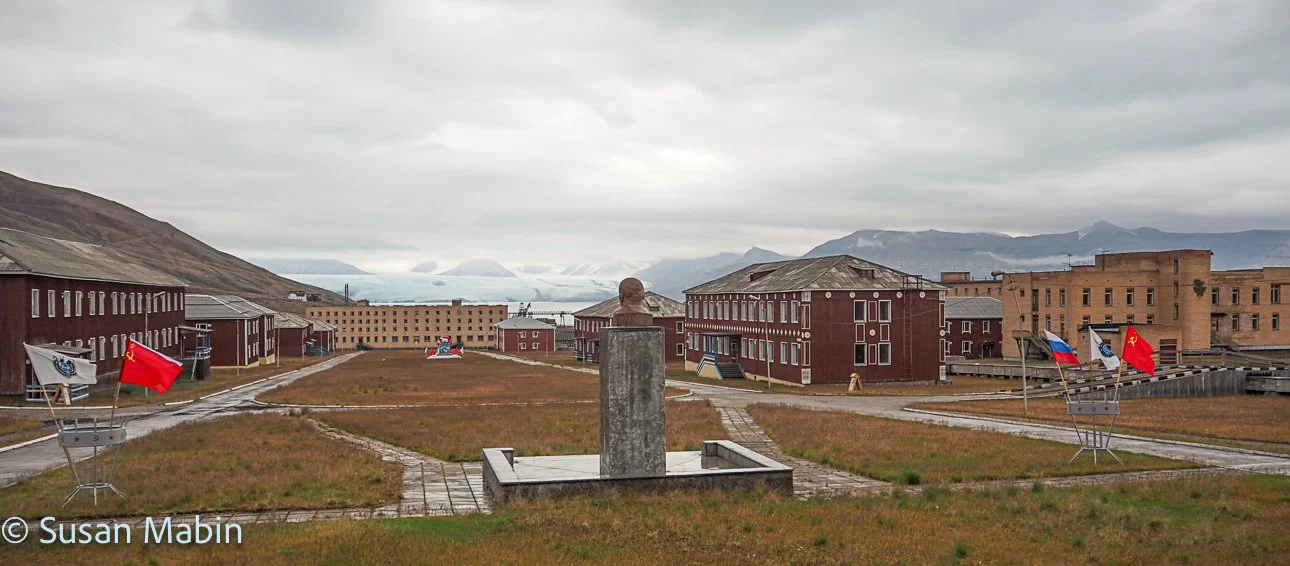
My first boat trip was to Billefjorden, the Nordenskiöld Glacier and Pyramiden, a Russian town that had once been a coalmining town, at 78.4°N, that had been abandoned in the 1990s. I think a few people do stay in Pyramiden all year round, and there were guides who gave us a speedy tour around some of the interiors of the abandoned buildings, giving a fascinating glimpse into past lives and architecture of the Russian people that had lived there.
A Lenin bust that does not appear to be decaying at the same pace as the buildings presides over the abandoned town with a view beyond these, to the glacier.
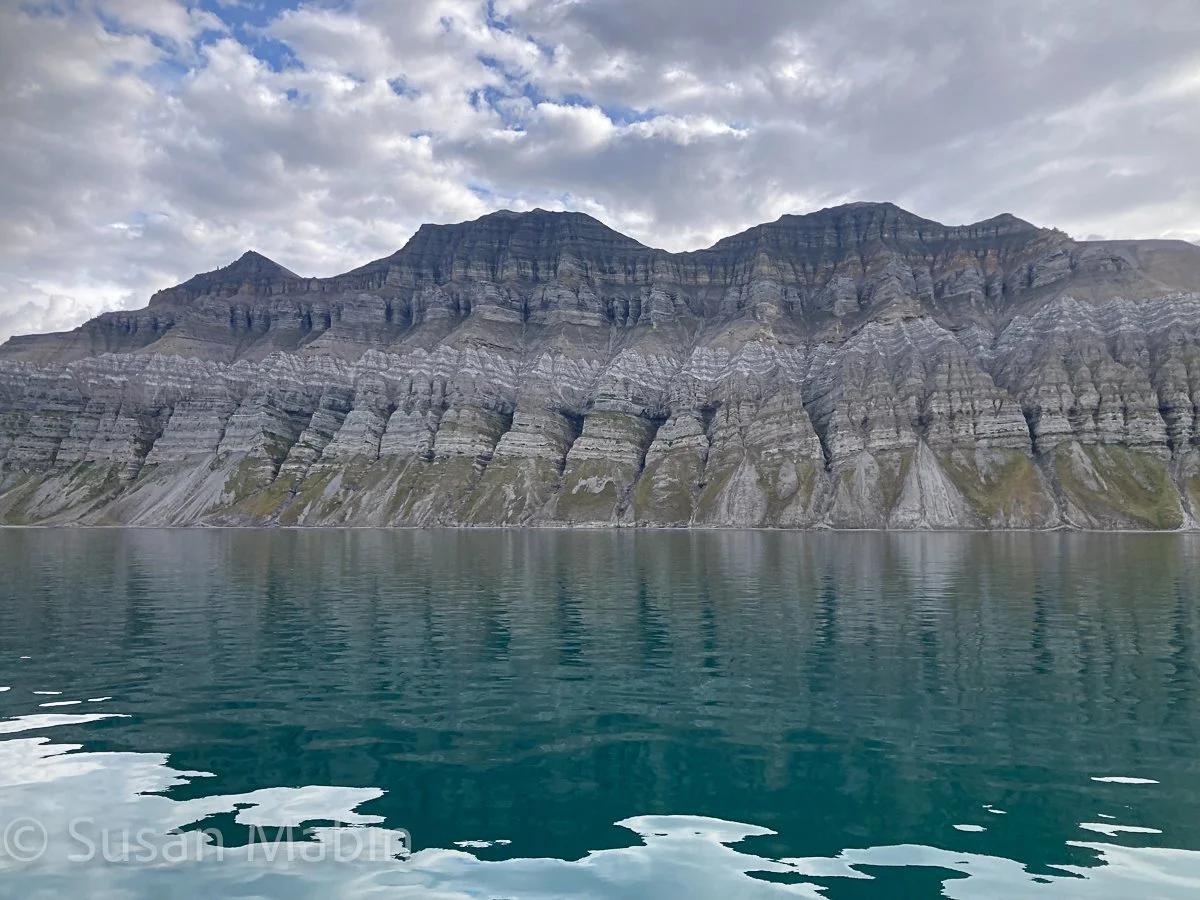
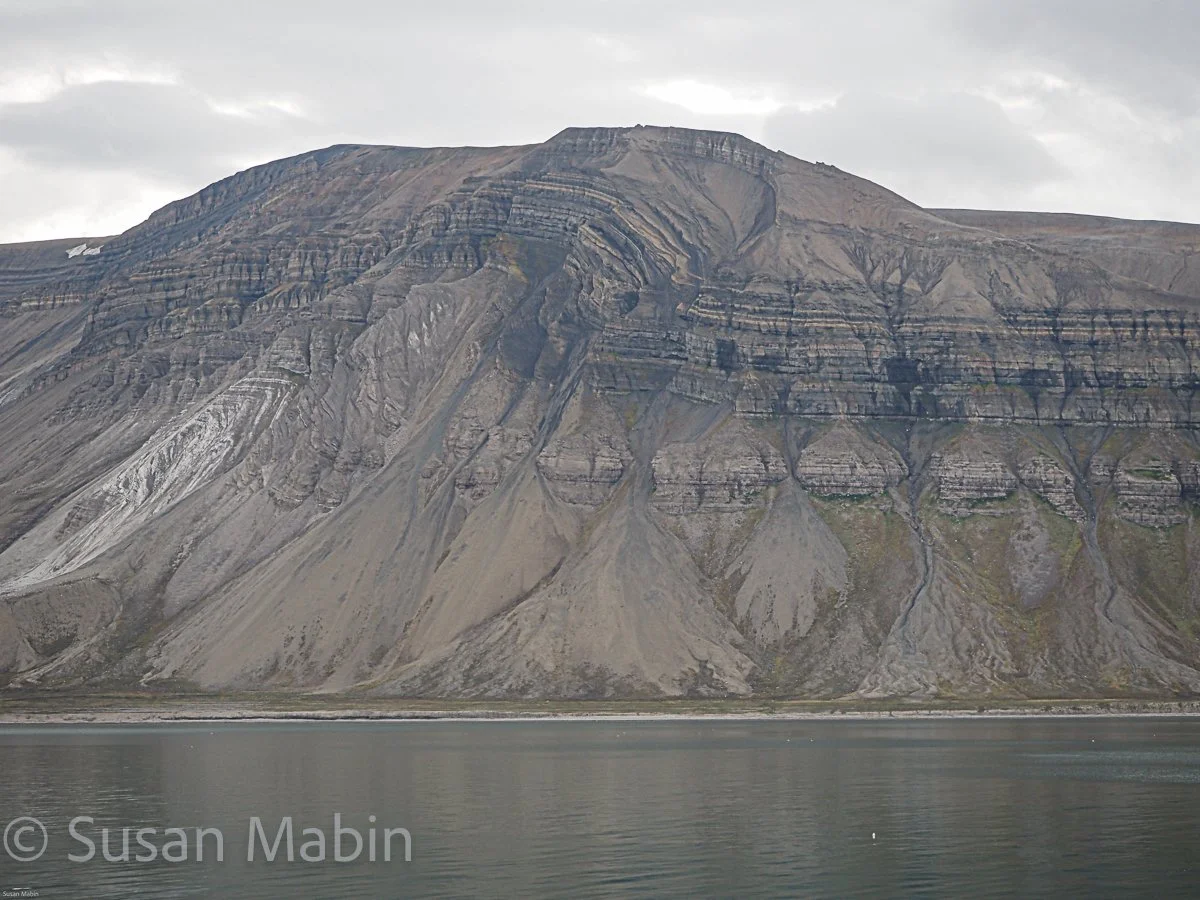
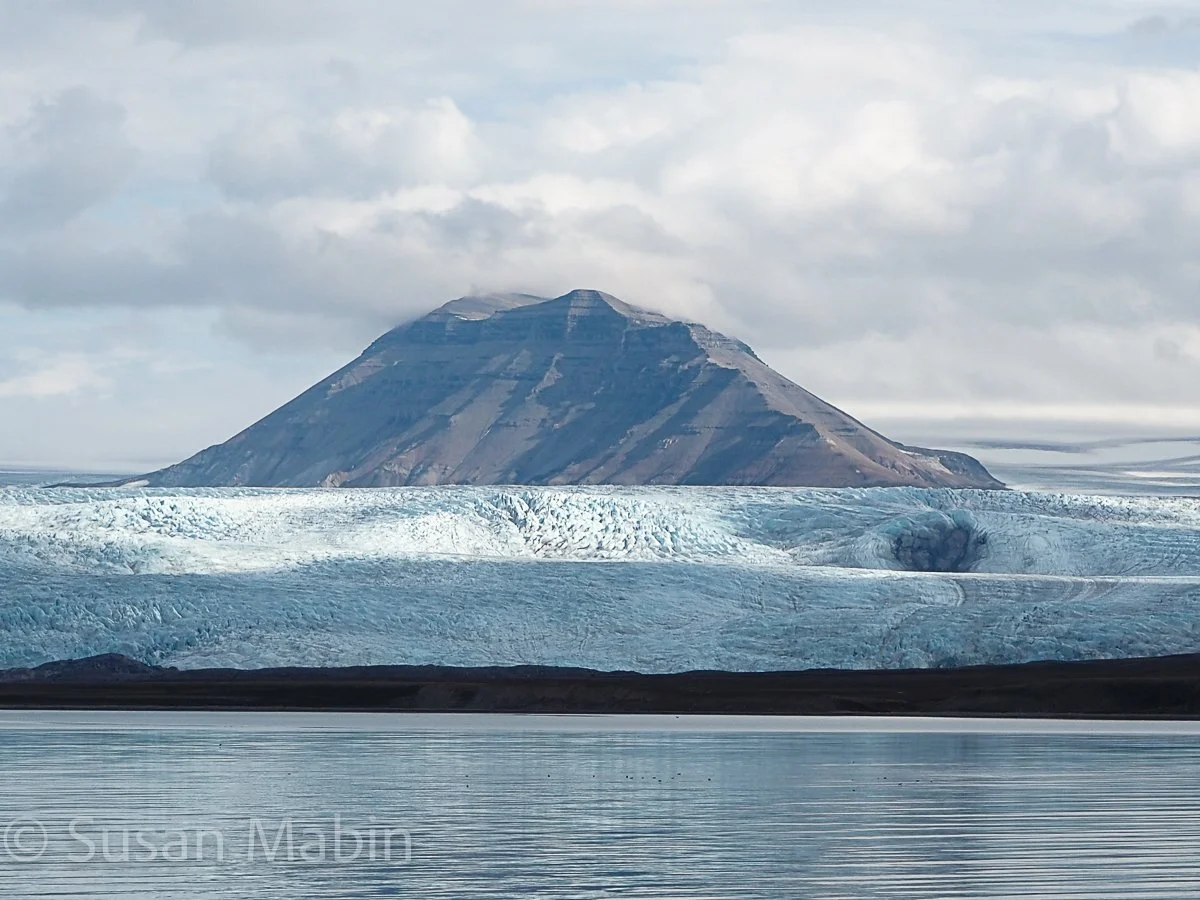
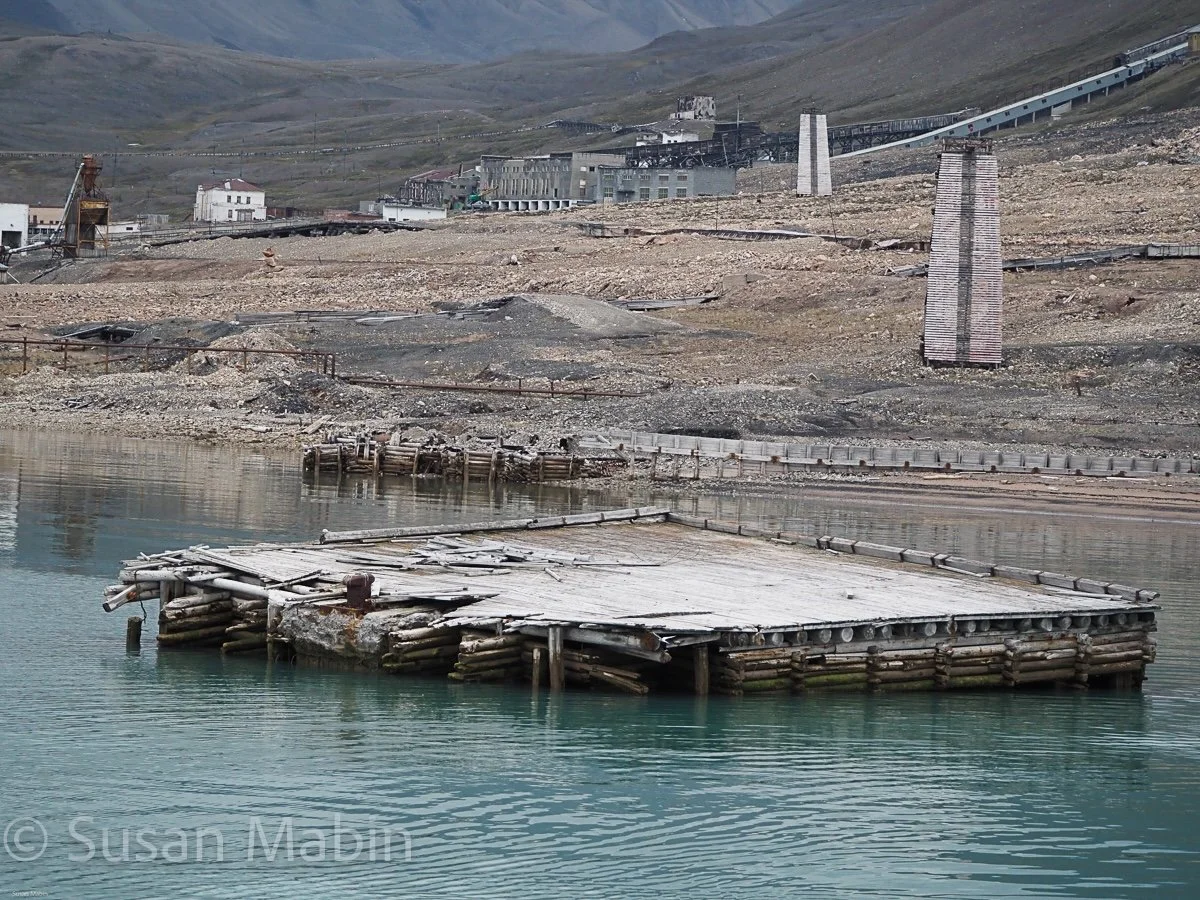
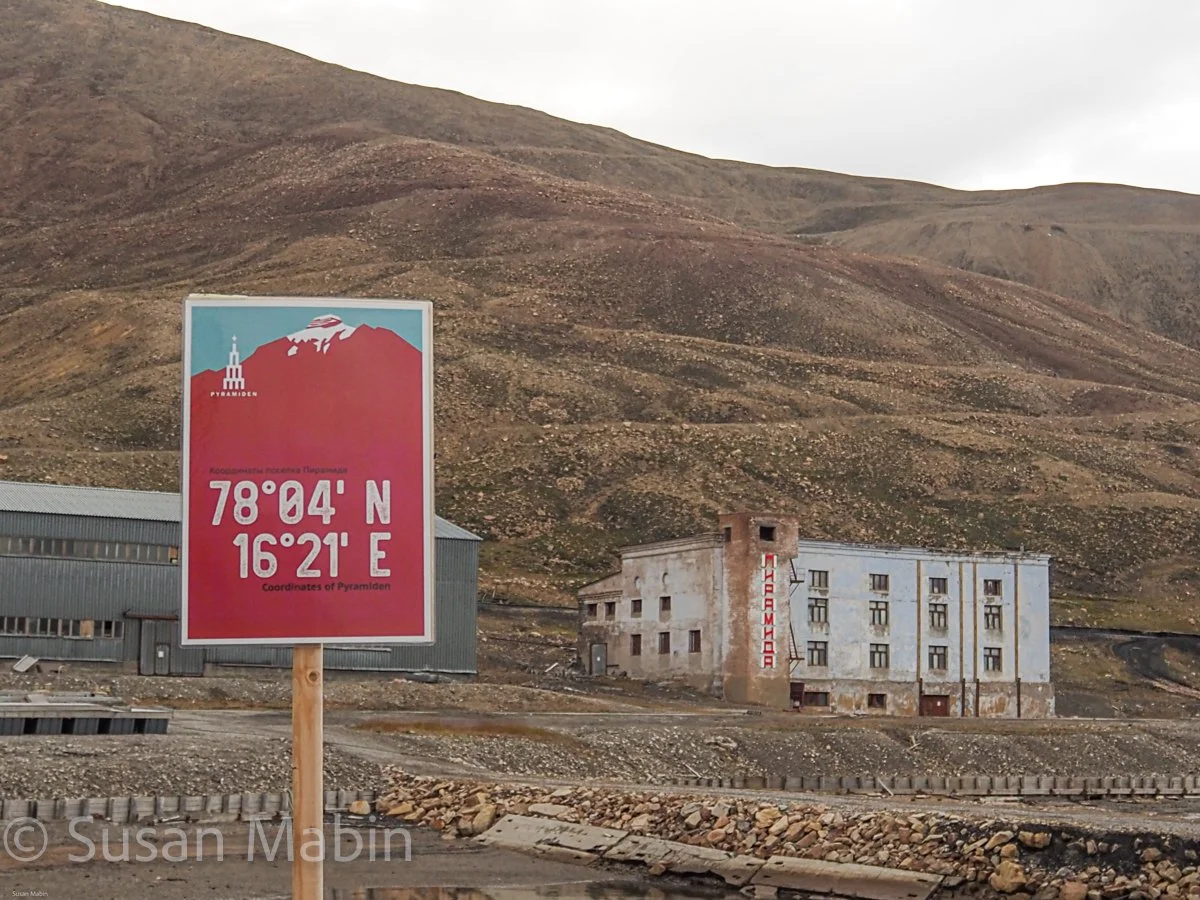
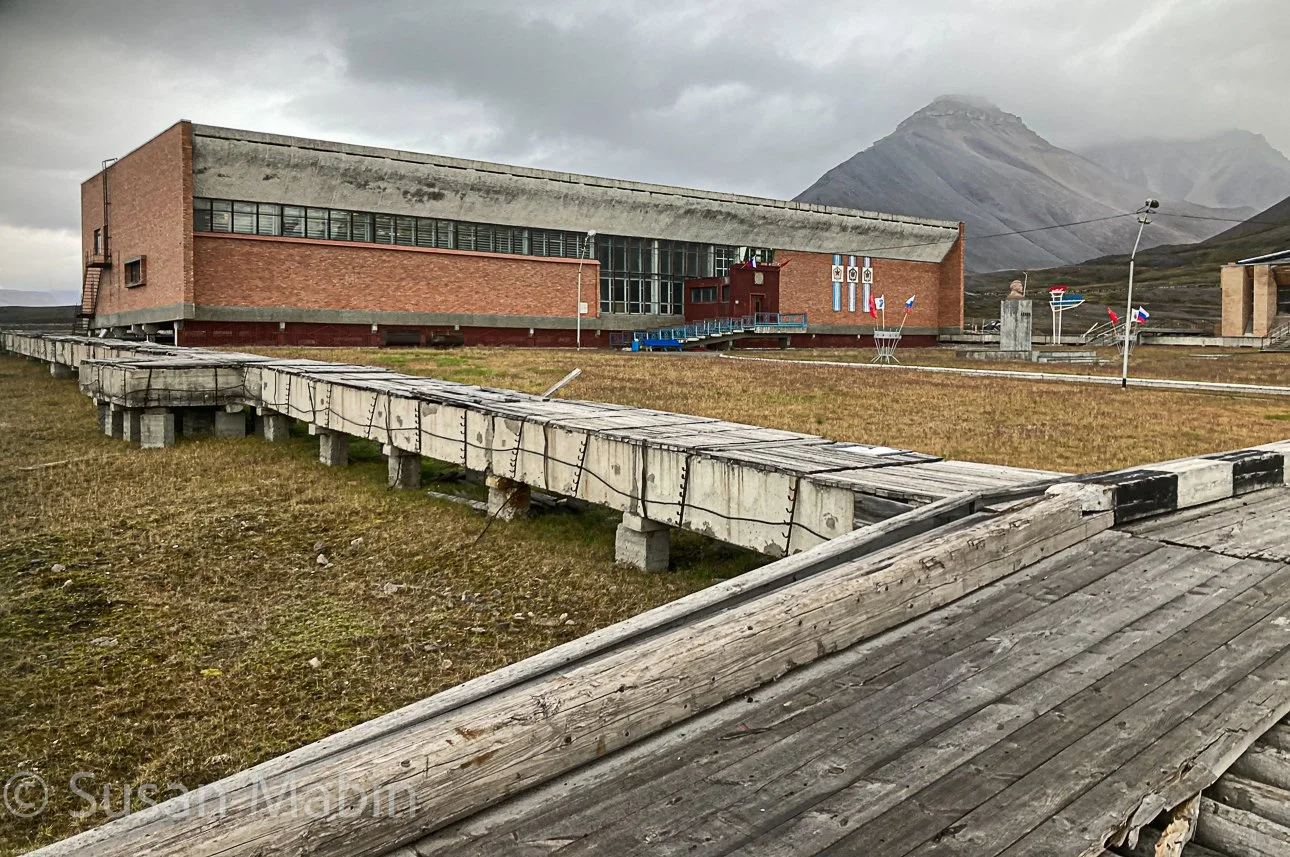
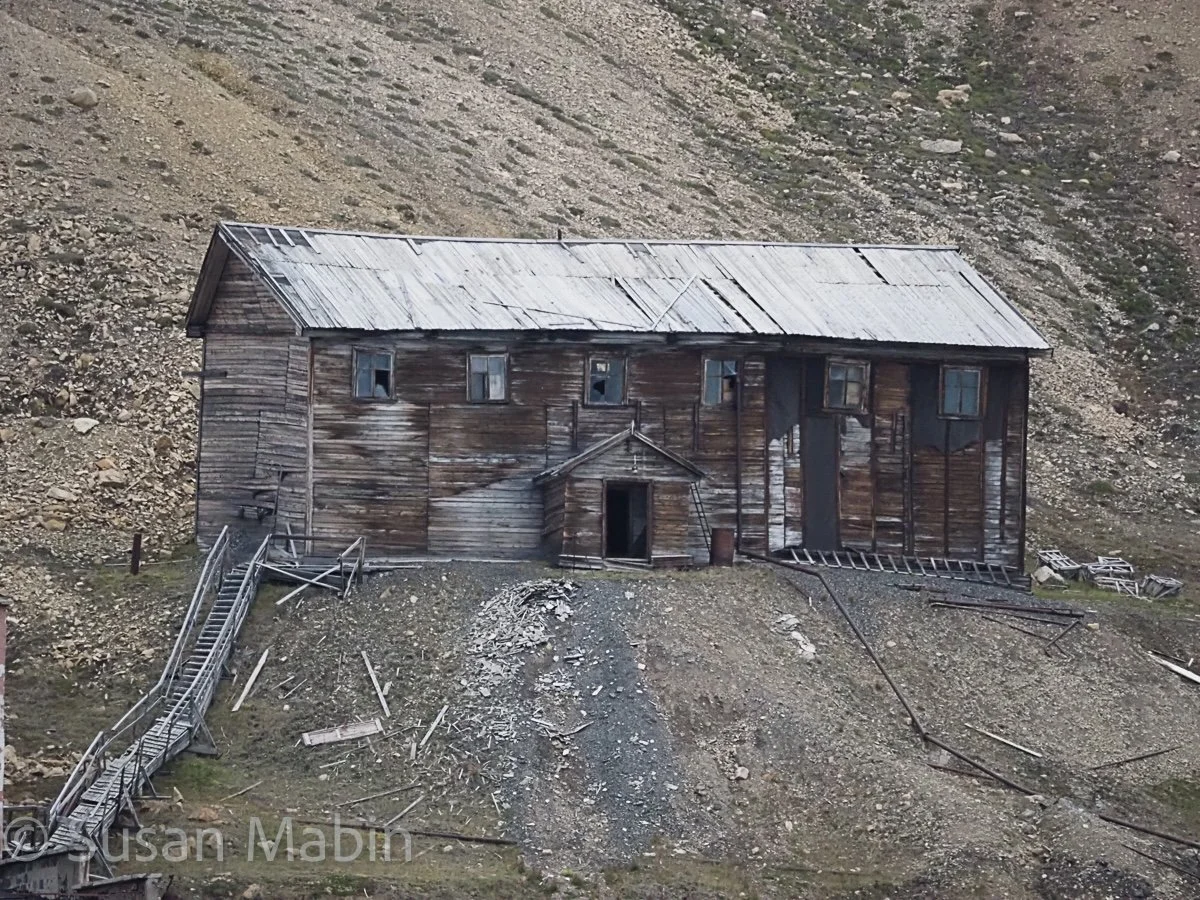
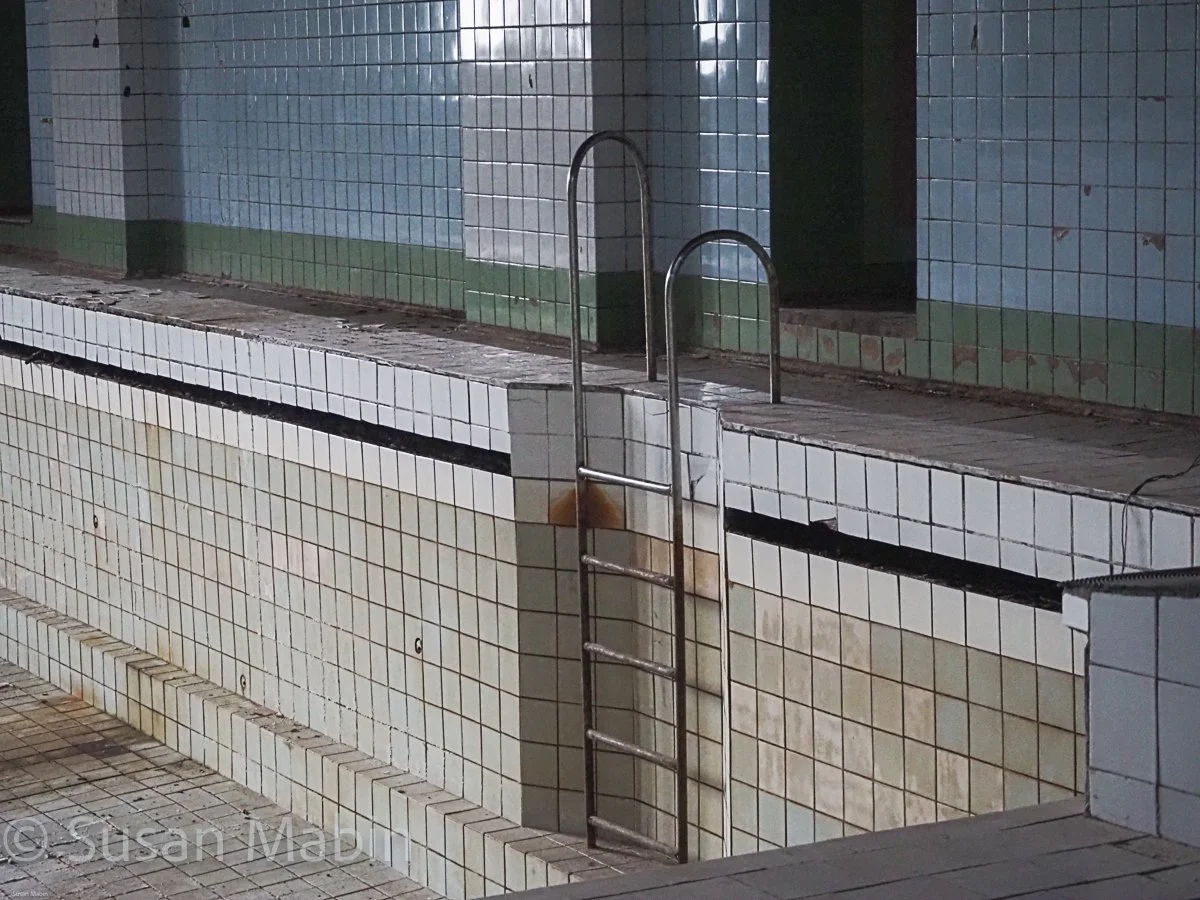
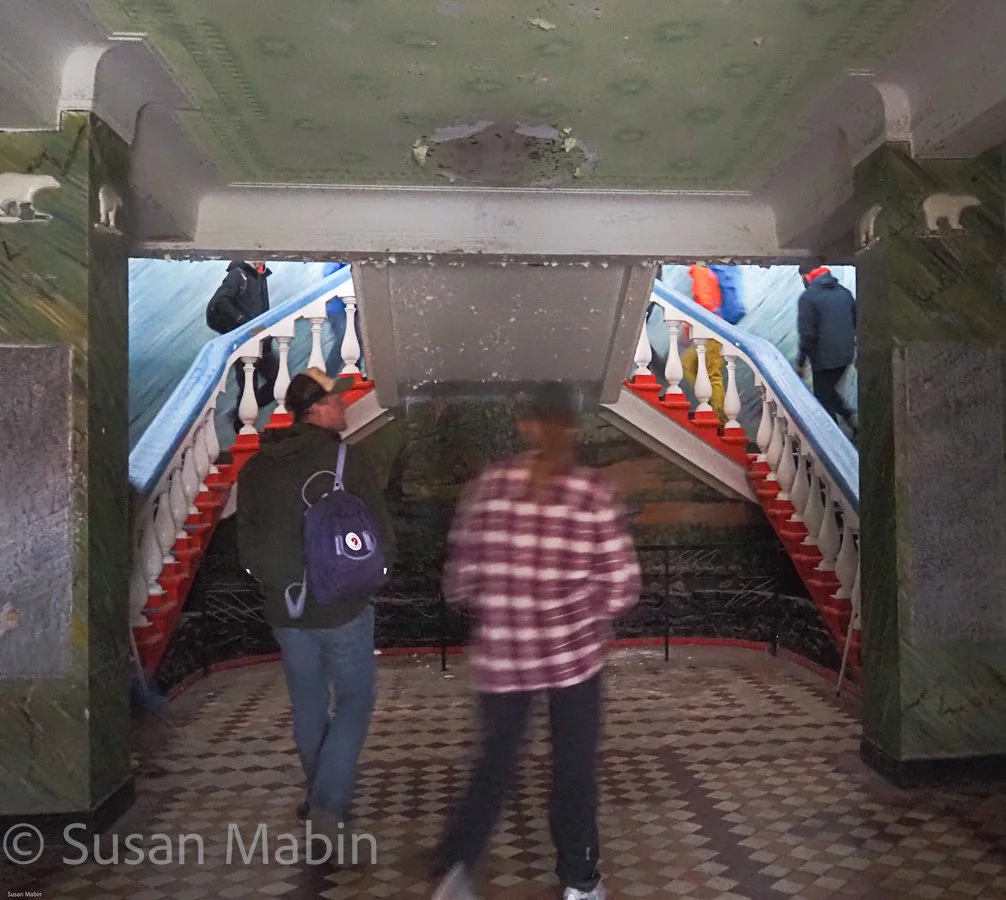
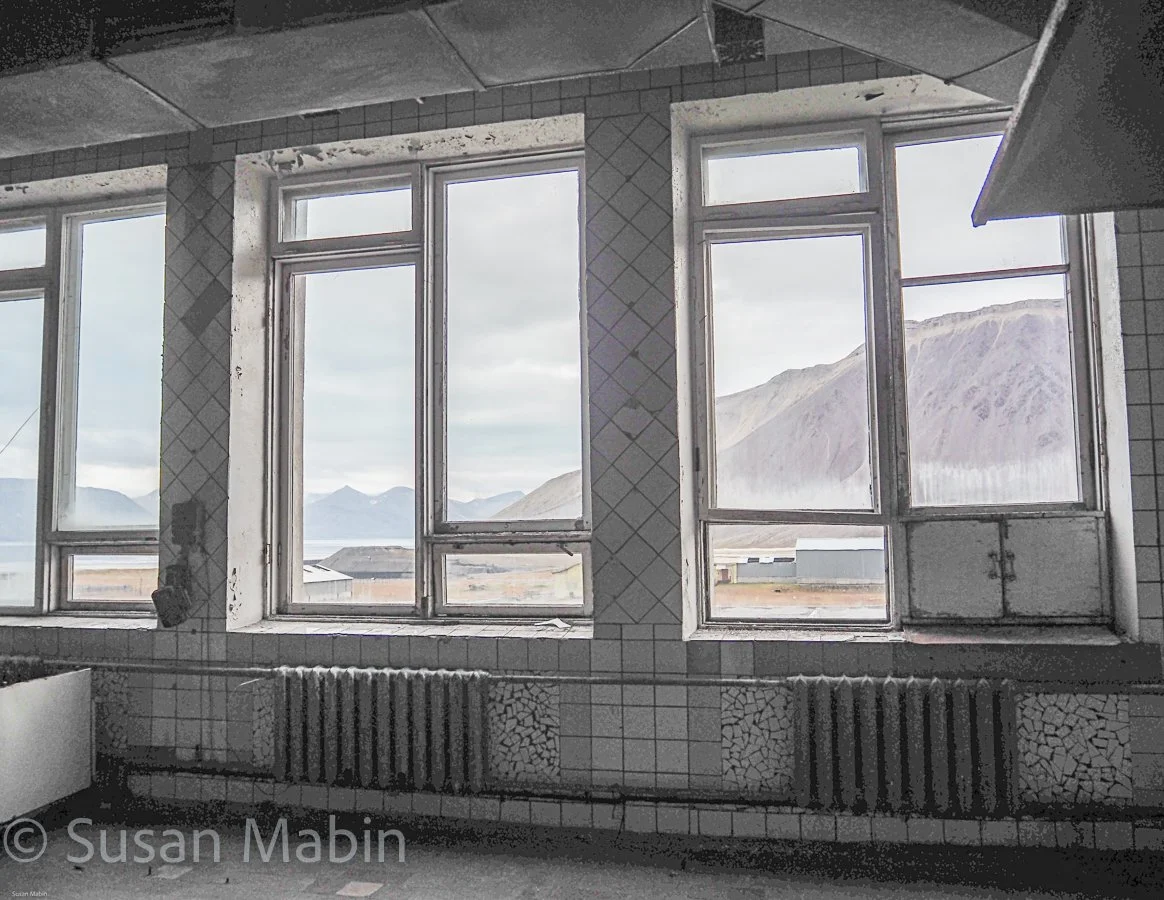
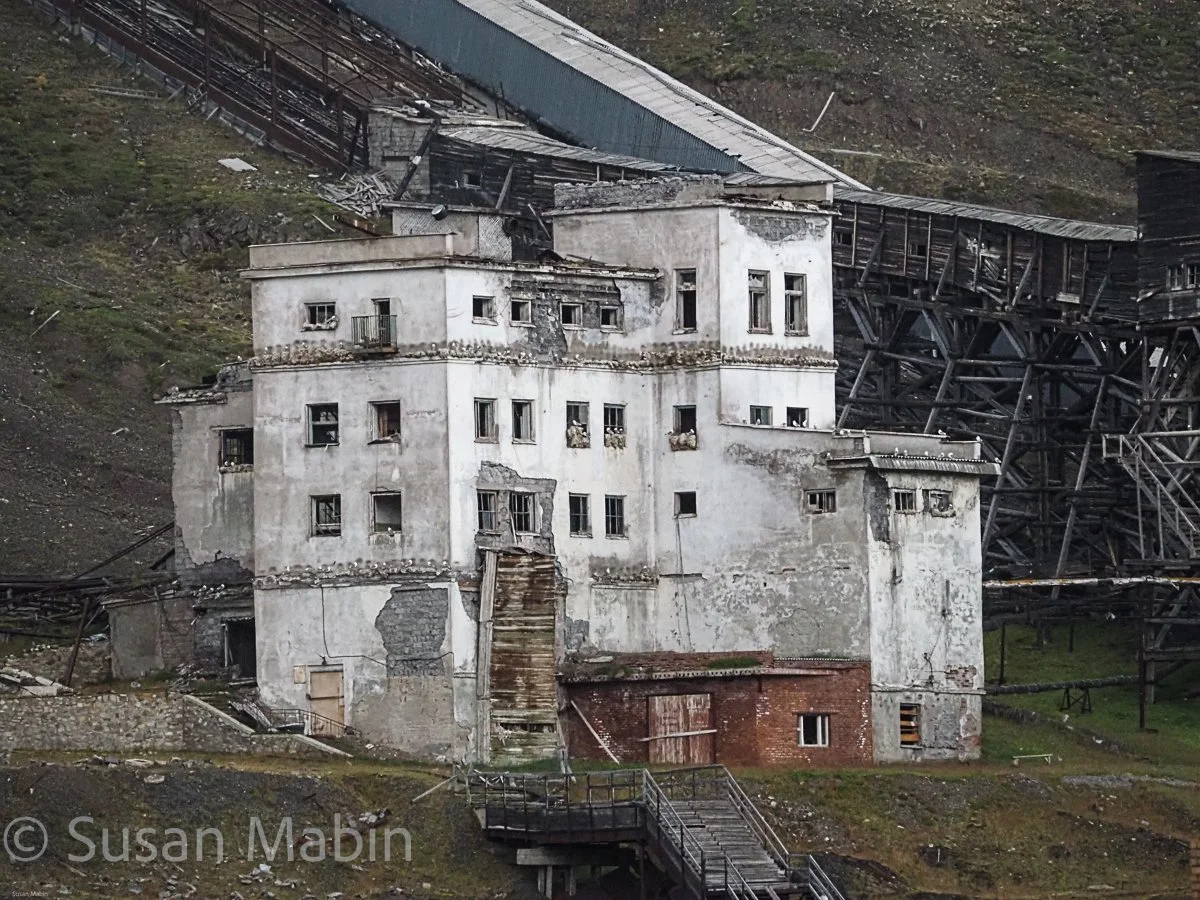
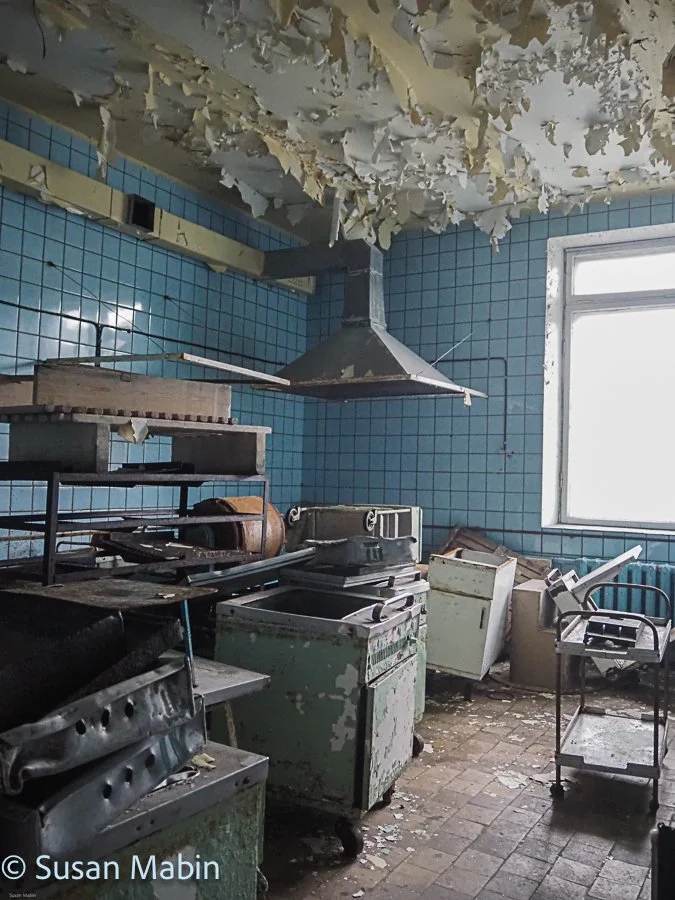
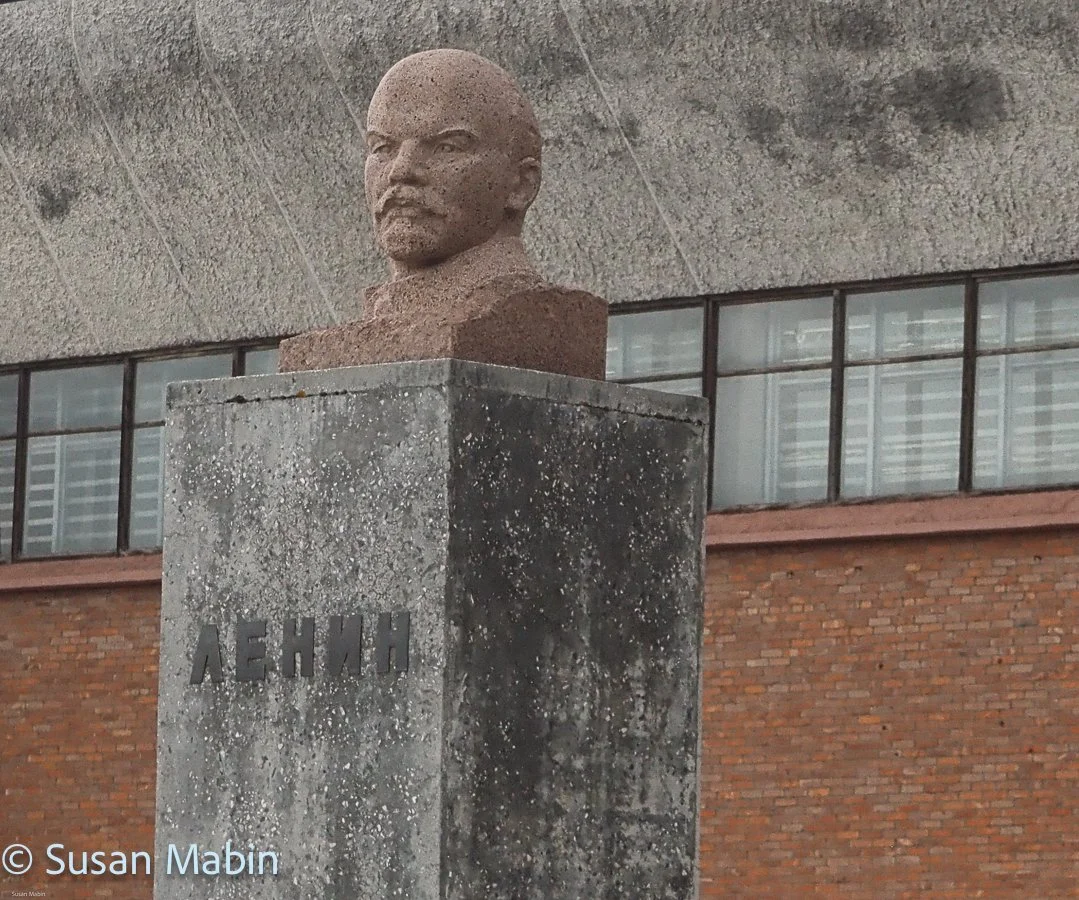
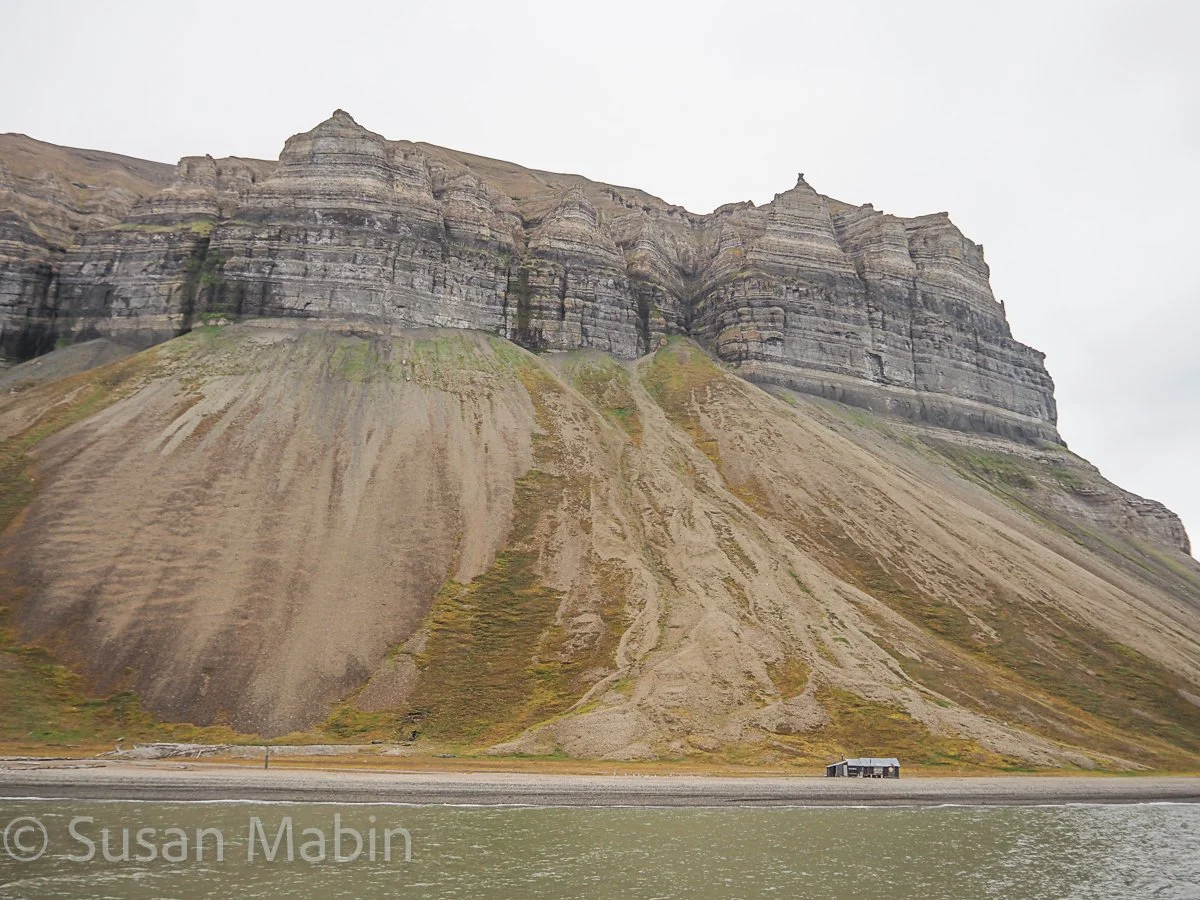
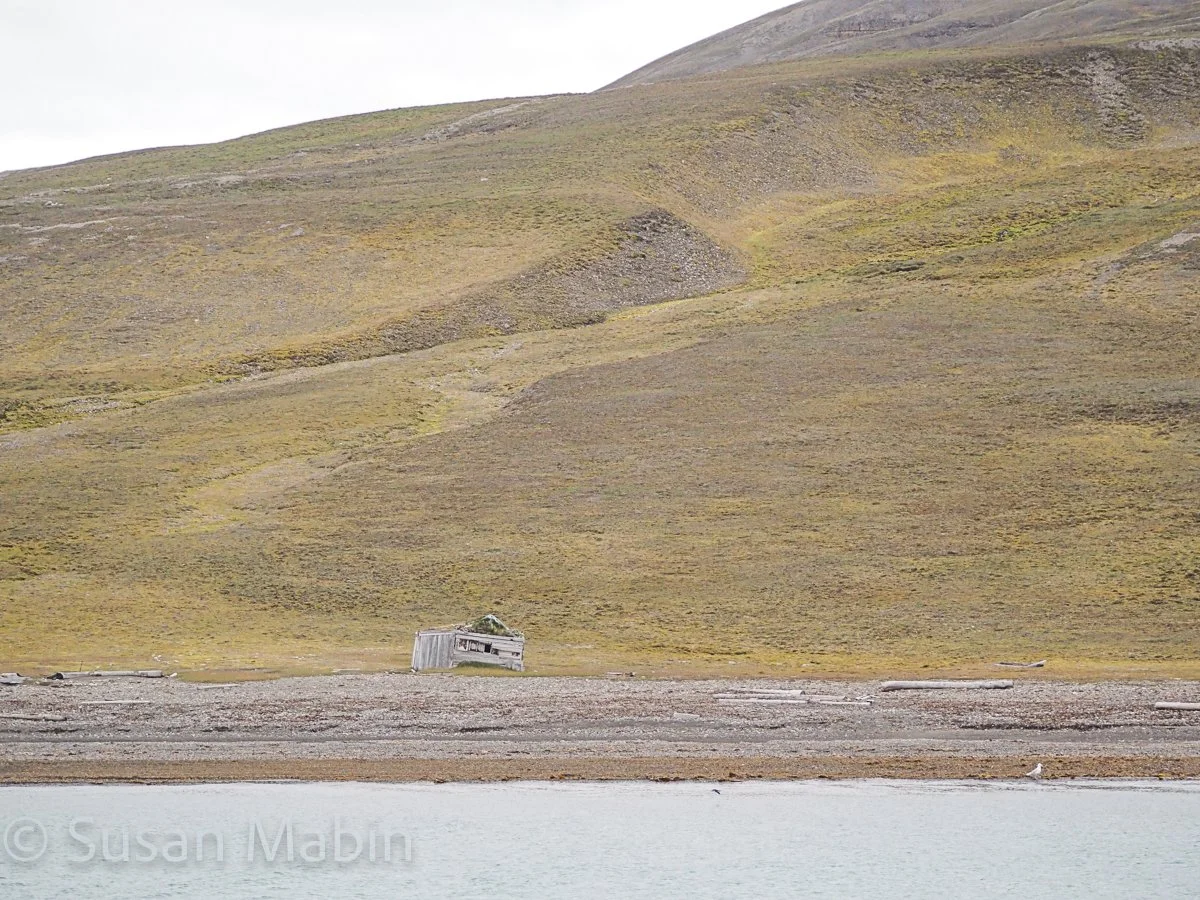
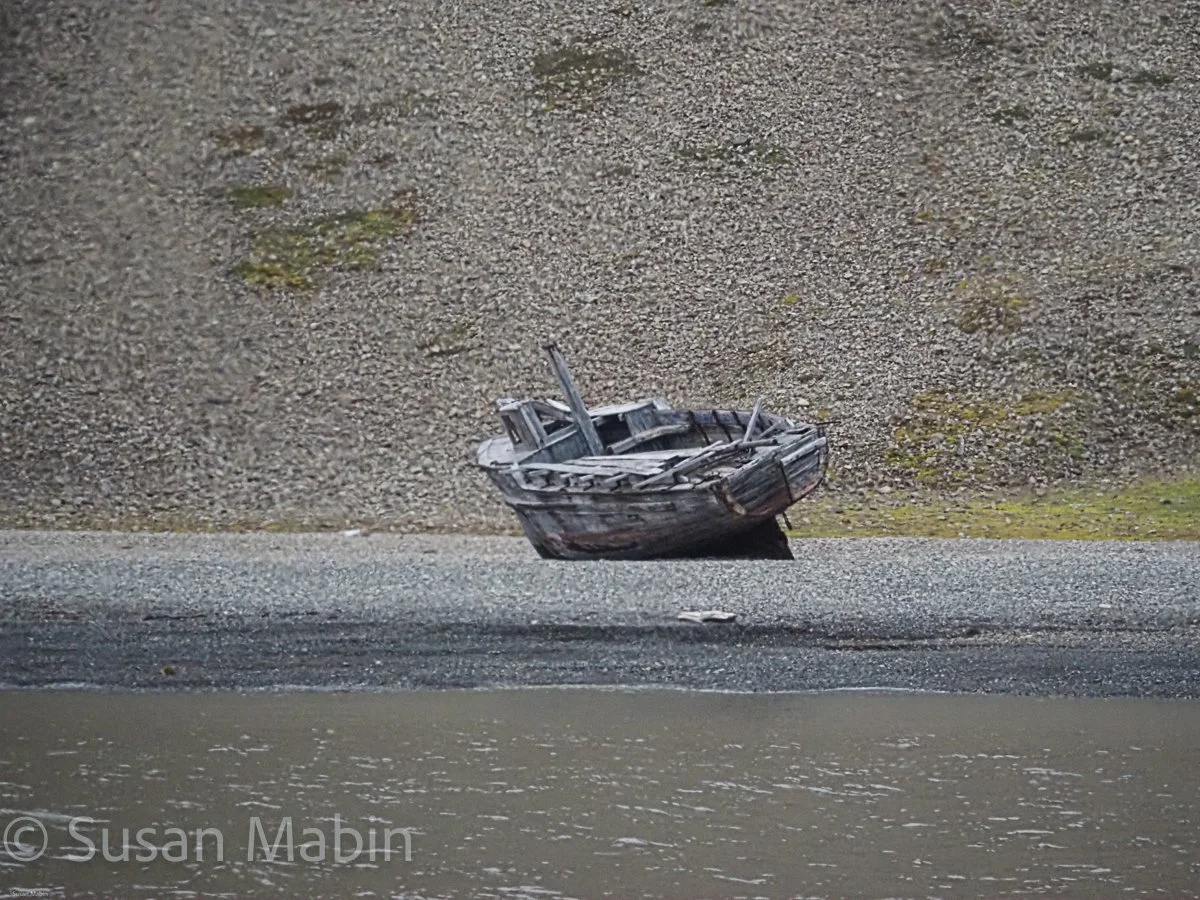
The second trip was towards the Esmark Glacier and Barentsburg.
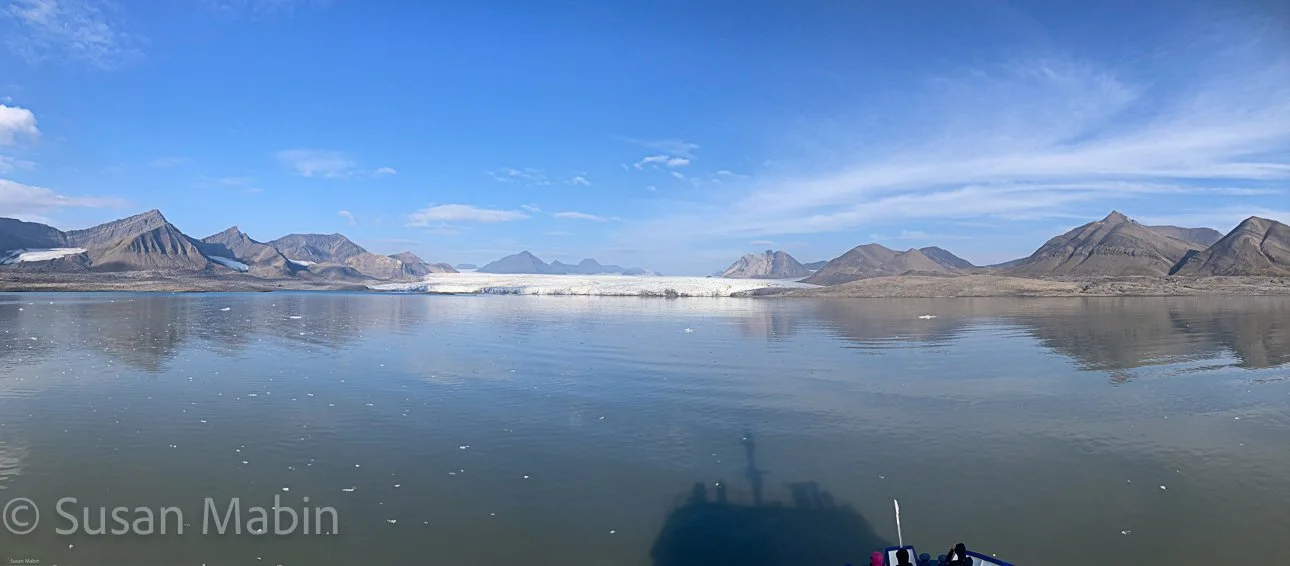
Esmark Glacier
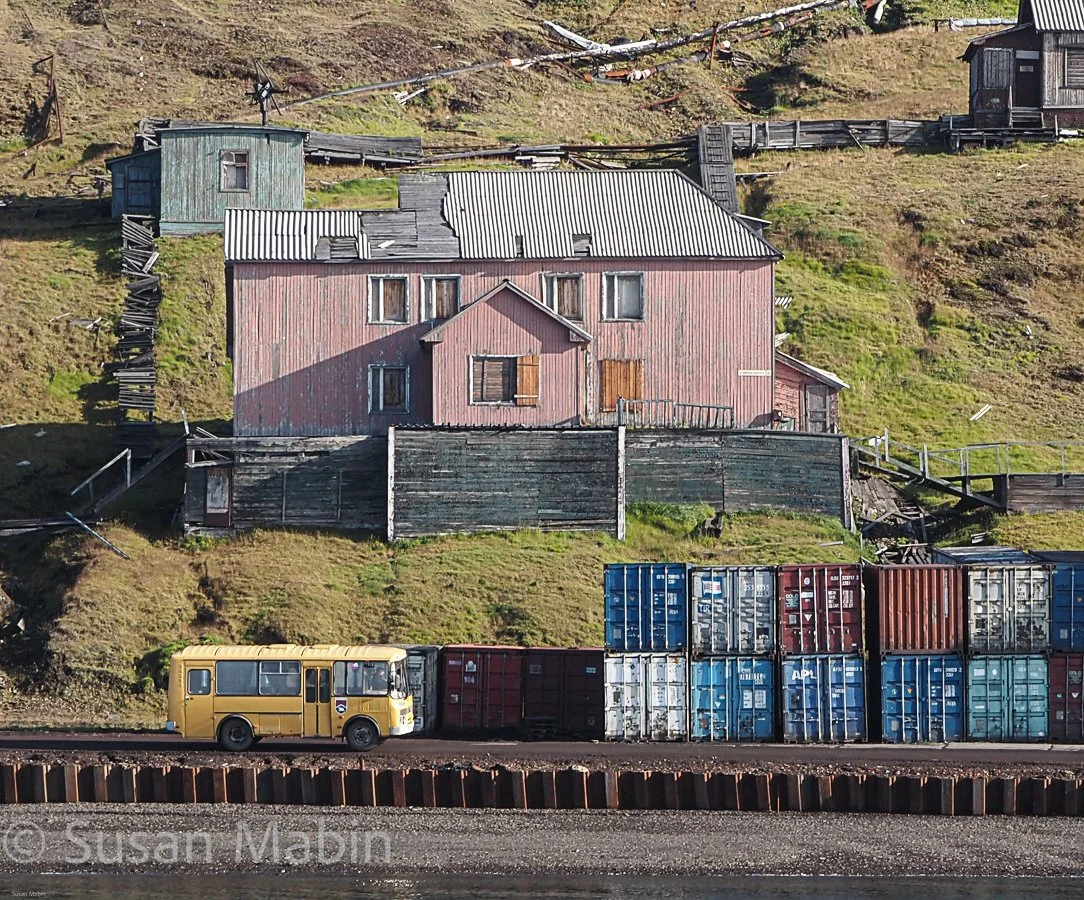
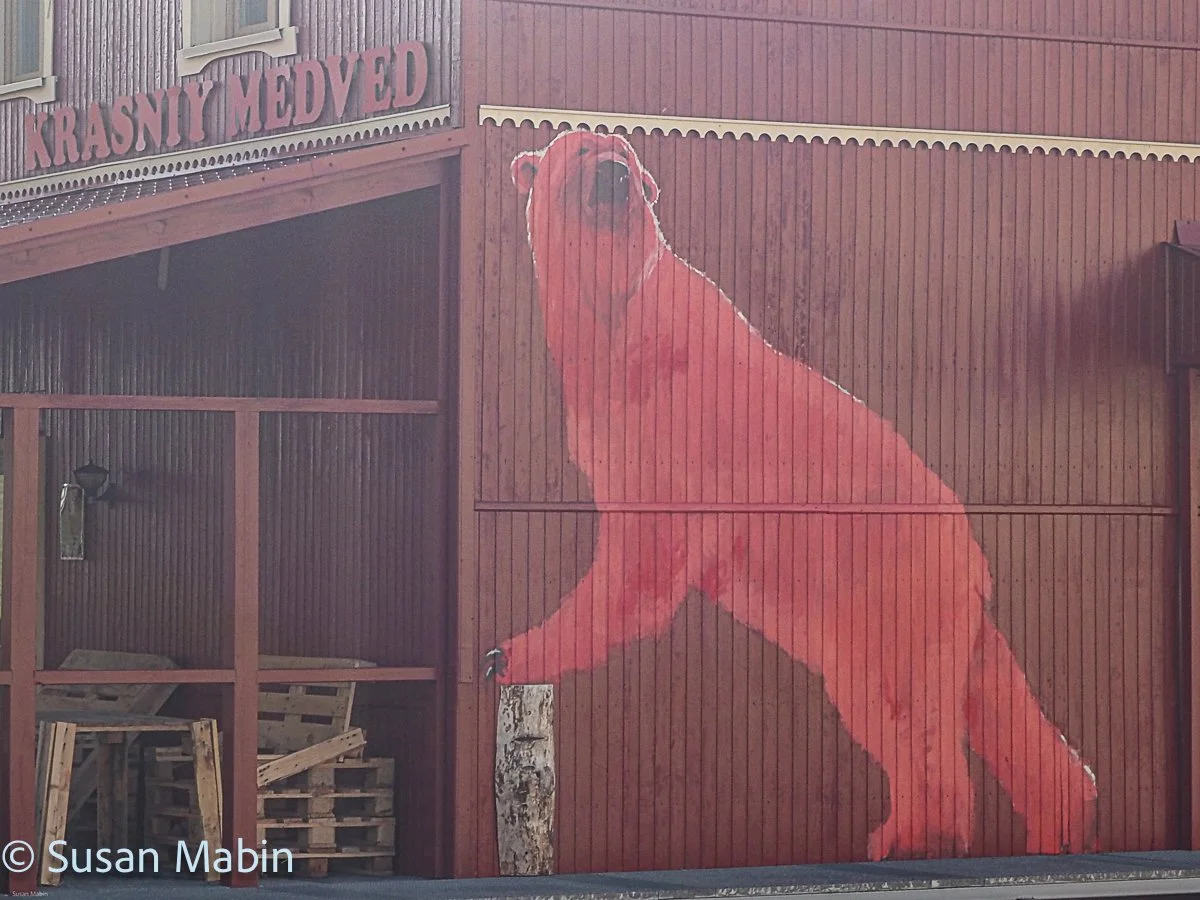
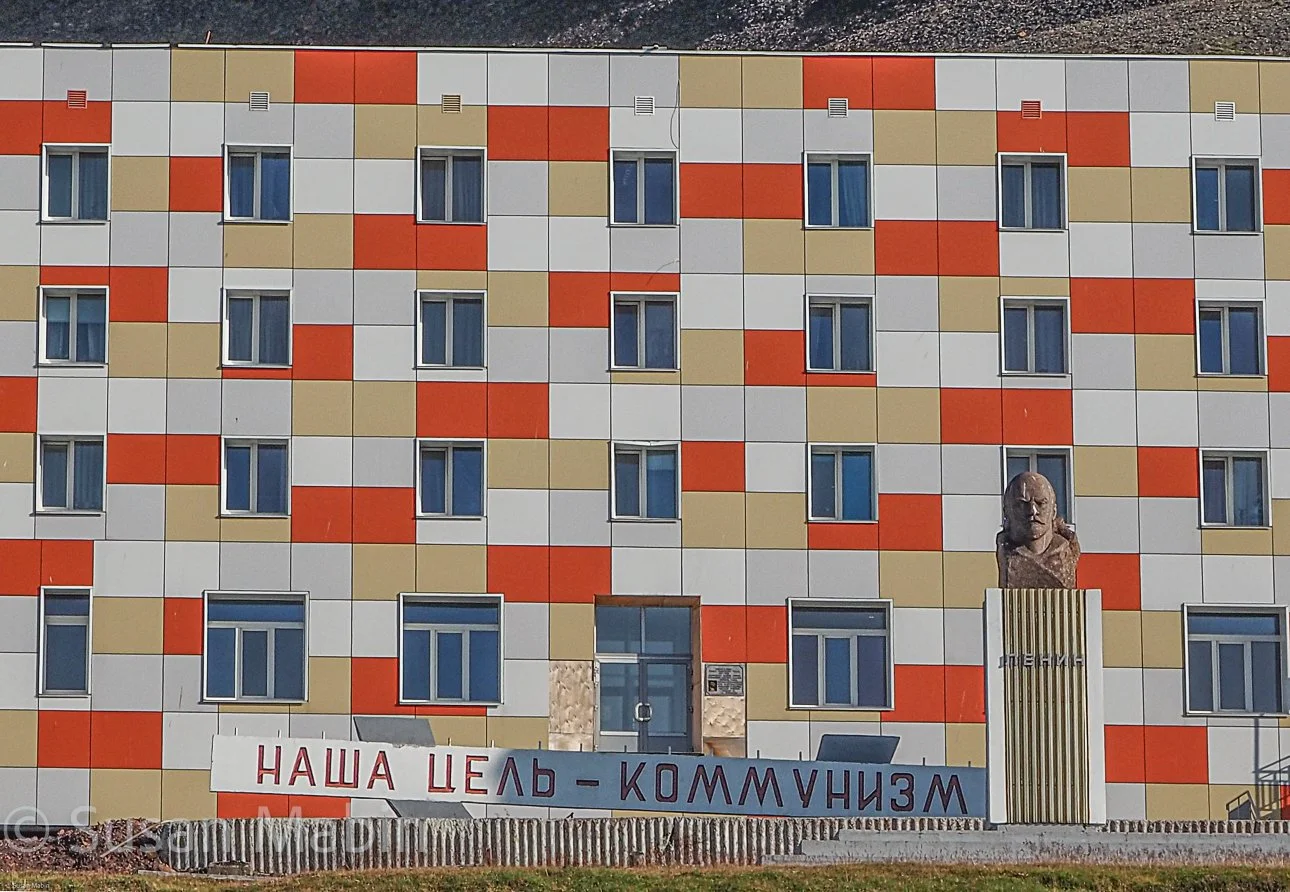
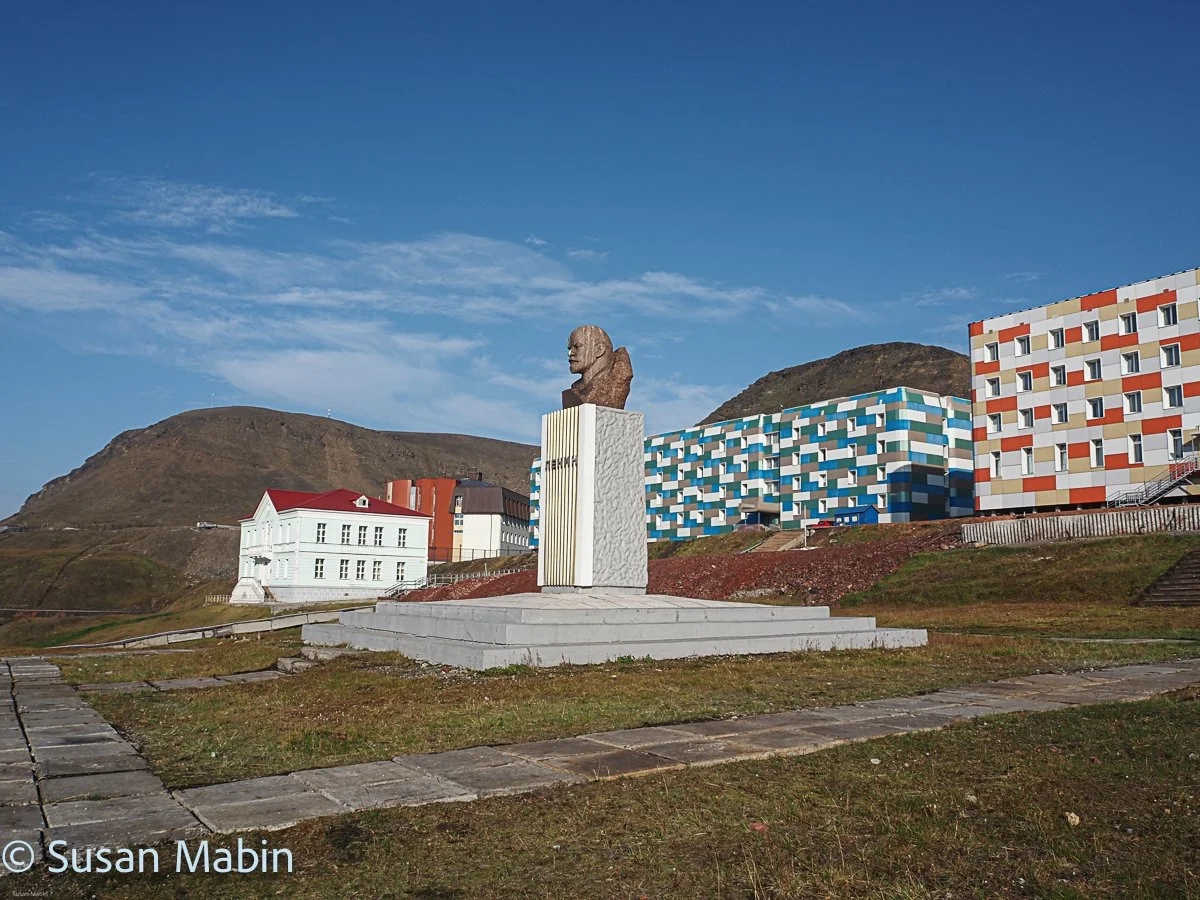
Barentsburg is a Russian town, with about 300 inhabitants. Here, there is still coal-mining and also brewing of Red Bear beer. We got a walking tour around a portion of the town and then were left to wander for about an hour before being driven back to the wharf in this little yellow bus for the rest of the boat trip back to Longyearbyen. There were also a Lenin bust overseeing the views and some decaying buildings from earlier Barentsburg times. Lots of interesting photography opportunities.
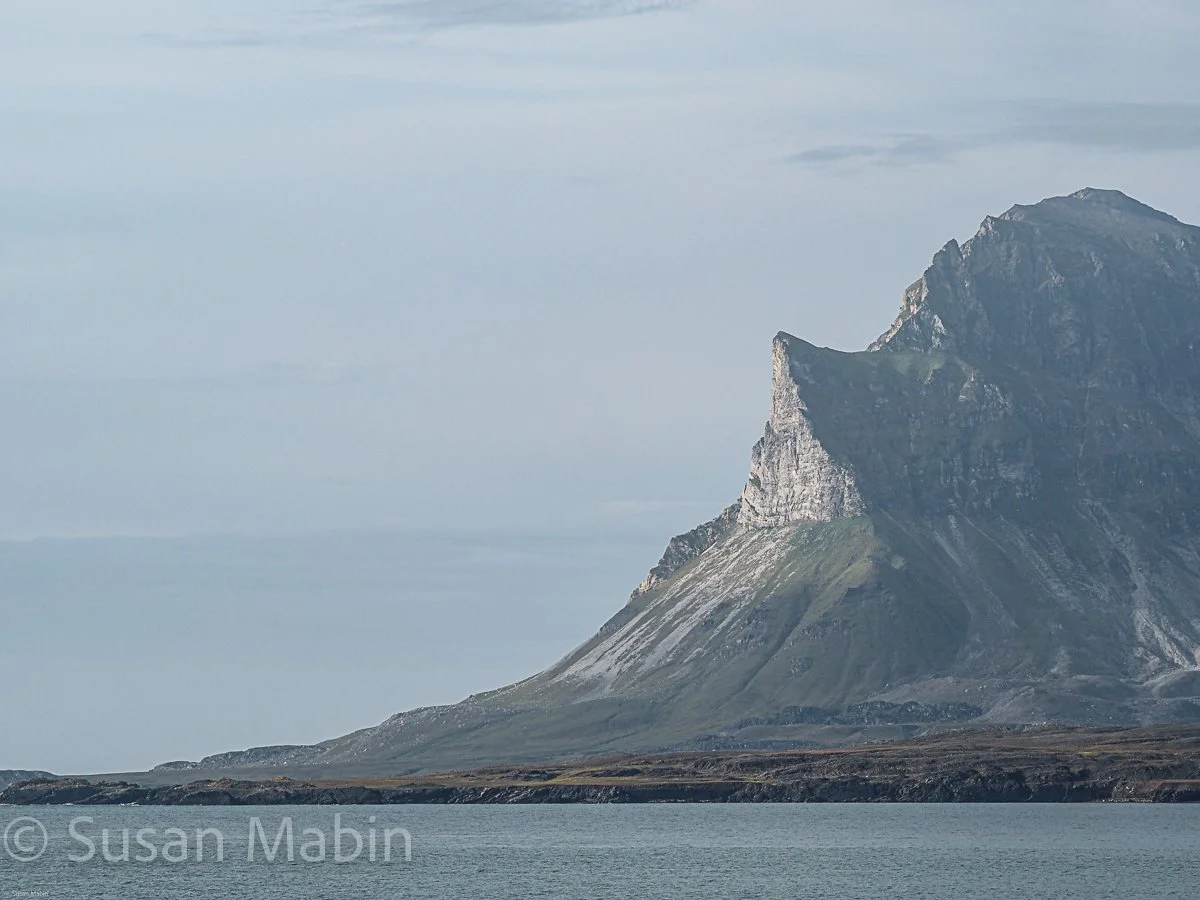
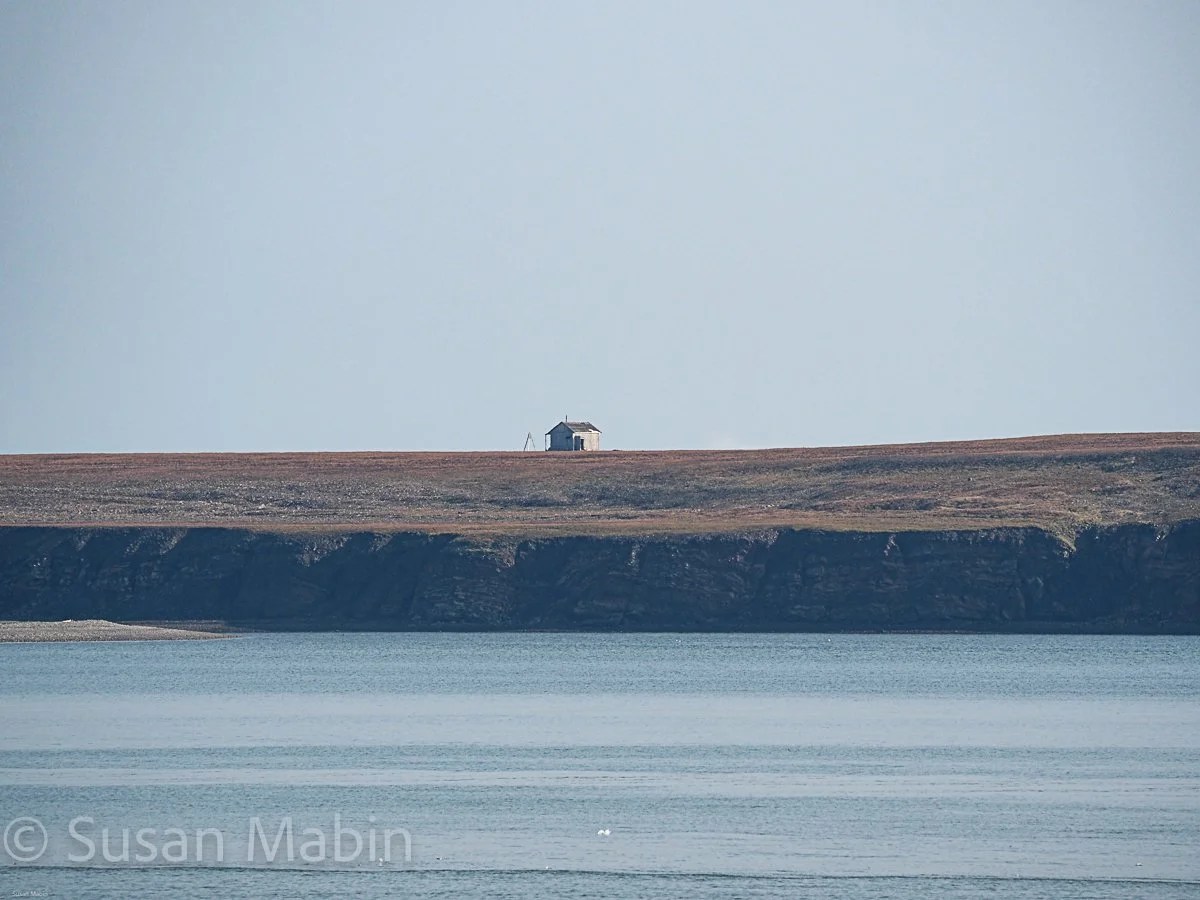
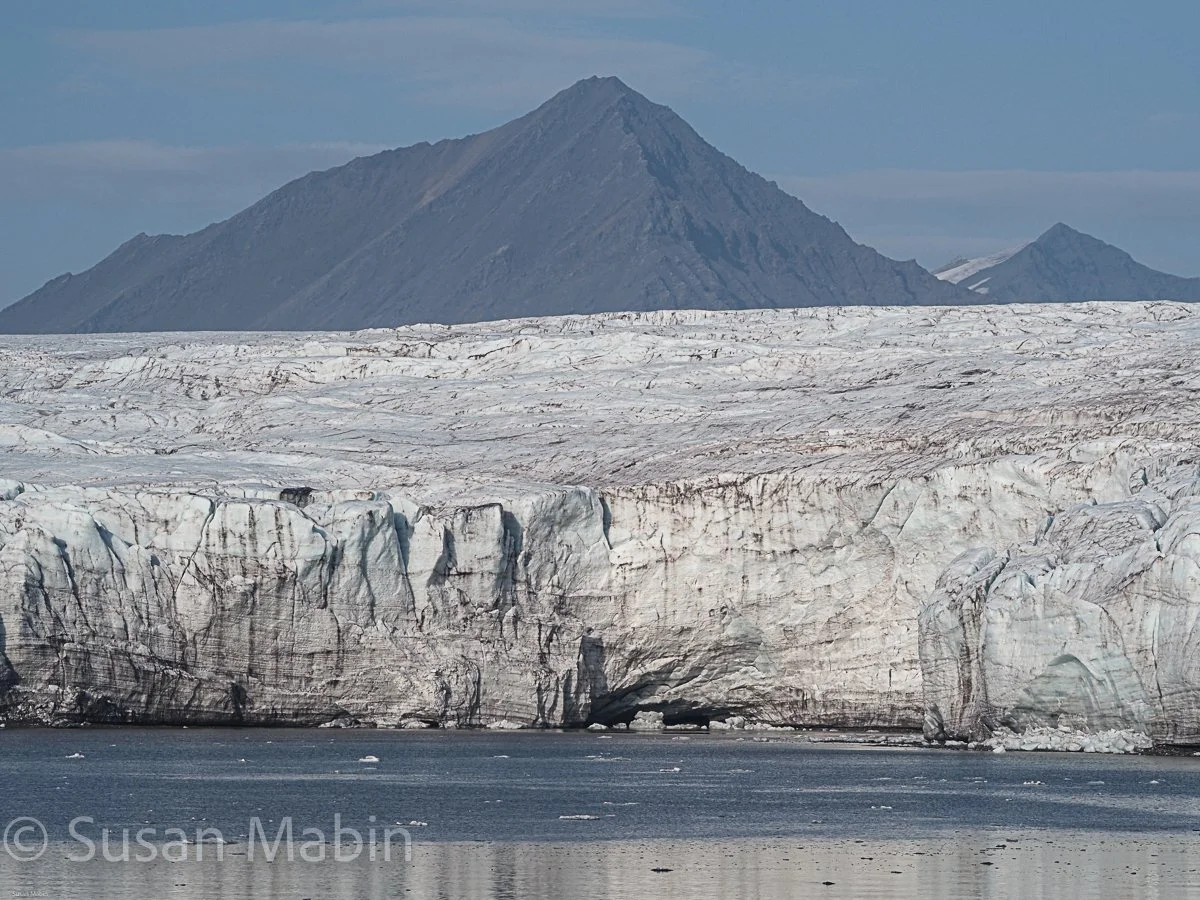
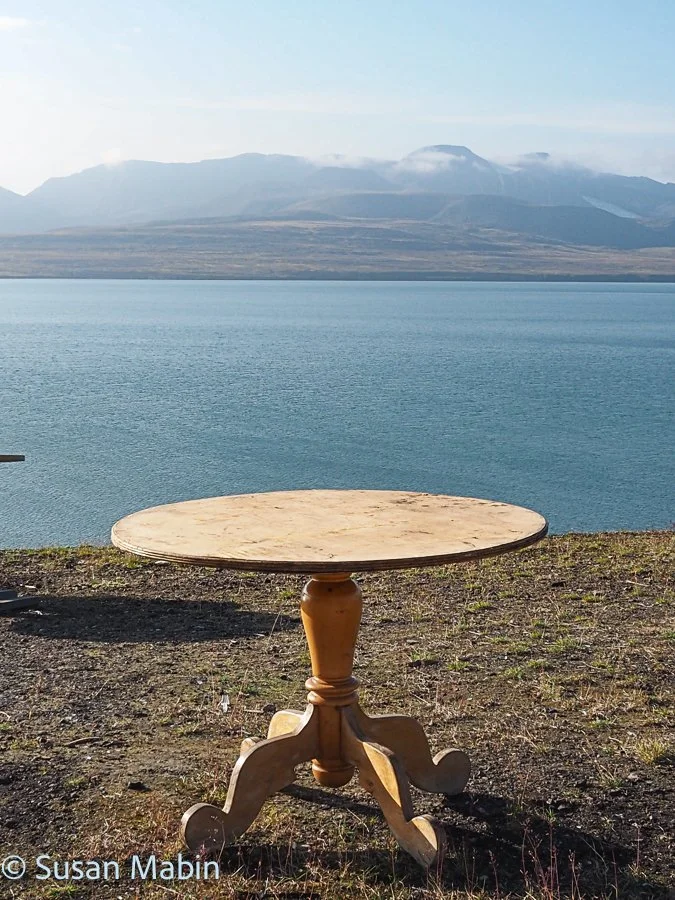
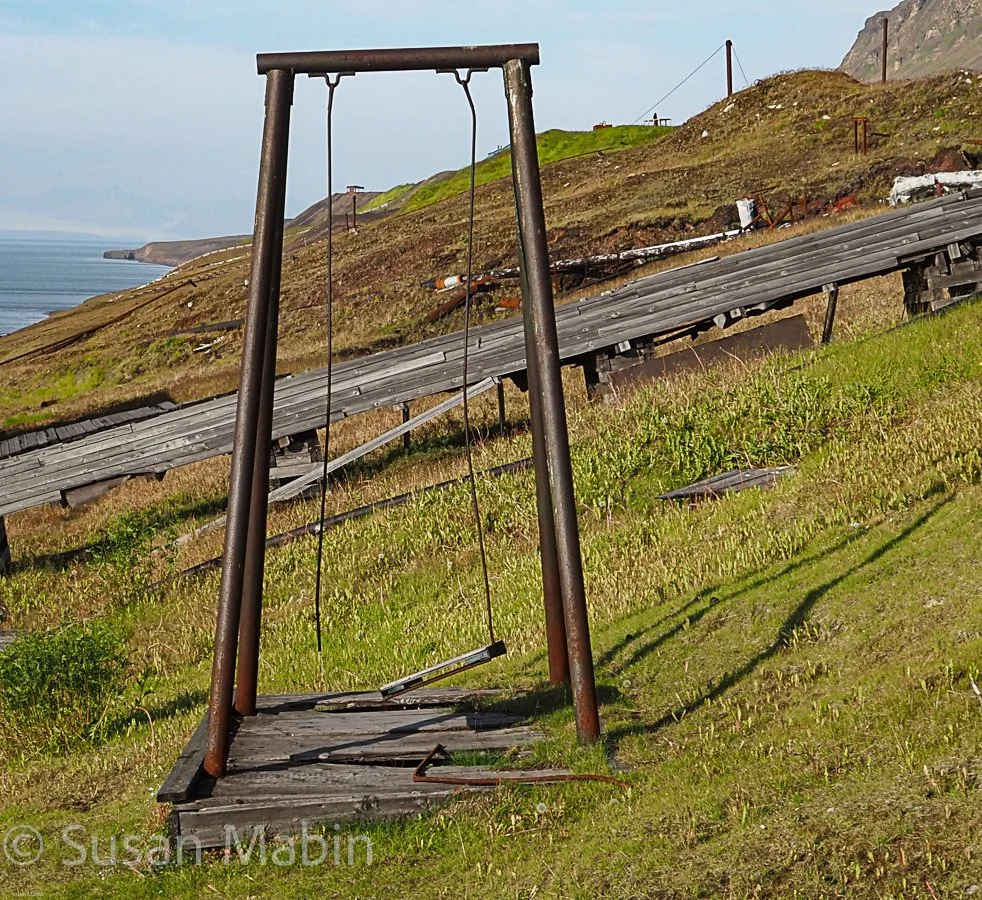
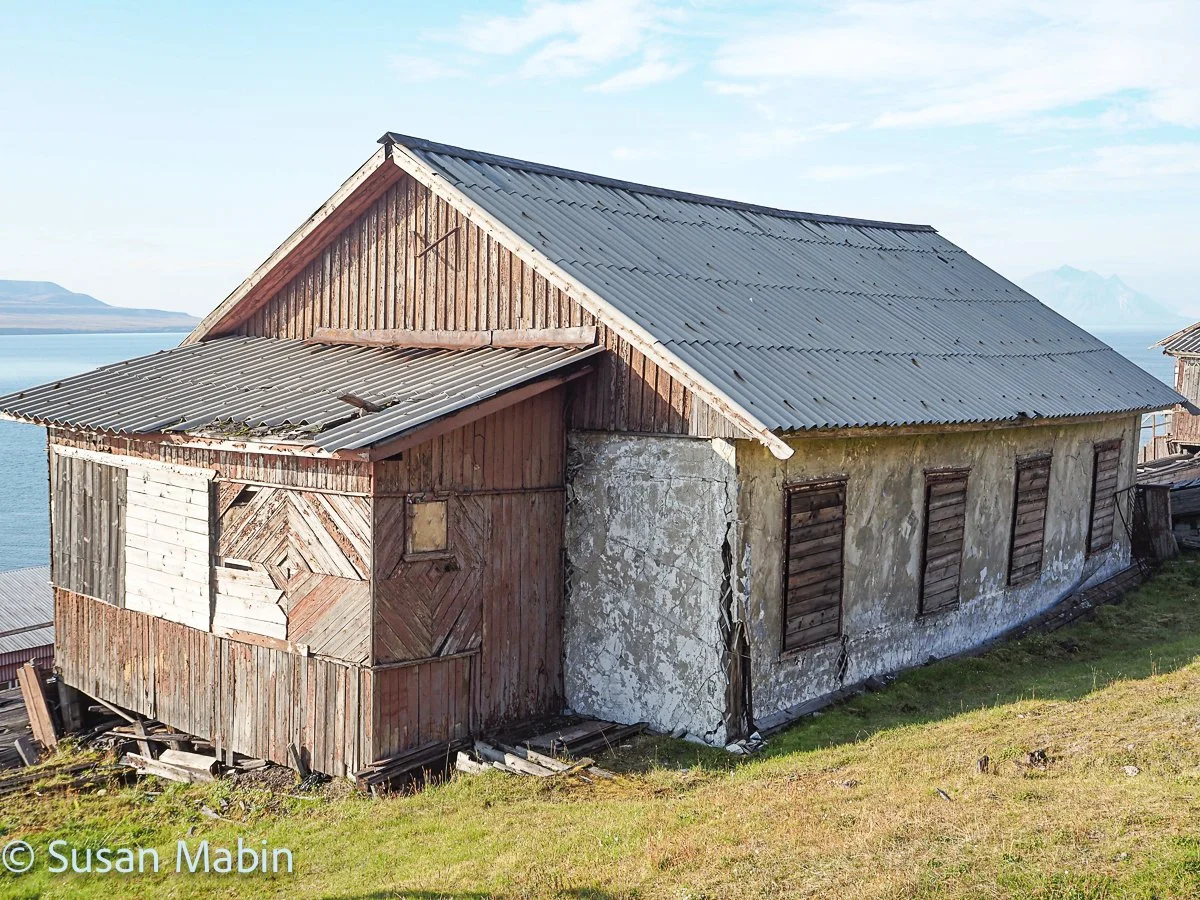
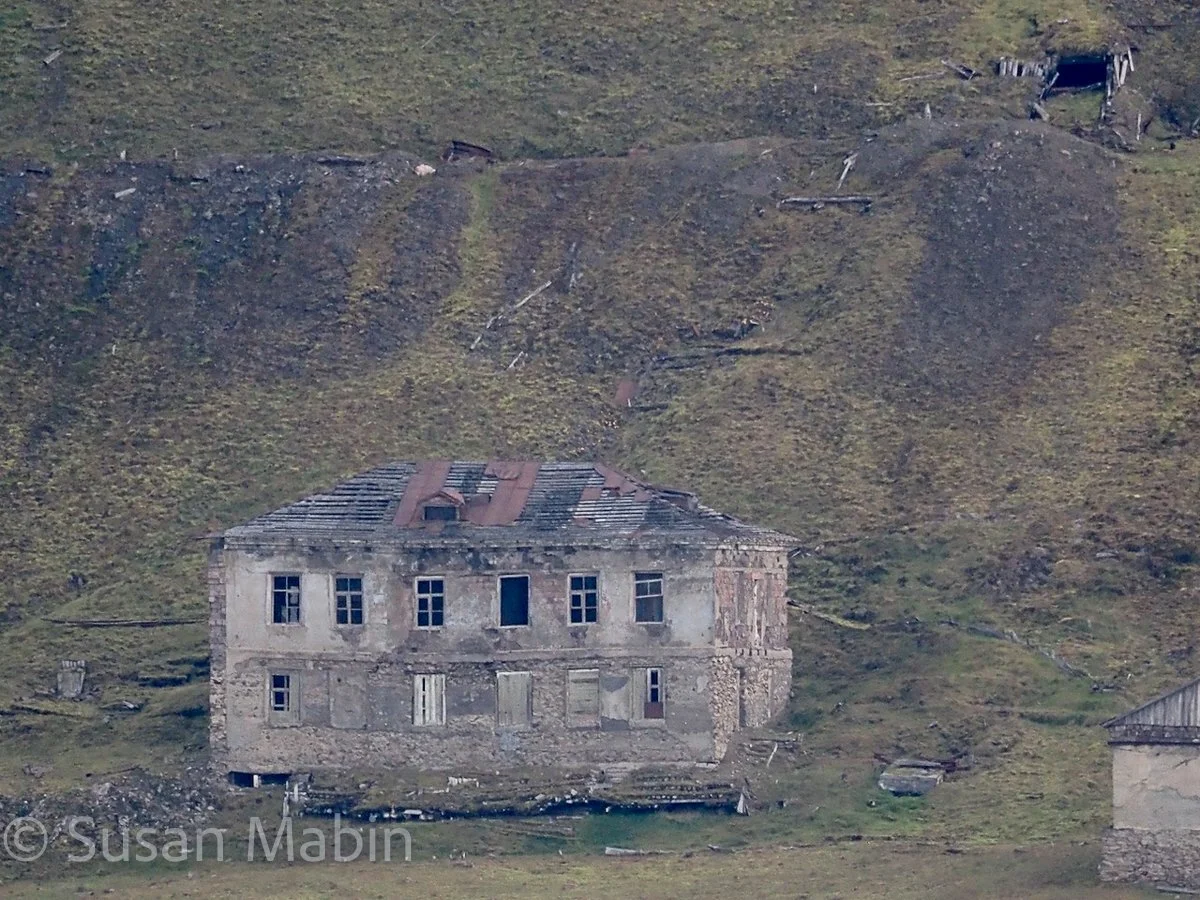
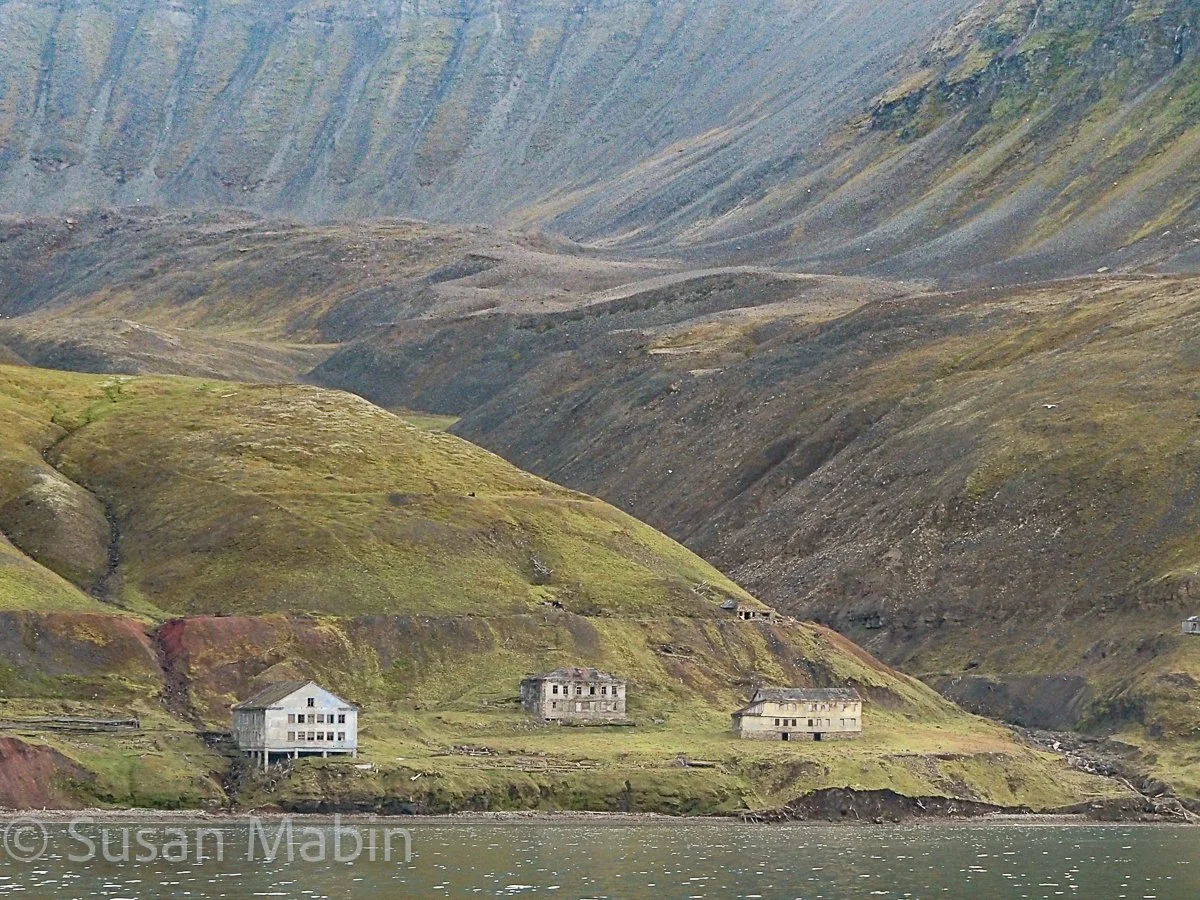
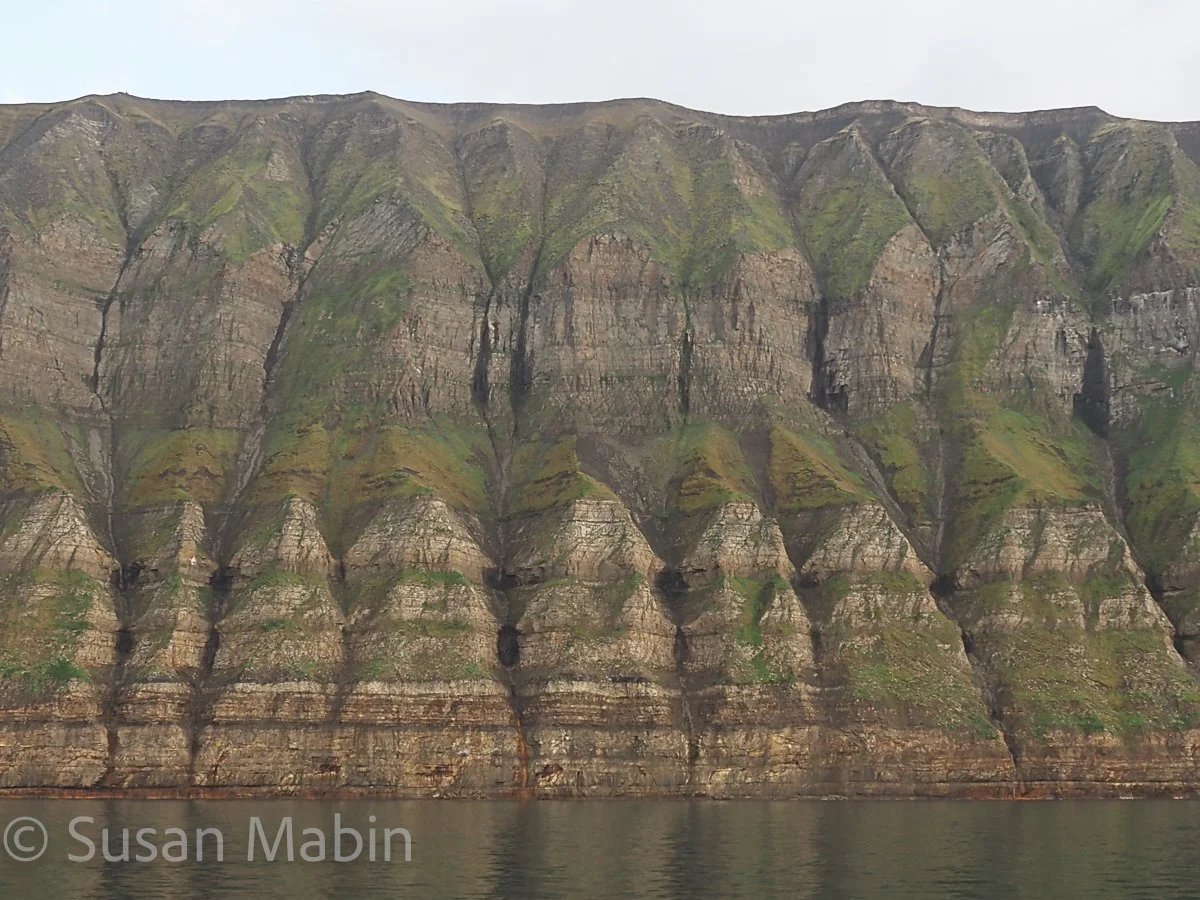
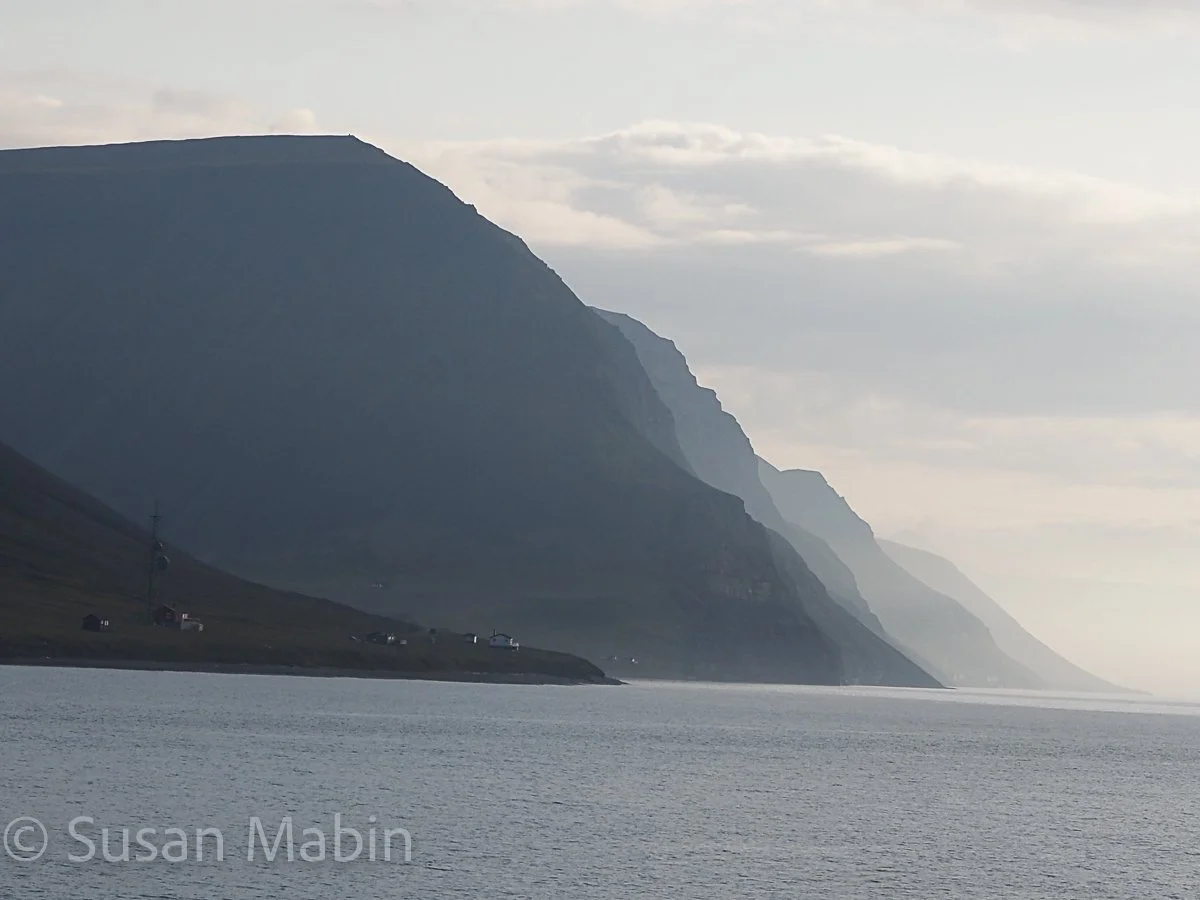
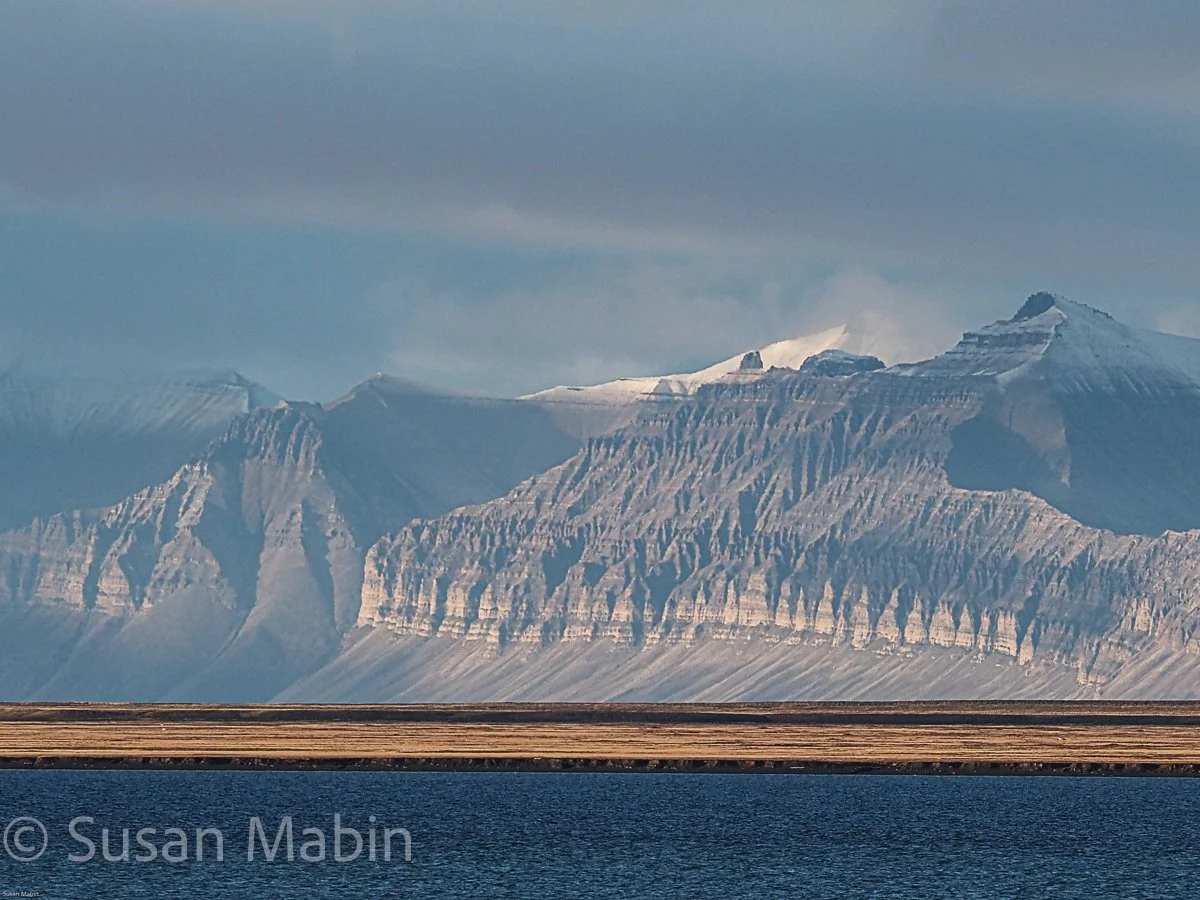
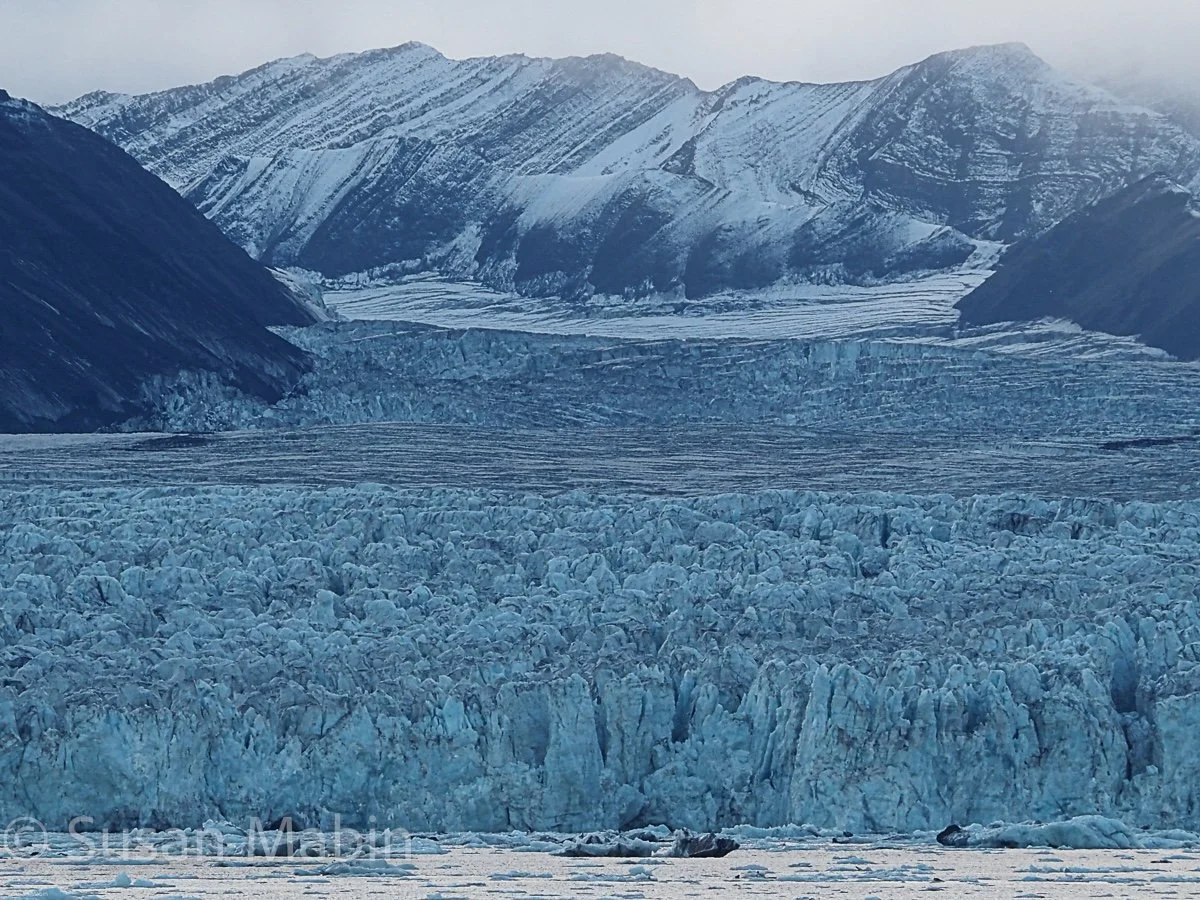
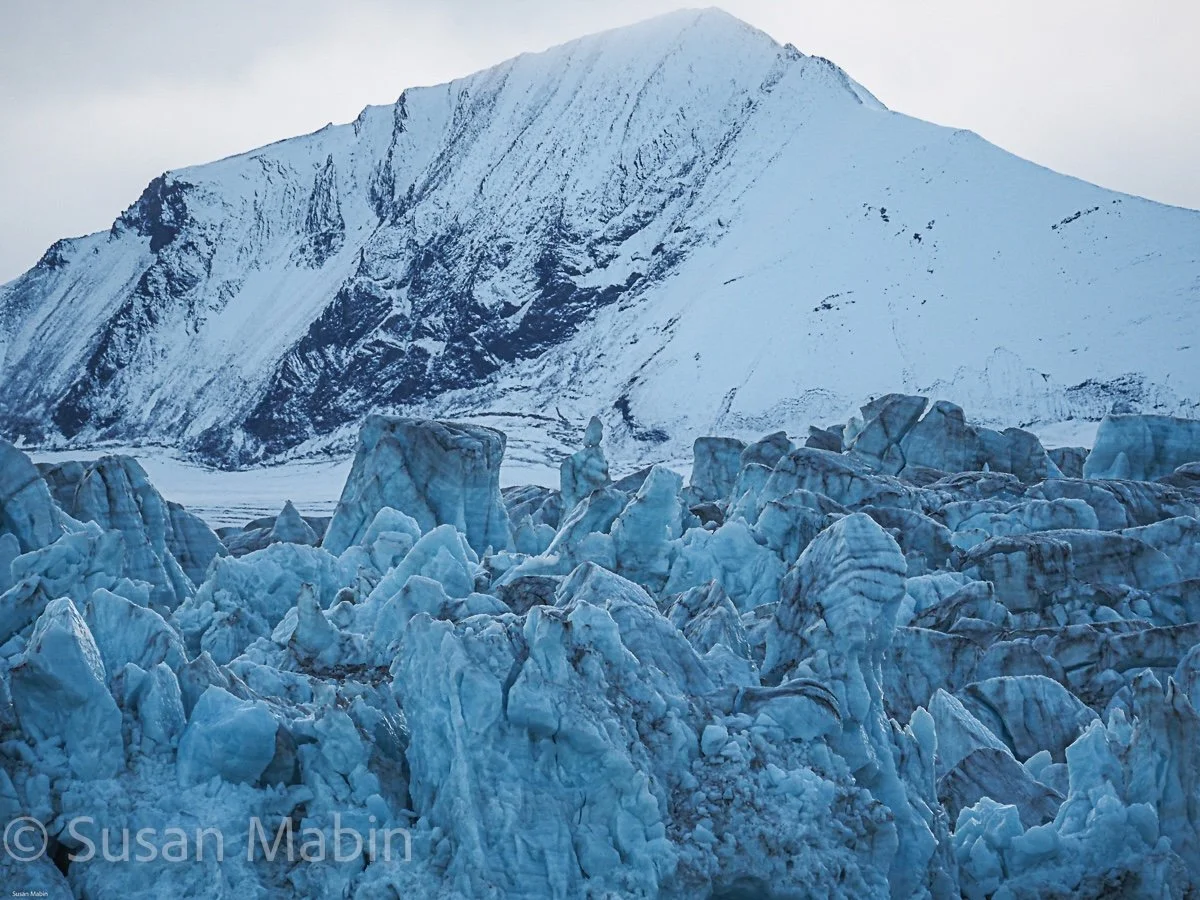
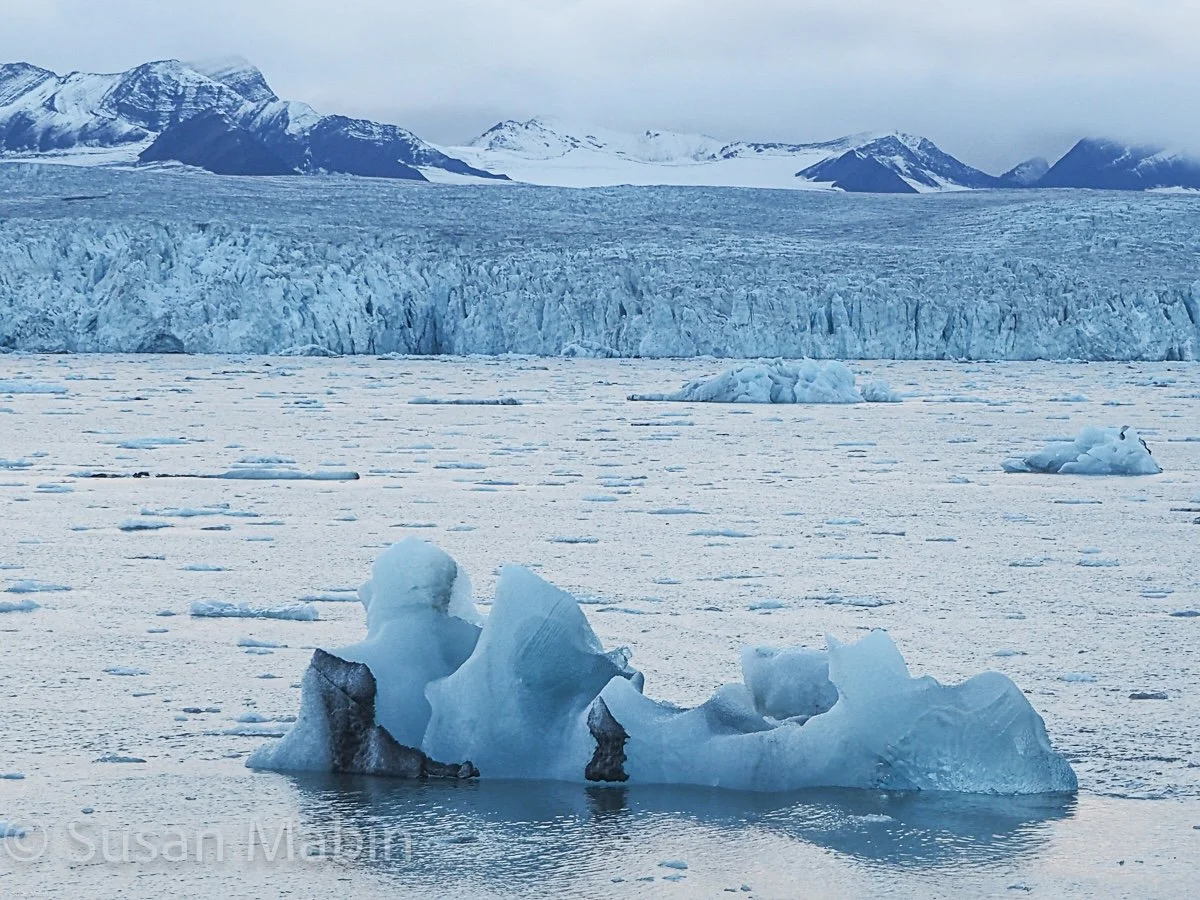
The third trip was across Isfjorden to a magnificent glacier…photos below. This glacier was overwhelming to be close to…in a good way.
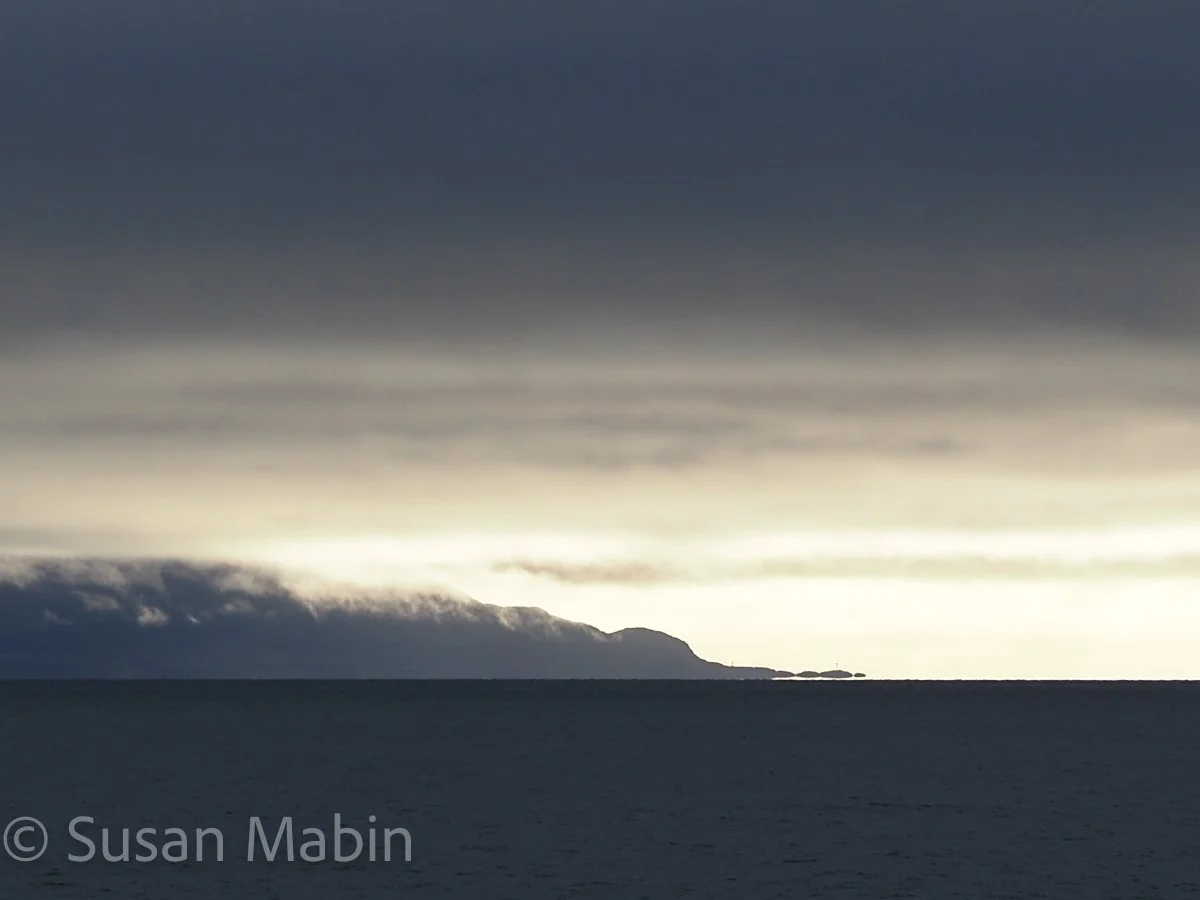
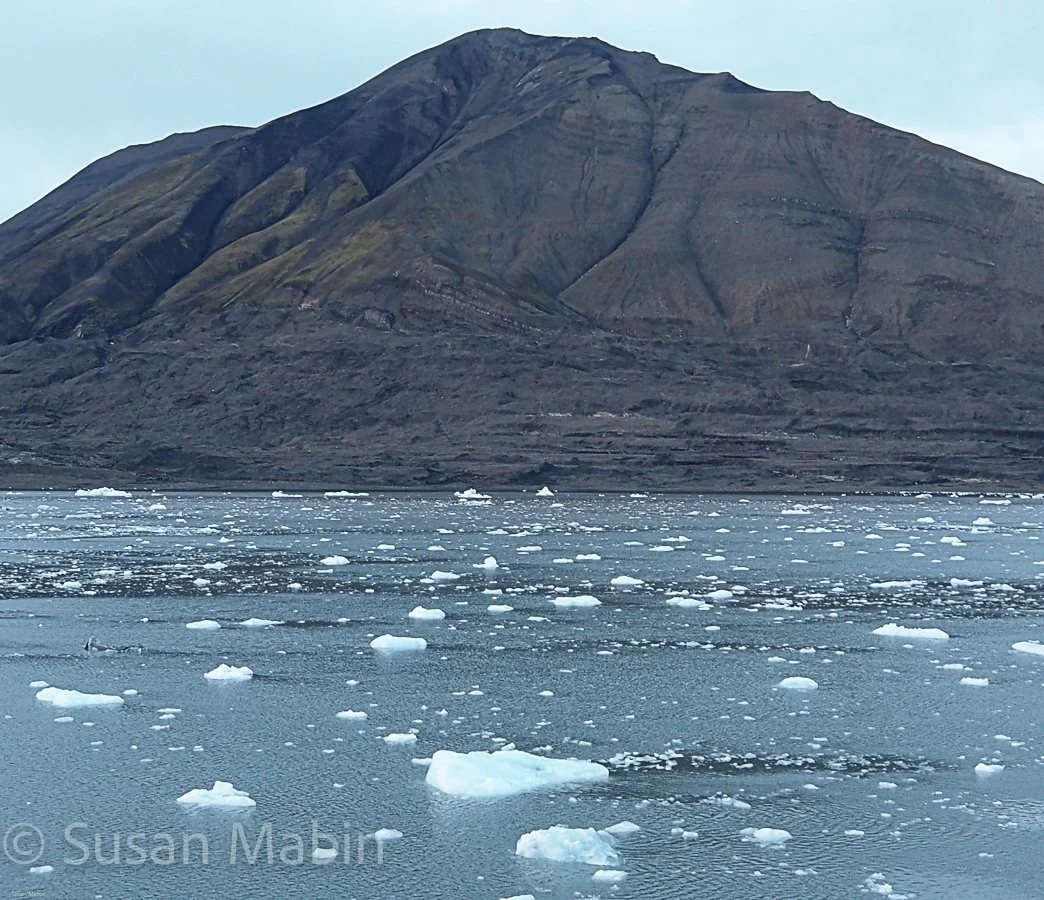
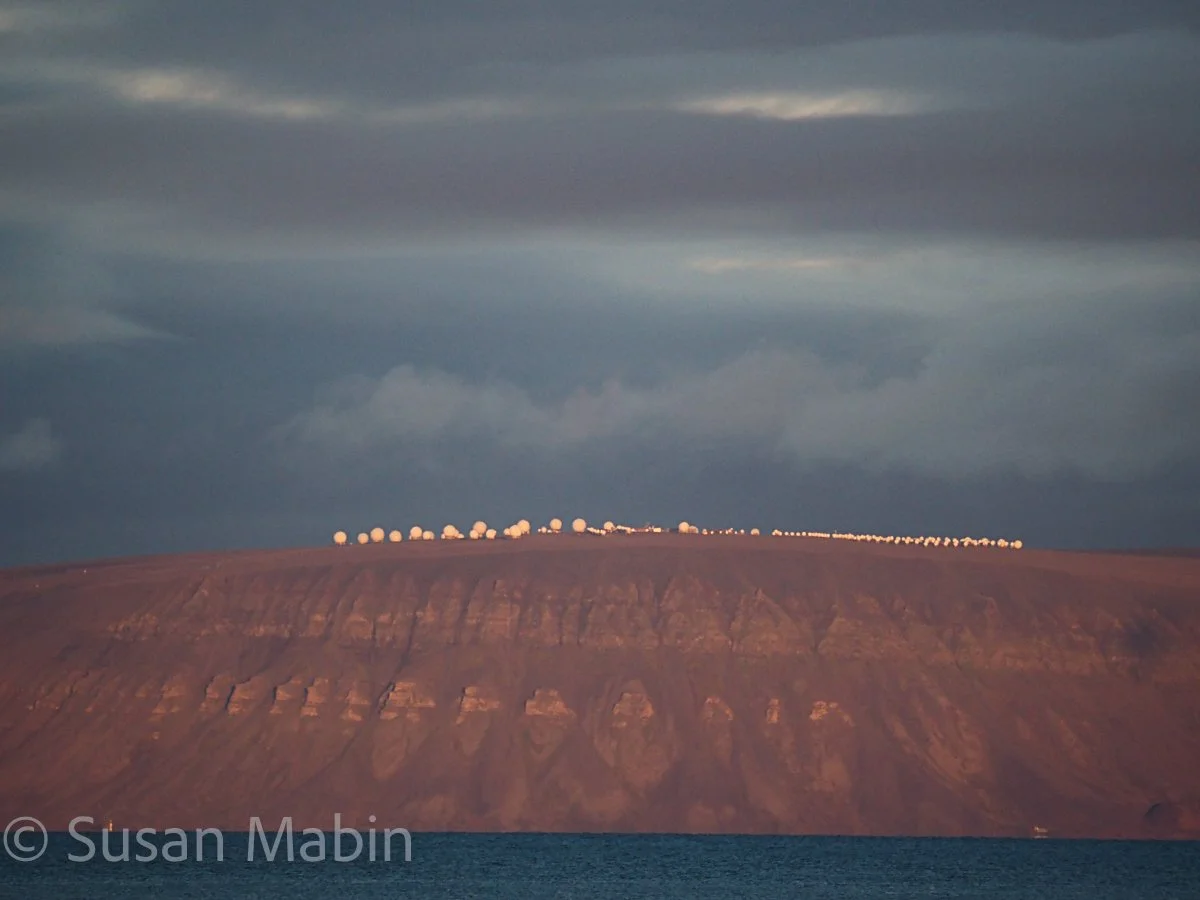
Inbetween these day trips, I was doing timelapse photography, and still photography. I made daily photos from one place and later have compiled these into a short movies, as a documentation of time and place and the weather during my 6 weeks spent there.
I was also collecting objects, making sculpture with those objects, as well as continuing my daily drawing and painting practice, whilst being open to the stories that would emerge from the found objects and from my experiences. I had brought some air-dry clay from Glasgow and started making my own version of the polar-bear souvenirs.
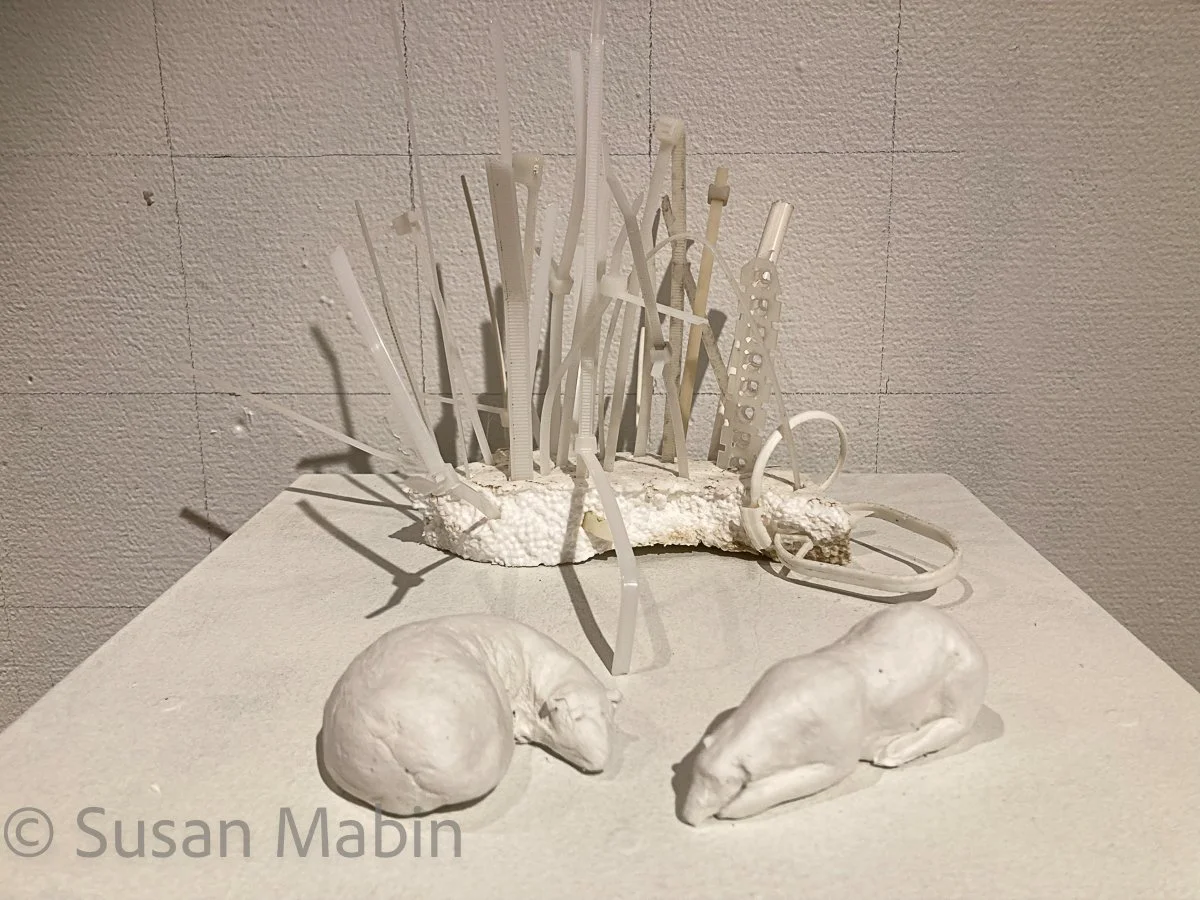
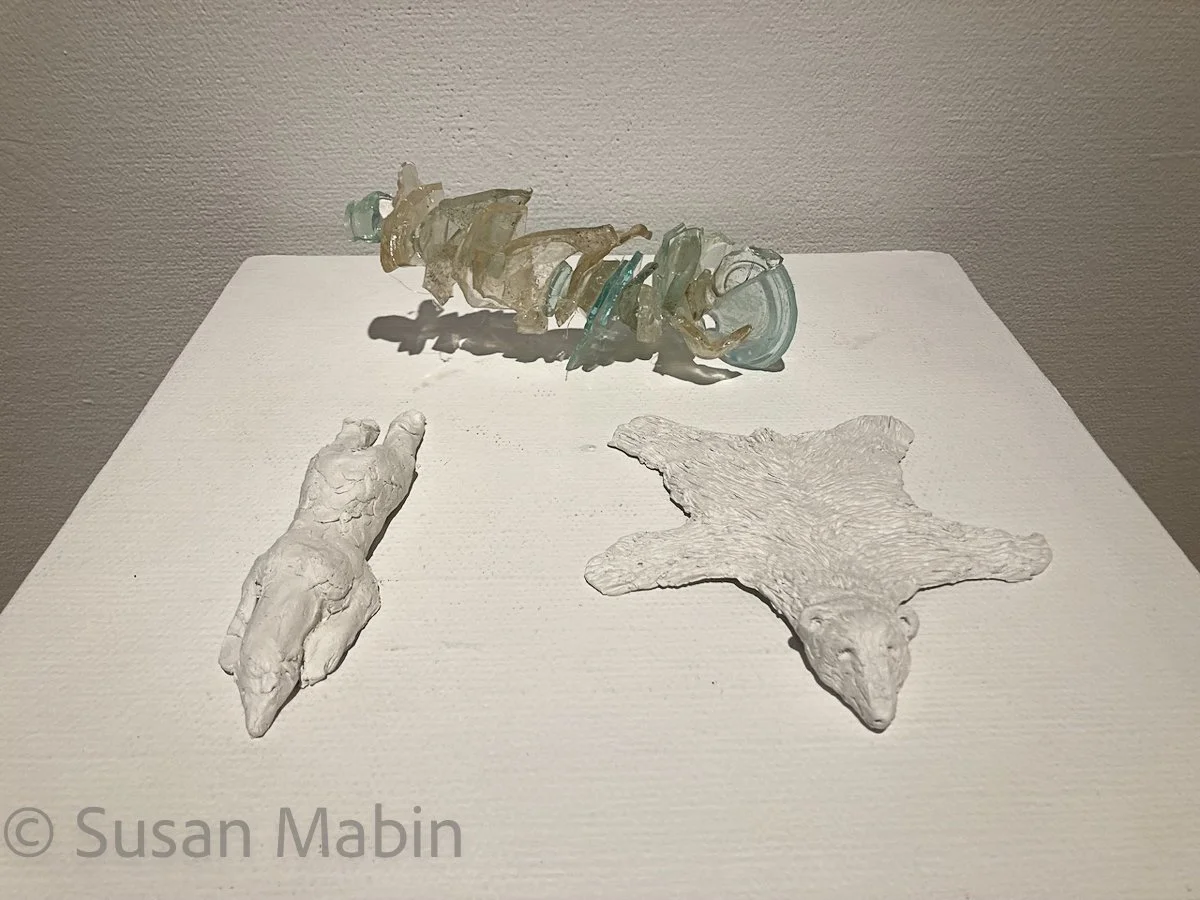
There is much hype around the polar bears, and rightly so. It seems everyone wants to see a living polar bear (from a safe distance). The polar bear ‘story’ became one of my art interests, not only because they are magnificent, but also because of how the amplified climate change in their environment is affecting their survival, how humans have hunted them in the past, and how so many have ended up as taxidermy specimens distributed to museums, hotels and rich peoples homes, throughout the world and also the use of the polar bears in this region for tourism purposes. There were many conversations and stories being told of bear encounters that have ended badly for a wandering tourist and sometimes for experienced guides as well, which will then end badly for the polar bear as a result…(maybe a consequence is where a polar bear may end up stuffed and forever going nowhere on a baggage carousel?) I started documenting the tourism aspect by drawing all the fake and taxidermy polar bears I encountered in Longyearbyen town and I certainly did not get close to seeing them all. I did not see a living polar bear.
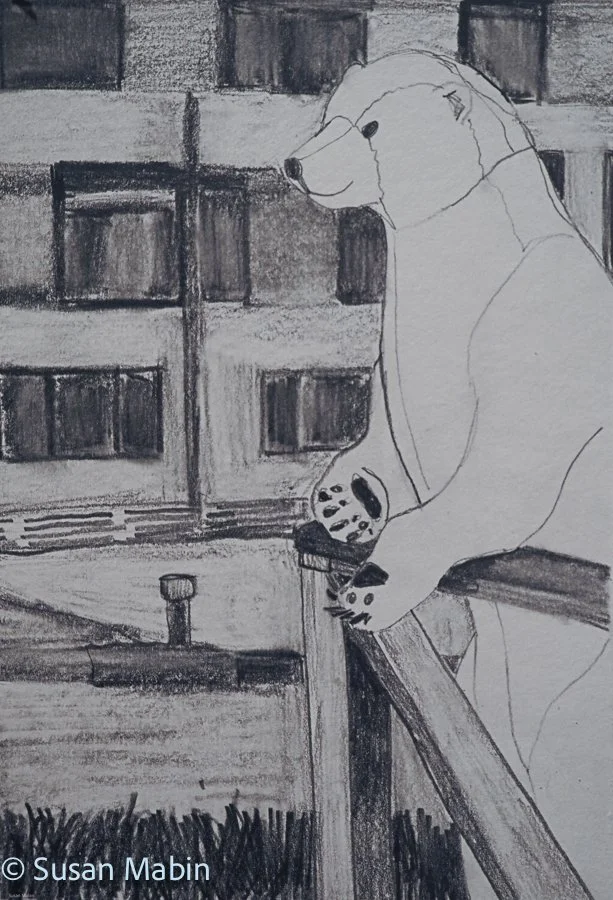
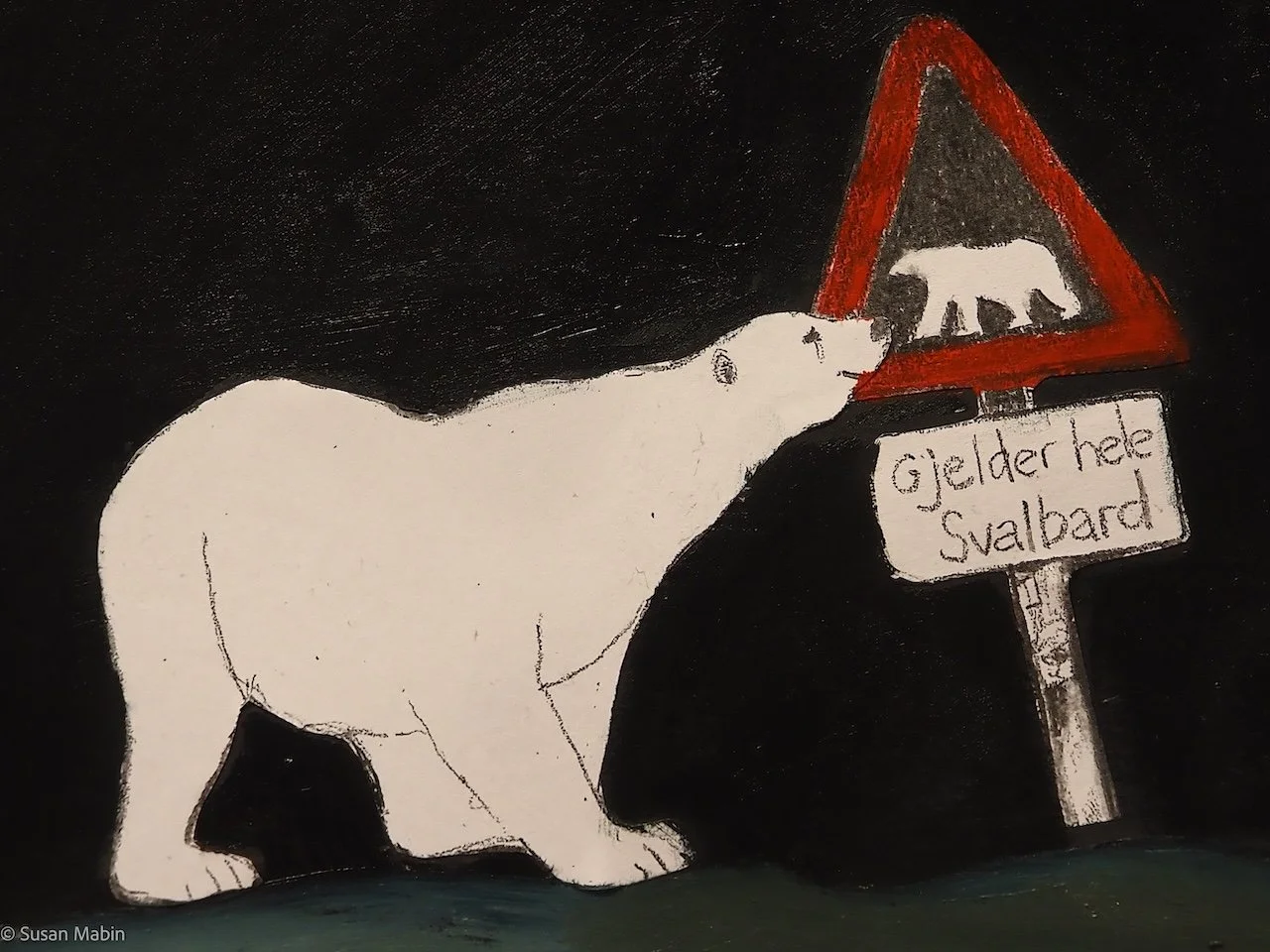
I had an exhibition at the end of the residency showcasing some of the artwork I had created.
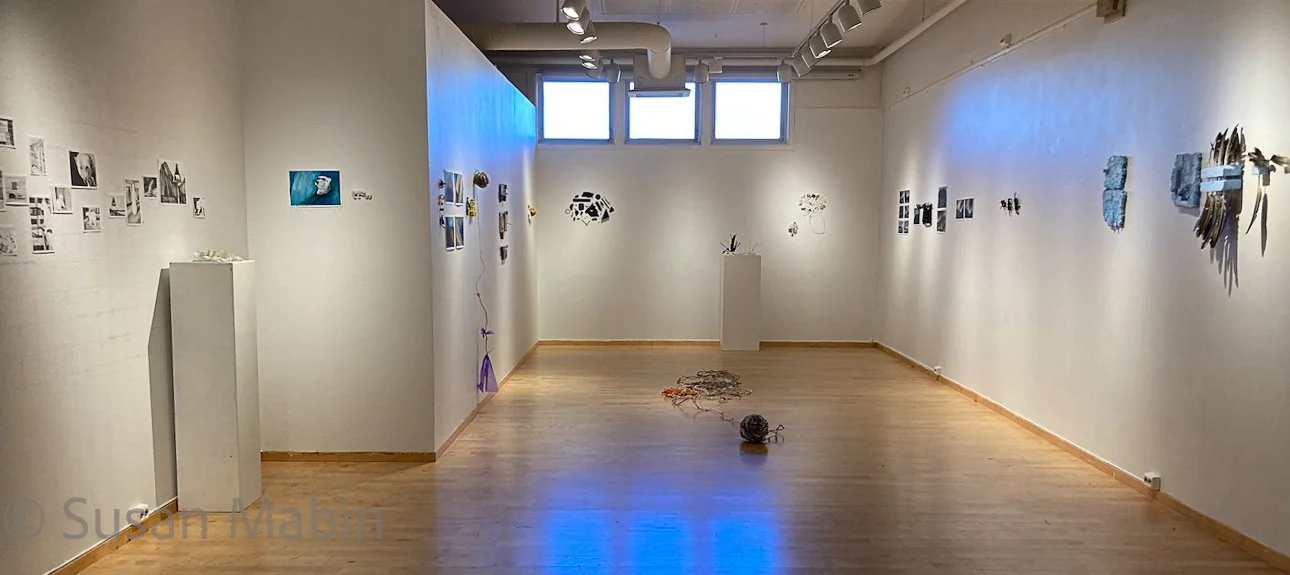
Exhibition view. The tip of the Iceberg. September 2024.
It was hard to leave on the 15th September to take the long journey back to New Zealand, over the next 30 hours. I brought some of the art work home with me, including my head sized ball of string made from my plastic bags I had used over the last 8 months, a record of my food consumerism and consequent accumulation of soft plastics over that time. Below I have a stop motion of the plastic bag ball going to town (to check out the sustainable destination sign).